-

Do rabbit droppings need to be cleaned up every day? A detailed explanation of rabbit dropping cleaning frequency
Teacher Xu Shangjin, a rabbit-raising expert from Heilongjiang, China, said he discovered that rabbit droppings have a thin film on the outside, and about ten minutes after the droppings fall onto the dropping board, this thin film dries up. If you do not break it, the droppings do not smell or give off odor! If you insist on a system of cleaning the droppings once every day, it will inevitably cause the dropping pellets to break and release foul and unusual odors. In addition, it also shows that cleaning droppings inside the rabbit house every day will inevitably affect the rabbits' rest. If rabbits do not rest well, they will not grow well. Therefore, cleaning droppings every day is not recommended, and at the same time it is strictly forbidden to
-
Cleaner Shrimp
Scientific name: Lysmata amboinensis Origin: Pacific Ocean Water temperature: 20-26°C Food: Omnivorous Temperament: Peaceful Suitability for soft coral tank: Suitable Body length: 6cm Keeping difficulty: Easy A shrimp known for cleaning parasites off the body surfaces of fish. Even if you just put your hand into the tank, they will come over and skillfully clean with their tiny scissors. These shrimp also
-
Can the fat-to-lean ratio of pigs be regulated? The answer is yes.
After nearly ten years of scientific and technological research, scientists in China have discovered the mechanism of differentiation and regulation of pork fat cells, achieving a major breakthrough in research on using biotechnology to control the fat content of pork. The study adopted a variety of techniques such as cell biology and molecular biology to measure and analyze the growth and development of fat cells, adipose tissue metabolism and related genes among different pig breeds, and obtained a series of research results. This major achievement recently passed the appraisal organized by the Ministry of Education.
-
How should fruits and vegetables be washed to remove pesticide residues thoroughly?
Today's vegetables and fruits are all sprayed with pesticides, and pesticide residues are also very serious, so how should we wash them to minimize pesticide residues? Excessive nitrogen fertilizer on fruits and vegetables - beware of cancer. Although eating fruits and vegetables is good for health, when nitrogen fertilizer is used excessively, the nitrate present in leafy vegetables can trigger diseases such as esophageal cancer, gastrointestinal cancer and liver cancer.
-
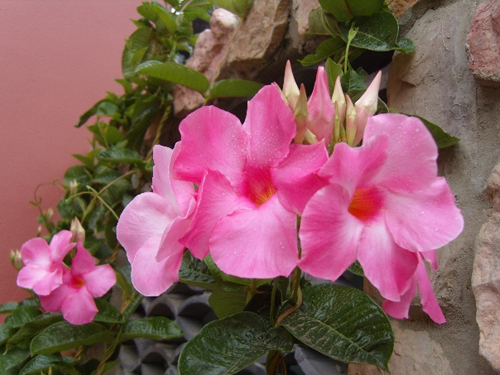
How to grow Mandevilla (also known as Dipladenia, red mandevilla, and Chilean jasmine)
Mandevilla (Dipladenia, red mandevilla, Chilean jasmine) Scientific name: mandevillasanderi Aliases: red wrinkled vine, double gland vine, Dipladenia, red mandevilla, Chilean jasmine Family and genus: Apocynaceae Morphological characteristics: perennial evergreen vine, with slender rhizomes. Leaves opposite, long ovate, apex acute, leathery
-
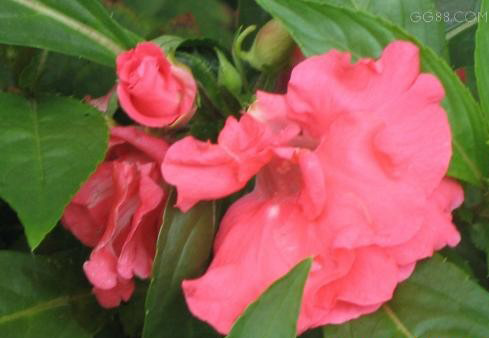
Is oleander poisonous? Just how strong is its toxicity?
Is oleander poisonous? Poisoning occurs from accidentally eating oleander leaves or stems. The leaves of oleander are used clinically as a cardiac stimulant to treat heart disease. It is also an abortifacient; using its leaves as a decoction and giving it to pregnant women to drink can cause strong uterine contractions, is harmful to the fetus, and can trigger miscarriage.
-
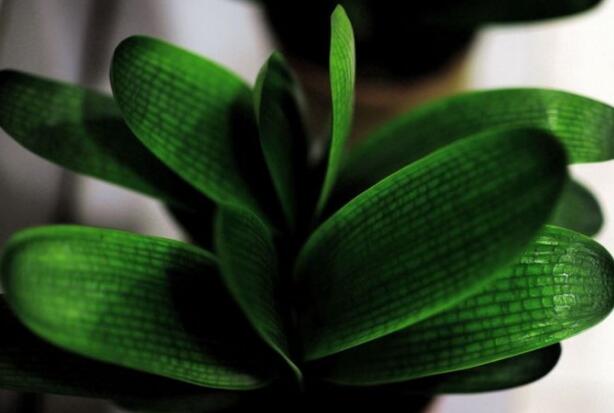
How to grow Clivia leaves so they are glossy: sufficient light, suitable temperature / wipe the leaves with clean water
Clivia, an ornamental flowering plant, kept at home not only beautifies the environment, but looking at its emerald green leaves when you get up in the morning is also very refreshing and pleasing to the eye. Because the Clivia flowering period is short, 6 parts of its beauty is shown in the leaves, so to make Clivia highly ornamental, making its leaves glossy is very important
-
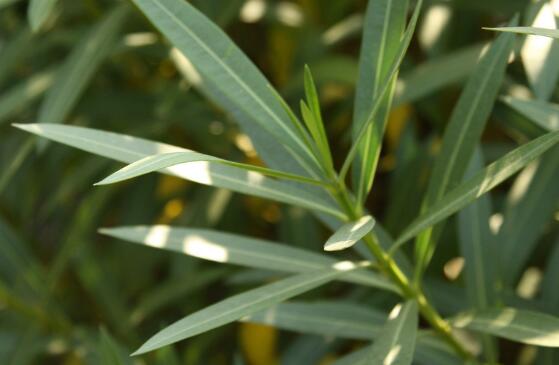
What to do when oleander leaves turn yellow? 6 solutions for too much watering and too little light
Everyone has surely heard of oleander. Although the whole plant is poisonous, its emerald green leaves and large, beautiful flowers are still highly ornamental, so quite a few people take the risk of growing it. However, during cultivation, due to improper care and other reasons, symptoms of yellowing leaves can appear. So what should be done when oleander leaves turn yellow?
-
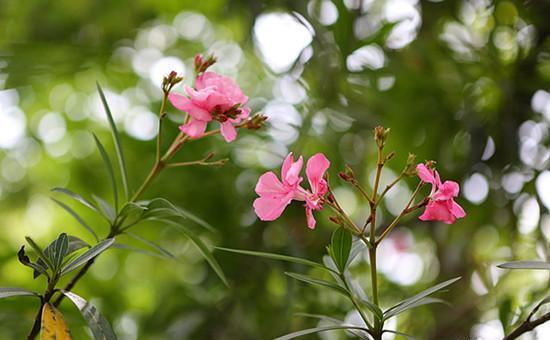
How to fertilize oleander? Homemade farm fertilizer twice a month, stop fertilizing during summer heat
Oleander is a highly ornamental plant with rich flower colors - white, pink, red and more - found throughout parks, along riversides and elsewhere. As everyone knows, oleander is toxic, so growing it well is difficult, especially when it comes to fertilizing: not fertilizing is certainly not an option, but fertilizing too much is also a worry. So how do you fertilize oleander?
-
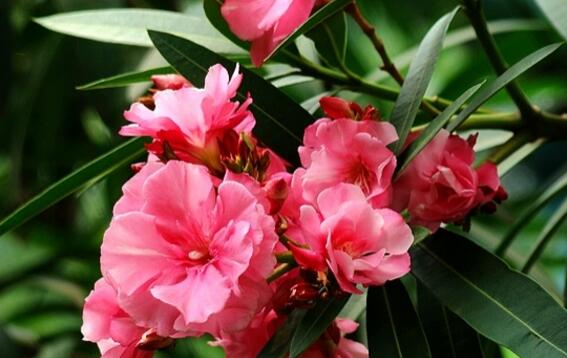
How to water oleander? Water only when dry, and when you do, soak it thoroughly; reduce watering in winter.
As a highly ornamental plant, oleander is very poisonous, but its flowers and leaves are both very attractive, so many people keep it at home. Oleander is highly adaptable and has low demands for water and fertilizer, but if you want it to look better, watering is key. So how do you water oleander?
条件筛选