What to do when oleander leaves turn yellow? 6 solutions for too much watering and too little light
Everyone has surely heard of oleander. Although the whole plant is poisonous, its emerald green leaves and large, beautiful flowers are still highly ornamental, so quite a few people take the risk of growing it. However, during cultivation, due to improper care and other reasons, symptoms of yellowing leaves can appear. So what should be done when oleander leaves turn yellow? The editor has summarized several causes of oleander leaf yellowing and their solutions. Read on to find out!
I. What to do when oleander leaves turn yellow: find the cause
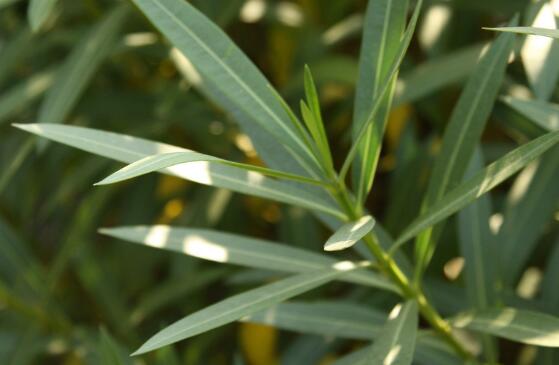
This question is actually quite simple to answer. We just need to find the cause and then address it specifically. There are only a few things that can cause oleander leaves to turn yellow, such as watering too much or too little, insufficient light, fertilizing too much or too little, and so on. Next, the editor will explain them in detail.
II. Causes of oleander leaf yellowing and solutions
1. Sudden environmental change
There are actually many causes of oleander leaf yellowing, but the first thing we should think of is environmental problems. Because if your oleander was bought online, it may not have adapted to a sudden major change in its growing environment, and after being kept for a while, symptoms of yellowing leaves will appear.
Solution: Ask the seller about the oleander's growing environment and keep it unchanged after buying it. Even if the environment needs to be changed, do it gradually so it has time to adapt. If the yellowing leaves are caused by the environment, growers can place the oleander in a ventilated spot to let it recover, and once the plant returns to normal, care for it in the usual way.
2. Insufficient light
In the oleander cultivation methods, it was mentioned that oleander likes light, and even strong light does not matter; its leaves will not turn yellow. But once there is insufficient light, oleander branches will become leggy, and the leaves will be small, yellow, and fall off, seriously affecting its ornamental value.
Solution: Understand oleander's growth habits and give it sufficient light. The best approach is to place it in a spot with ample light, such as a balcony or windowsill, and care for it attentively. It should not be long before the plant returns to health.
3. Overwatering
Oleander likes a moist environment, but too much watering is also bad, because it causes water to accumulate in the pot, leaving the soil short of oxygen, which leads to root rot. After root rot occurs, the top leaves of the oleander turn pale yellow and wilt, while the old leaves also turn dull yellow.
Solution: Stop watering immediately, and preferably loosen the soil more to let the water evaporate. In addition, on the premise of not damaging the roots, you should also dig out part of the soil and fill in dry nutrient soil.
4. Lack of
Oleander likes water. Although too much water is bad, too little is even worse. Once it goes without watering for a long time, the lower branches and leaves of the oleander will age and gradually turn dry and yellow, while the new leaves remain normal.
Solution: To prevent water loss, immediately place the oleander in a semi-shaded spot and water it lightly, not too much at once. At the same time, loosen the cracks around the pot wall so water can drain away through the gaps.
5. Overfertilizing
Oleander has strong adaptability and does not demand much from fertilizer. To make it look good, proper fertilizing is key. However, once too much fertilizer is applied, the new leaves become thick and very glossy, but the old leaves gradually turn yellow and fall off.
Solution: If the oleander leaves turn yellow due to too much or too concentrated fertilizer, you should promptly repot and replace the soil, then remove all the leaves and replant. After that, water appropriately and keep the oleander in a semi-shaded spot for care. Once new leaves sprout, return to normal cultivation.
6. Lack of fertilizer
Too much fertilizer can cause oleander leaves to turn yellow, but too little fertilizer is also bad. It causes the plant to lack nutrients, resulting in weak branches, thin and small leaves, and yellowing young leaves.
Solution: Fertilize promptly to increase nutrients. If conditions allow, you can also water with liquid decomposed fertilizer solution to help it regain its growth ability.
Overall, oleander is relatively easy to grow, but because it is poisonous, many people care for it improperly during cultivation. But since we are growing it, we should grow it well. Besides, as long as you do not come into long-term contact with oleander, it will not harm people. That is all the editor has to share about oleander leaves turning yellow, and I hope it helps everyone.
How to water oleander: do not water until dry, and water thoroughly when you do / reduce watering in winter
As a highly ornamental plant, oleander is very poisonous, but its flowers and leaves are both very beautiful, so many people keep it at home. Oleander has strong adaptability and is not demanding about water and fertilizer, but if you want it to look better, watering is key. So how do you water oleander? Below, the editor will introduce the watering methods for oleander.
I. How to water oleander: do not water until dry
In the oleander cultivation methods, we mentioned that oleander likes a moist environment, so watering is very important. However, you cannot water too much, because that will cause oleander leaves to turn yellow, so mastering the correct watering method is important. As for how to water oleander, we only need to grasp an 8-character principle: do not water until dry, and water thoroughly when you do.
1. Do not water until dry
Oleander is a neutral plant, and "do not water until dry" means waiting until the oleander has dried out before watering. As for how to judge whether the oleander needs watering, the editor has prepared 2 methods: one is looking, and the other is tapping:
① Look: Look at the potting soil with your eyes. If the soil turns white and cracks appear at the edge of the potting soil, these are signs that the potting soil is dry, and at this point you need to water; if the potting soil is dark brown with no cracks, it means the potting soil is still moist and does not need watering.
② Tap: Pick up the flowerpot and tap or knock on the pot wall with your finger. If the sound is crisp, it means the potting soil is already dry and we need to water; if the sound after tapping is dull, it means the soil is still moist and does not need watering.
2. Water thoroughly when you do
For how to water oleander, besides not watering until dry, you also need to grasp the principle of watering thoroughly when you do. It means that when watering oleander, water it thoroughly in one go and do not stop midway. Note: oleander is a wetland plant, so we would rather let it be wet than let it dry out.
For how to water oleander, in principle grasping the 8-character principle is enough. However, if you search online, you will find that very few people can achieve this, and most can only manage "not letting it die of drought or drown." So, for everyone to grow oleander better, let us continue to look at the four-season watering methods for oleander.
II. How to water oleander in winter / four-season watering methods
After winter arrives, the temperature drops sharply, and water evaporation also slows down. So at this time, when watering oleander, the amount of water should be reduced. Even if you do water, pay attention to the timing, and it is best to do it at noon, because at other times the temperature is too low, which will cause oleander to enter a dormant state.
Spring and autumn: In these two seasons, the temperatures are relatively suitable, and this is the period when oleander grows best, so you should water a little more. Watering time: morning or afternoon.
Summer: In summer, the temperature rises very high, and water evaporates very quickly at this time. To keep the potting soil moist, you should water oleander more. However, if the temperature is too high, oleander will enter dormancy, and at that point you should water less. Watering time: morning or evening, when the temperature is not high.
What to do when desert rose leaves turn yellow: figure out the causes of desert rose leaf yellowing
Because its place of origin is close to the desert and its plant form resembles a rose, it is named desert rose. It is a very popular plant to grow, and yellowing leaves often appear during artificial cultivation of desert rose. So what should be done when desert rose leaves turn yellow?
Desert rose introduction:
Desert rose (Latin scientific name: Adenium obesum.) is actually not a rose that grows in desert regions, and it has no close relationship with or resemblance to roses. Also known as: Tianbao flower, Apocynaceae. This is a plant in the Apocynaceae family. Tianbao flower is a succulent plant, also called a succulent. It is a succulent shrub or small tree, up to 4.5m tall; the trunk is swollen. Leaves are simple and alternate, clustered at the branch tips, obovate to elliptic, up to 15cm long, entire, with an obtuse apex and a short point, fleshy, nearly sessile. It likes high temperatures, dry conditions, and a sunny environment, tolerates extreme heat, and is not cold-tolerant. It is named desert rose because its place of origin is close to the desert and it is red like a rose; its places of origin are Kenya and Tanzania in Africa. It is beautiful when in full bloom and is often cultivated for ornament.
What to do when desert rose leaves turn yellow:
One: Has not yet adapted to the environment
A newly bought desert rose is in an adaptation period, and a small amount of yellow leaves is very common and perfectly normal. After a while, once it adapts on its own, it will be fine.
Two: Root rot
Plant roots need to breathe. Keeping the soil loose matters; if the flowerpot is not breathable, it easily causes root rot, and once the roots rot, the plant naturally cannot absorb enough nutrients. The solution is to cut off the already rotten parts and loosen the soil. If the root system is completely rotten, then there is no saving it.
Three: Overwatering
From the name desert rose, you can tell that it is relatively drought-tolerant. Do not water too much each time, otherwise it easily causes root rot, which in turn causes leaves to turn yellow. After cutting off the rotten roots, control watering.
Four: Temperature too low
In winter, when the temperature is low, desert rose will enter dormancy. Leaves turning yellow, drying up, and even dropping are all to reduce water evaporation and nutrient consumption. This is a self-protection mechanism, so there is no need to worry. If you want desert rose to remain lively in winter, then move it into a greenhouse.
Five: Insufficient light
Desert rose is a sun-loving plant, and sufficient light is needed to ensure its normal growth. If you are currently keeping it in a shaded place, hurry and let it take a sunbath.
Six: Poor ventilation
Poor ventilation will inevitably cause yellow leaves in the plant, and in severe cases, the whole plant may rot and die. The solution is to take it out to "get some air," that is, move it to a well-ventilated location, such as a balcony or window.
Seven: Overfertilizing
Overfertilizing makes the soil less breathable on the one hand, and on the other hand the extracellular solution concentration becomes too high, causing root cells to lose water and die. The result in both cases is root rot, leading to death. So fertilize in moderation, and remember not to apply too much.
Eight: Pests
The main pest of desert rose is scale insects. When the infestation is severe, it causes all leaves to fall off, the plant's growing points to die, and even the plant to die. Once discovered, immediately wipe them off with a cotton swab dipped in water. You can also use 40% omethoate emulsifiable concentrate at 1000—2000 times, or 50% fenitrothion emulsifiable concentrate at 1000 times, and spray 1—2 times during the egg-laying and hatching periods.
Nine: Diseases
Desert rose is mainly harmed by leaf spot disease and root rot. When leaf spot disease is severe, it can cause large numbers of leaves to fall off. It can be controlled with 25% carbendazim wettable powder at 500 times solution, or 50% thiophanate at 1000 times solution. Root rot often causes the plant's roots to rot and the plant to die. It can be controlled by drenching with 50% thiophanate wettable powder at 500 times solution or agricultural streptomycin at 1000 times solution.
Finally, special note: whether it is in the adaptation period or the dormant period, watering should be controlled and fertilizing suspended. Wait until spring, when a large number of new buds appear, then supplement with topdressing according to growth conditions. In winter, it can be placed in a sunny location and the potting soil kept dry, with the lowest temperature not below 8°C. In other seasons, it can be placed in a sunny area and must not be kept in a dark place for care; otherwise, even with normal watering and fertilizing, leaves will turn yellow and fall off due to insufficient light.