How to fertilize oleander? Homemade farm fertilizer twice a month, stop fertilizing during summer heat
Oleander is a highly ornamental plant with rich flower colors - white, pink, red and more - found throughout parks, along riversides and elsewhere. As everyone knows, oleander is toxic, so growing it well is difficult, especially when it comes to fertilizing: not fertilizing is certainly not an option, but fertilizing too much is also a worry. So how do you fertilize oleander? Below, the editor brings you the fertilization methods for oleander, among which homemade farm fertilizer is very important.
1. How to fertilize oleander: timing and fertilizer selection
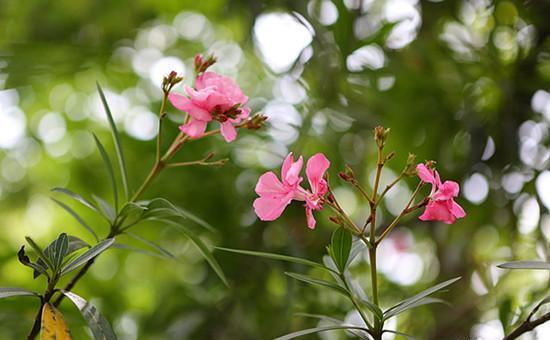
In our article on the benefits and uses of oleander, we learned that although oleander is toxic, its medicinal properties can also cure diseases, so many people want to grow it well. However, to grow oleander well, fertilizing is key. So how should oleander be fertilized? First, we must choose the right fertilizer, then comes the timing of fertilization. For the specifics, read on.
(1) Fertilizer selection: homemade farm fertilizer
How to fertilize oleander: first, we must choose the correct fertilizer. Anyone who has grown flowers knows there are many kinds of fertilizer for ornamental plants, most of them specially produced chemical fertilizers, with only a small portion being homemade farmyard manure. When fertilizing oleander, it is best to choose homemade farm fertilizer, because the animal manure and urine in farm fertilizer are rich in nitrogen, which benefits oleander's growth.
Principles for applying farm fertilizer: dilute, light, little, frequent. Doing these 4 things well prevents over-fertilization and the resulting root burn. Once over-fertilized, oleander leaves turn yellow, and fixing it is very troublesome.
Choosing base fertilizer for potted plants: when growing oleander in pots at home, adding base fertilizer to the potting soil is very important. For the phosphorus oleander needs, you can crush fish bones and other bones or grind them into powder; for the potassium oleander needs, you can use plant-based fertilizers such as peanut cake water or soybean cake water.
(2) Fertilization methods for oleander
How to fertilize oleander: after choosing the fertilizer, it is time to start fertilizing, but for beginners, mastering the method is also very important. It is said that oleander plants are large and have a very long flowering period, so fertilizing is very necessary. The specifics are as follows:
In the early stage, fertilize sparingly; do not apply too much or only a single kind. Before flowering, fertilize at least 2 times a month. During flowering, apply more phosphorus- and potassium-rich fertilizer, with a supplementary feeding every 10 days. In winter, it is best to fertilize another 1-2 times. In spring, when potting up, apply plenty of base fertilizer, then ideally give a supplementary feeding once a week, rich in potassium and phosphorus.
2. Precautions for fertilizing oleander
How to fertilize oleander: after reading the above, you should have some understanding! But during fertilization, there are a few things that need extra attention. Simply put, they are as follows:
① Avoid alkaline fertilizers: in our guide to growing oleander, we mentioned that oleander likes neutral or acidic soil, so when fertilizing, it is best not to use alkaline fertilizers such as plant ash.
② Stop fertilizing at high temperatures: oleander does not tolerate high temperatures. When summer temperatures exceed 30°C, the plant goes dormant, and at this time we should pause fertilizing, lest fertilizer accumulate and harm the oleander.
③ Oleander is toxic: in addition, there is one more point that deserves everyone's attention - oleander's stems and leaves contain multiple toxins, so when fertilizing, be careful not to injure the stems and leaves, to avoid poisoning.
Overall, oleander has strong adaptability; even with careless care, it can still bloom. But if you want oleander to grow well and its flowers to be beautiful, we must thoroughly understand things like how to water oleander and how to fertilize oleander. Only by mastering the correct growing methods can your oleander produce big, beautiful flowers.
Home flower-growing techniques and a complete guide to key points for growing flowers at home
With their brilliant splendor, flowers adorn nature and make it extraordinarily beautiful, giving people aesthetic enjoyment. Growing flowers can enrich and adjust people's cultural life, add pleasure, cultivate temperament, and improve health; it can also increase scientific knowledge, raise cultural and artistic literacy, and has many important economic values. Below, let us take a look at the complete guide to home flower-growing techniques!
Home flower growing: the "three suitable"
1. It is suitable to grow flowers with a strong ability to absorb toxins: certain flowers can absorb certain concentrations of toxic gases in the air, such as sulfur dioxide, nitrogen oxides, hydrogen fluoride, formaldehyde, hydrogen chloride and so on. Wintersweet can absorb mercury vapor; pomegranate plants can absorb lead vapor in the air; snapdragon, canna, morning glory, gladiolus, and China pink can, through their leaves, convert highly toxic sulfur dioxide into non-toxic or low-toxicity sulfate compounds through oxidation; narcissus, four o'clock flower, chrysanthemum, and saxifrage can convert nitrogen oxides into proteins in plant cells; spider plant, aloe, and snake plant can absorb large amounts of indoor pollutants such as formaldehyde.
2. It is suitable to grow flowers that secrete bactericides: the bactericides secreted by flowers such as jasmine, lilac, honeysuckle, and morning glory can kill certain bacteria in the air, inhibit the occurrence of diphtheria, tuberculosis, and dysentery pathogens as well as typhoid bacteria, and keep indoor air clean and hygienic.
3. It is suitable to grow flowers with "complementary" functions: most flowers mainly carry out photosynthesis during the day, absorbing carbon dioxide and releasing oxygen, and carry out respiration at night, absorbing oxygen and releasing carbon dioxide. Cacti are exactly the opposite: they release carbon dioxide during the day and absorb carbon dioxide and release oxygen at night. Growing flowers with "complementary" functions in the same room not only allows the two to benefit each other, but also balances indoor oxygen and carbon dioxide levels, keeping indoor air fresh.
Home flower growing: the "three avoid"
1. Avoid growing too many flowers that give off strong fragrance and pungent odors: orchids, roses, Chinese roses, lilies, night-blooming cestrum and others all give off rich aromas. One pot in a room fills it with fragrance, but if too many fragrant flowers are placed indoors and the scent is too strong, it will excite people's nerves; especially when smelled for a long time in a bedroom, it can cause insomnia. The gases given off by poinsettia and evergreen are unfavorable to people; the particles released by tulips and hydrangea can cause skin allergies and itching after prolonged contact.
2. Avoid placing too many: at night most flowers release carbon dioxide and absorb oxygen, "competing for air" with people, and at night most rooms are closed, with air not circulating enough with the outside. If too many flowers are placed indoors, the indoor oxygen concentration at night will be reduced, affecting the quality of sleep, such as chest tightness and frequent nightmares.
3. Avoid placing toxic flowers indoors: for example, oleander is toxic in its stems, leaves, and even flowers during spring, summer, and autumn; the milky white sap it secretes contains a kind of oleandrin, and accidental ingestion causes poisoning. The bulbs of narcissus contain lycorine toxin; if a child accidentally eats them, it causes symptoms such as vomiting, the sap of the leaves and flowers makes skin red and swollen, and if the sap gets into the eyes, it harms them. Excessive contact with mimosa can easily cause sparse eyebrows and yellowing hair, and in severe cases hair loss, and so on.
Home flower growing: the "six don'ts"
1. Carelessness: flowers, like people, are living things and need careful care. Many flower growers lack the proper careful and diligent attitude toward these beautiful lives. First, they are mentally lazy, unwilling to study flower-growing knowledge, long content to remain laymen, and their management is not methodical. Second, they are physically lazy, unwilling to spend too much time and energy on flowers. After the flowers enter the home, they are left neglected, enduring hunger and thirst for a long time and suffering from pests and diseases. In this way, even the best flowers will gradually wither, so lazy people cannot grow flowers well.
2. Loving them too much: contrary to the above situation, some flower growers love their flowers too much and get itchy hands if they do not fiddle with them for a moment. Some water and fertilize without any pattern, watering whenever they think of it, causing flowers to die from overwatering and overfertilizing. Some casually move the flower pots around, shifting them to several places in a day, making the flowers constantly adapt to the environment and disrupting their normal growth patterns. Over time, it would be strange if the flowers were not tormented to death.
3. Chasing fame and profit: some flower lovers believe that if you grow flowers, you should grow famous flowers, because famous flowers have high ornamental value and bring big market profits. Under this mentality, they spare no expense to seek out famous flowers and trees everywhere. The result is often that, due to the lack of good growing conditions and management skills, the flowers die soon after purchase, both wasting the precious flowers and squandering money. This is a conceptual misunderstanding. The correct approach is to start with ordinary, lower-grade varieties, gradually explore the rules and techniques of growing flowers, and only after reaching a certain skill level gradually buy more precious varieties; that way, success is much more assured.
4. Not distinguishing good from bad: some flower growers are fond of being greedy for size and completeness, bringing home whatever variety they see. This not only makes management harder, but also brings some unsuitable flowers into the home, polluting the environment and harming health. For example, flowers with toxic sap can easily cause poisoning when people touch them. The smell of some flowers affects the human nervous system and can easily cause breathing difficulty or even allergic reactions. In short, home flower growing should not be greedy for size and completeness or fail to distinguish good from bad; you should choose varieties with a smaller plant shape, a beautiful appearance, and no harm to the human body.
5. Fickleness: some flower growers are restless and have no theme in growing flowers, changing the flowers at home like a merry-go-round. This is a great taboo in flower growing. First, changing varieties too quickly and growing each for too short a time is not conducive to cultivating flowers and trees with graceful shapes and high ornamental value. Second, merely dabbling in each kind of flower is not conducive to improving one's flower-growing level, and in the end you are still a flower novice. Therefore, only by choosing one or two kinds of flowers and focusing on studying and cultivating them can a grower truly gain something.
6. Outdated ideas: today, new knowledge and new techniques in the flower-growing industry emerge endlessly, yet most growers still cling to traditional care methods and are not good at using new techniques and new equipment in aspects such as the use of flower containers, water and fertilizer management, and seedling cultivation, such as soilless culture, odorless flower fertilizers, and various flower containers. As a result, home flower growing is unhygienic, unattractive, and not novel, with relatively large side effects.
Spring care for home potted flowers
1. Propagating good seedlings: Chinese rose, geranium, pomegranate, winter jasmine and others can be propagated in spring by taking healthy branches for cuttings. Azaleas and jasmine prefer acidic soil; you can cut sturdy new branches 5-10 cm long, remove the lower leaves, and keep 3-4 top leaves for cuttings. For cuttings, black mountain soil, vermiculite, or yellow sand can be used as the medium. Mist the cuttings appropriately to maintain a certain humidity; generally they root after about 1 month. Orchids, agave, and spider plant can be propagated in early spring by division or by runners respectively. Spring-sown herbaceous plants grown from seed, such as asparagus fern, five-color pepper, mimosa, garden balsam, scarlet sage, morning glory, and marigold types, can be broadcast or sown in spots.
2. Repotting and changing soil: repotting and changing soil is a way to supplement fertilizer for potted flowers in spring. Generally, small pots are repotted once a year, and large pots once every 3-4 years; tall plants need larger pots. If some roots are too densely grown or there are dead or rotten roots, they need appropriate pruning. After repotting, generally the first watering should soak through, then the plant should be placed in a shady spot; afterward, water again when the potting soil looks dry, and generally after new roots grow, resume normal watering and move it to a sunny spot.
3. Pruning and training: pruning and training should be done according to different plants. Azaleas and winter jasmine should not be pruned excessively. For pomegranate and Chinese rose, in early spring you can cut off all dead branches, injured branches, or overly dense branches to encourage abundant flowers and lush leaves. When repotting jasmine, remove old leaves to encourage more new branches. For climbing vines such as Boston ivy, banks rose, wisteria, and multiflora rose, training can be done so that the leaf surface is exposed to sunlight as much as possible and grows vigorously.
Note: In early spring, do not move potted flowers outdoors too early, lest they suffer cold damage from cold air. Watering can increase as temperatures rise, keeping moisture evenly balanced.
Summer care for home potted flowers
1. Water at the right time: in summer, flowers have lush branches and leaves and consume a lot of water, so in summer you should water the flowers fully every morning and evening.
2. Build a frame for shade: for all potted flowers, once summer comes you must build a frame and put up reed curtains for shade, so they safely pass through the severe summer heat.
3. Pay attention to ventilation: for indoor flowers, when the temperature exceeds 30°C, pay attention to ventilation, open the windows, and let fresh air flow indoors to prevent heatstroke and cool down.
4. Preserve moisture and lower temperature: in summer, you can cover the potting soil with some grass so that sunlight does not directly hit the potting soil, thereby lowering the soil temperature and also preventing the soil moisture from evaporating too quickly. You can also use a sprayer to wet the flower leaves and at the same time wet the surroundings, lowering the temperature and increasing humidity. This is very beneficial for some flowers that like cool conditions.
Autumn care for home potted flowers
1. Increase water and fertilizer management: after the Start of Autumn, the weather gradually turns cooler. For some foliage flowers such as asparagus fern, spider plant, and sago palm, generally apply a dilute liquid fertilizer once every half month to keep the leaves green and improve cold resistance. For chrysanthemums, camellias, azaleas and others that bloom once a year, timely supplementary feeding with a liquid fertilizer mainly based on phosphorus is needed to ensure sufficient nutrients and make the flowers bloom more and larger. For Chinese roses, Milan, jasmine and others that bloom multiple times a year, sufficient fertilizer and water should be supplied so they keep blooming. For some ornamental-fruit flowers, such as kumquat, finger citron, and fruiting pomegranate, apply 1-2 times a dilute liquid fertilizer mainly based on phosphorus.
2. Sow in autumn in time: autumn cuttings. In autumn, promptly harvest mature flower and tree seeds, and promptly sow tulips, gloxinia, snapdragon and others. Especially for seeds that easily lose germination ability, sow them promptly in autumn, and combine with pruning to take cuttings of flowers and trees. For example, taking cuttings of Chinese rose, rose, and multiflora rose has a relatively high survival rate.
Winter care for home potted flowers
1. Overwintering deciduous woody flowers: most deciduous woody flowers originate in temperate regions. Common ones include pomegranate, honeysuckle, Chinese rose, ornamental peach, and winter jasmine. They generally go dormant in winter, so the room temperature can be controlled at around 5°C. If there is a balcony or small courtyard, you can place relatively cold-hardy potted Chinese roses, ornamental peaches, pomegranates, honeysuckles and others together in a wind-sheltered spot on the balcony or in a corner of the courtyard, wrap and cover them well with plastic film, and they can overwinter safely.
2. Overwintering evergreen woody flowers: such as oleander, kumquat, osmanthus and others, which are in a semi-dormant state. The temperature is generally controlled above 0°C, and they can safely pass the severe winter. For Milan, jasmine, Chinese hibiscus, and gardenia, they should be placed where there is ample sunlight. Indoor temperature should be kept at around 15°C; if the temperature is too low, the flowers will die.
3. Overwintering annual and biennial herbaceous flowers: such as Chinese primrose, coleus, and pocketbook plant, keeping room temperature between 5-15°C allows normal growth. For perennial herbaceous flowers such as asparagus fern, garden balsam, geranium, and wax begonia, keeping ample sunlight and room temperature of 10-20°C allows them to grow well. For herbaceous flowers that are dormant in winter such as clivia and dancing-lady orchid, maintaining a room temperature of around 5°C and giving an appropriate amount of light is enough, with no more than 8-10 hours of light per day; at the same time, strengthen fertilizer and water management, and they can bloom after two months.
What are the particular requirements for water used to water flowers?
1. Water selection: the best water for watering flowers is neutral or slightly acidic river water, pond water, or rainwater. Rainwater is best for watering flowers because it contains more natural minerals. Next are river water and pond water; especially greenish pond water, which is rich in nutrients and is a relatively ideal water for watering flowers. In cities, tap water is mostly used for watering flowers, but tap water contains relatively high amounts of bleaching powder and chemicals, so when using it to water flowers, store it for one or two days first. In addition, if you put a few slices of vitamin C in tap water, it can eliminate the chlorine in the water; generally add one slice per basin of water, let it sit for half a day, and then it can be used to water flowers.
2. Temperature control: flower-growing sayings go, "When southern flowers move north, add alum to the watering water", "When growing southern flowers at home in the north, fish tank water is better for watering", "Fish water is fat and rice water is strong; both are most suitable for watering potted flowers". Whether in deep winter or midsummer, do not water flowers with cold water. When the temperature is below 10°C, you can add a little hot water to the water as appropriate, trying to make the water temperature close to the soil temperature and create a microclimate suitable for flower growth.
How do you judge whether a potted flower lacks water?
1. Tapping method: gently tap the upper-middle part of the flowerpot wall with the knuckle of your finger. If it gives a relatively crisp sound, it means the potting soil is already dry and needs immediate watering. If it gives a dull, muffled sound, it means the potting soil is moist and watering can be postponed.
2. Visual method: observe with your eyes whether the surface color of the potting soil has changed. If the color becomes lighter or turns light grayish-white, it means the potting soil is dry and needs watering. If the color becomes darker or dark brown, it means the potting soil is moist and watering can be postponed.
3. Finger test method: gently insert your finger about 2 cm deep into the potting soil and feel the soil. If it feels dry or rough and hard, it means the potting soil is dry and needs immediate watering. If it feels slightly moist, fine, and soft, it means the potting soil is moist and watering can be postponed.
4. Rolling method: rub some potting soil with your fingers. If the soil becomes powdery, it means the potting soil is dry and should be watered immediately. If the soil forms flakes or pellets, it means the potting soil is moist and watering can be postponed. The above methods are all based on experience, and they can only tell people the approximate condition of whether the potting soil is dry or wet. If you need to know the exact degree of dryness or moisture of the potting soil, you can buy a soil moisture meter, insert it into the soil, and then see words such as "dry" or "moist" appear on the scale, so you can know exactly when to water.
Homemade fertilizers for home potted flowers
1. Soaking liquid fertilizer: use a small jar (or small crock) and put in waste vegetable leaves, melon and fruit peels, chicken and fish offal, fish scales, waste bones, eggshells, and moldy foods (peanuts, melon seeds, beans, bean powder) and so on, add water and sprinkle a little trichlorfon, then cover tightly. After high-temperature fermentation and decomposition, it can be used. When using, take the supernatant liquid and dilute it with water before trial use. You can also mix the above waste materials with some old potting soil, add some water, put them into a large plastic bag, tie it tightly, leave it for a period, and use it after fermentation.
2. Waste composting: choose a suitable spot and dig a soil pit 60-80 cm deep, line it with 10 cm of furnace ash, then put rotten vegetable leaves, poultry and livestock innards, fish scales, chicken and duck manure, eggshells, meat waste, and crushed bones into the pit, sprinkle some insecticide, and cover it with about 10 cm of garden soil. Keep the pit moist to promote fertilizer decomposition. It is best to compost in autumn and winter; after spring warming causes decomposition and there is no foul odor, it can be mixed into potting soil as base fertilizer, or while still wet it can be sieved through a 4 mm sieve and rolled into pellets; the fine part is used as topdressing, and the coarse part as base fertilizer. When retting, you can add some orange peel or diluted rice vinegar to reduce the odor.
Clever fertilizing for home flowers
1. Fertilize at the right time: so-called timely fertilization means applying fertilizer when the flowers need it. When flower leaves are found to become lighter or yellow and the plant grows thin and weak, that is the most suitable time to fertilize. In addition, when flower seedlings sprout leaves and branches unfold leaves, topdressing should be applied to meet the seedlings' rapid growth demand for fertilizer. Different growth stages of flowers have different fertilizer needs. The type and amount of fertilizer also differ. For example, applying more nitrogen fertilizer at the seedling stage can promote seedling growth, and applying phosphorus fertilizer at the bud stage can promote larger, more vivid flowers and a longer flowering period.
2. Fertilize in appropriate amounts: for potted flowers, fertilization should follow "eat small meals often", that is, fertilize many times but with a small amount each time. Generally apply a dilute fertilizer solution once every 7-10 days, and once every 15-20 days after the "Start of Autumn". As the flowers and trees gradually grow, the fertilizer concentration gradually increases; for example, the urea application concentration increases from 0.2% in the early stage to 1.0%, and phosphorus and potassium fertilizer increases from 1.0% to 3.0-4.0%.
3. Seasonal fertilization: in spring and summer, flowers grow quickly and vigorously, so a moderate amount of extra fertilizer can be applied. After autumn begins, temperatures gradually decrease and flower growth weakens, so fertilizer should be reduced. From late August to early September, fertilization should stop to prevent a second growth peak, otherwise it is easy for flower tissue cells to become tender and make overwintering difficult. For overwintering flowers, fertilization should stop during winter dormancy.
4. Temperature control: potted flowers should not be fertilized around midday in high temperatures or on rainy days; fertilizing at these times easily injures the roots, so it is best to fertilize in the evening. After autumn and in winter, temperatures are low and flowers grow slowly, so generally no fertilizer is applied. In summer, temperatures are high and flowers grow vigorously, so more fertilizer should be applied; when temperatures are high, the topdressing concentration should be low and the amount small, and dilute fertilizer solution should be used with more frequent feedings.
5. Mixing medicine and fertilizer: if pests or diseases occur during fertilization, an appropriate amount of pesticide can be added to the fertilizer liquid, which can serve the dual purpose of fertilizing and preventing pests and diseases.
Why do home-grown flowers die?
1. Too much fertilizer: some people love flowers so much that, considering the potted flowers consume many nutrients during the flowering period, they apply large amounts of chemical fertilizer, causing the concentration to be too high. In mild cases, this affects the root hairs' absorption of water; in severe cases, it causes the plant to die.
2. Applying too much undecomposed organic fertilizer: because organic fertilizer has large amounts of microbial activity when decomposing in the soil, it causes soil oxygen deficiency, and the roots suffocate and die. On the other hand, organic fertilizer fermentation produces alcohol, lactic acid and other substances that are toxic to the root system, and fermentation releases a large amount of heat, raising the temperature and causing "root burn".
3. No place to grow flowers: people often put potted flowers on enclosed balconies facing east or west. In this way, the radiant heat of the sun makes the temperature inside the balcony rise sharply, forming a hot, dry environment. High temperature, dryness, and lack of ventilation also make red spider mite infestations likely, accelerating the death of the flowers.
4. Overwintered flowers suddenly moved outdoors: leaves grown by flowers overwintered indoors are semi-shade leaves or shade leaves. If suddenly moved outdoors in early spring, shade leaves cannot adapt, and tender leaves and buds are easily sunburned; combined with the large temperature difference between indoors and outdoors, this easily causes fatal damage to the flowers.
5. Lack of sunlight: some people, for convenience of viewing, place flowers on indoor desks and tables, far from sunlight, causing their photosynthesis to be inhibited. The organic nutrients in the flowers can only be consumed and cannot be replenished in time, reducing the flowers' resistance and causing the plants to weaken and die. Watering too much and too frequently is also a cause of plant death.
The complete guide to home flower growing (very detailed, a must for flower growers)
1. The benefits of growing flowersWith their brilliant splendor, flowers adorn nature and make it extraordinarily beautiful, giving people aesthetic enjoyment. Growing flowers can enrich and adjust people's cultural life, add pleasure, cultivate temperament, and improve health; it can also increase scientific knowledge and raise cultural and artistic literacy. Growing flowers can green and beautify the land of the motherland, protect and improve the environment, purify the air, and enable people to work and study in a beautiful environment, making life even better. Growing flowers not only provides ornamental value, but also has many important economic values. Flowers are an important part of Chinese herbal medicine; honeysuckle, chrysanthemum, wintersweet, hibiscus, azalea, Chinese rose, lotus and others are all common Chinese medicinal materials. Fragrant flowers are widely used in food, light industry and other aspects. For example, osmanthus can be used as a food flavoring and for brewing wine; jasmine, white orchid, bitter orange, and chloranthus can be used to scent tea; chrysanthemum can be made into high-grade foods and dishes; and white orchid, jasmine, rose, wintersweet, and narcissus can be used to extract essences.
2. The "three suitable" for growing flowers indoors
1. It is suitable to grow flowers with a strong ability to absorb toxins. Certain flowers can absorb certain concentrations of toxic gases in the air, such as sulfur dioxide, nitrogen oxides, hydrogen fluoride, formaldehyde, hydrogen chloride and so on. According to research, wintersweet can absorb mercury vapor; pomegranate plants can absorb lead vapor in the air; snapdragon, canna, morning glory, gladiolus, and China pink can, through their leaves, convert highly toxic sulfur dioxide into non-toxic or low-toxicity sulfate compounds through oxidation; narcissus, four o'clock flower, chrysanthemum, and saxifrage can convert nitrogen oxides into proteins in plant cells; spider plant, aloe, and snake plant can absorb large amounts of indoor pollutants such as formaldehyde, eliminating and preventing indoor air pollution.
2. It is suitable to grow flowers that secrete bactericides. The bactericides secreted by flowers such as jasmine, lilac, honeysuckle, and morning glory can kill certain bacteria in the air, inhibit the occurrence of diphtheria, tuberculosis, and dysentery pathogens as well as typhoid bacteria, and keep indoor air clean and hygienic.
3. It is suitable to grow flowers with "complementary" functions. Most flowers mainly carry out photosynthesis during the day, absorbing carbon dioxide and releasing oxygen. At night they carry out respiration, absorbing oxygen and releasing carbon dioxide. Cacti are exactly the opposite: they release carbon dioxide during the day and absorb carbon dioxide and release oxygen at night. Growing flowers with "complementary" functions in the same room not only allows the two to benefit each other, but also balances indoor oxygen and carbon dioxide levels, keeping indoor air fresh.
3. The "three avoid" for growing flowers indoors
1. Avoid growing too many flowers that give off strong fragrance and pungent odors. Orchids, roses, Chinese roses, lilies, night-blooming cestrum and others all give off rich aromas. One pot in a room fills it with fragrance, but if too many fragrant flowers are placed indoors and the scent is too strong, it will excite people's nerves; especially when smelled for a long time in a bedroom, it can cause insomnia. The gases given off by poinsettia and evergreen are unfavorable to people; the particles released by tulips and hydrangea can cause skin allergies and itching after prolonged contact.
2. Avoid placing too many. At night most flowers release carbon dioxide and absorb oxygen, "competing for air" with people. And at night most rooms are closed, with air not circulating enough with the outside. If too many flowers are placed indoors, the indoor oxygen concentration at night will be reduced, affecting the quality of sleep, such as chest tightness and frequent nightmares.
3. Avoid placing toxic flowers indoors. For example, oleander is toxic in its stems, leaves, and even flowers during spring, summer, and autumn; the milky white sap it secretes contains a kind of oleandrin, and accidental ingestion causes poisoning. The bulbs of narcissus contain lycorine toxin; if a child accidentally eats them, it causes symptoms such as vomiting, the sap of the leaves and flowers makes skin red and swollen, and if the sap gets into the eyes, it harms them. Excessive contact with mimosa can easily cause sparse eyebrows and yellowing hair, and in severe cases hair loss, and so on.
Therefore, when growing and appreciating flowers, we should understand the relevant scientific knowledge to bring health and happiness to ourselves and our families.
4. The "six don'ts" for home flower growing
Home flower growing is now increasingly common, but many flower lovers, because they do not grasp the key points, grow flowers that are wilted and lifeless. Where is the problem?
First don't: carelessness. Flowers, like people, are living things and need careful care. Many flower growers lack the proper careful and diligent attitude toward these beautiful lives. First, they are mentally lazy, unwilling to study flower-growing knowledge, long content to remain laymen, and their management is not methodical. Second, they are physically lazy, unwilling to spend too much time and energy on flowers. After the flowers enter the home, they are left neglected, enduring hunger and thirst for a long time and suffering from pests and diseases. In this way, even the best flowers will gradually wither. So lazy people cannot grow flowers well.
Second don't: loving them too much. Contrary to the above situation, some flower growers love their flowers too much and get itchy hands if they do not fiddle with them for a moment. Some water and fertilize without any pattern, watering whenever they think of it, causing flowers to die from overwatering and overfertilizing; some casually move the flower pots around, shifting them to several places in a day, making the flowers constantly adapt to the environment and disrupting their normal growth patterns. Over time, it would be strange if the flowers were not tormented to death. Having a few pleasant potted flowers at home and liking them is understandable, but flowers, like people, have their own growth patterns; if you frequently disturb them even when they need rest, they will naturally feel exhausted and not grow well.
Third don't: chasing fame and profit. Some flower lovers believe that if you grow flowers, you should grow famous flowers, because famous flowers have high ornamental value and bring big market profits. Under this mentality, they spare no expense to seek out famous flowers and trees everywhere. The result is often that, due to the lack of good growing conditions and management skills, the flowers die soon after purchase, both wasting the precious flowers and squandering money. This is a conceptual misunderstanding. The correct approach is to start with ordinary, lower-grade varieties, gradually explore the rules and techniques of growing flowers. After reaching a certain technical level, then gradually buy more precious varieties; that way, success is much more assured.
Fourth don't: not distinguishing good from bad. Some flower growers are fond of being greedy for size and completeness, bringing home whatever variety they see. This not only makes management harder, but also brings some unsuitable flowers into the home, polluting the environment and harming health. For example, flowers with toxic sap can easily cause poisoning when people touch them. The smell of some flowers affects the human nervous system and can easily cause breathing difficulty or even allergic reactions. Plants with sharp thorns also pose a certain threat to human safety, and so on. In short, home flower growing should not be greedy for size and completeness or fail to distinguish good from bad; you should choose varieties with a smaller plant shape, a beautiful appearance, and no harm to the human body.
Fifth don't: fickleness. Some flower growers are restless and have no theme in growing flowers, changing the flowers at home like a merry-go-round. This is a great taboo in flower growing. First, changing varieties too quickly and growing each for too short a time is not conducive to cultivating flowers and trees with graceful shapes and high ornamental value. Second, merely dabbling in each kind of flower is not conducive to improving one's flower-growing level, and in the end you are still a flower novice. Therefore, only by choosing one or two kinds of flowers and focusing on studying and cultivating them can a grower truly gain something.
Sixth don't: outdated ideas. Today, new knowledge and new techniques in the flower-growing industry emerge endlessly, yet most growers still cling to traditional care methods and are not good at using new techniques and new equipment in aspects such as the use of flower containers, water and fertilizer management, and seedling cultivation, such as soilless culture, odorless flower fertilizers, and various flower containers. As a result, home flower growing is unhygienic, unattractive, and not novel, with relatively large side effects.
5. The knowledge of buying flowers
Do not buy the following kinds of flowers:
1. Flowers just potted. When buying flowers, if you see that the soil in the pot is new and the stem moves when you pull it upward, then this potted flower must have been potted not long ago and has not yet grown new roots. Such flowers are very likely to die after being bought. The reason is that some sellers, in pursuit of economic benefit, mix undecomposed organic fertilizer directly into the soil; once this fertilizer ferments, the flower's root system will be burned. Sometimes, to save labor or race against time, they plant the flower roots without any sorting at all, or even carelessly pot and market flower and tree plants whose roots are too severely damaged and which basically cannot survive. If you accidentally buy such flowers, most will be difficult to keep alive.
2. Flowers with two or more plants grown together. Some sellers seize on buyers' fondness for lush flowers and leaves, planting two or more inferior flower seedlings together in one pot, passing off inferior goods as superior and selling them to inexperienced buyers for profit. After such flowers are bought, the branches and leaves they grow become thinner, weaker, and yellower day by day, and the flowers bloom smaller and smaller. The reason is insufficient nutrients, and there are too many roots in the pot, making it easy for the soil to compact, and possibly causing root rot and death due to poor drainage and poor aeration. Of course, specially designed combination plantings are not included here. Flowers without a soil ball in summer or winter: in hot summer, temperatures are high, flower and tree leaves evaporate quickly, and the root system of newly potted flowers and trees is more or less damaged, making it difficult for them to absorb water from the potting soil in the short term. Only if the original soil ball is kept can they safely pass this transition period; otherwise they will first wilt and then slowly die. In winter, the weather is cold, flowers and trees grow slowly, and some even enter dormancy. At this time, if you buy flowers and trees without a soil ball from the market and bring them home, after potting and watering they may suffer cold damage (especially the root system); in mild cases the plant's growth is hindered, and in severe cases it dies. Even if they are not damaged by cold, because the soil temperature is relatively low, it is very difficult for the flowers and trees to grow new roots, while the old roots cannot sprout for a long time and are extremely prone to rotting and necrosis. Areas along the Yangtze River and other regions without winter heating should especially pay attention.
3. Flowers with roots but no stems or leaves. Some individual vendors, in autumn and winter, dig up wild vines and miscellaneous tree roots on the mountain and sell them as flowers and trees. Because there are no stems or leaves, they are very hard to identify. To keep them moist, they wrap them in moss and give them strange flower names, specifically deceiving inexperienced buyers. Some people are greedy for a bargain, but after buying, nine times out of ten they only grow leaves and do not bloom.
4. Flowers shown in pictures as being able to bloom in multiple colors. A small number of unscrupulous vendors, in order to make profit, insert fake flowers of various colors onto plants that cannot bloom, then take photos to make pictures, give them foreign-sounding flower names, and deceive friends who are beginners at growing flowers. These stall vendors change location constantly, so buyers who are cheated have a hard time finding them.
5. Flowers whose branches and leaves are tied with fine wire into various shapes. To sell for a good price, flower and tree sellers deliberately tie all the branches and leaves of evergreen trees such as pines and cypresses with fine wire into various animal shapes, then take them to market and sell them at a high price as bonsai. Such potted flowers look good at the time, but as time passes and the plant grows, the shape will change. Moreover, tying all the branches and leaves of the plant at the same time not only affects photosynthesis, but also easily leads to pests and diseases, which is very unfavorable to the plant's growth.
6. Cactus flowers with small frost spots on the stem or ball. In early spring, you often see individual vendors selling cactus-type flowers at low prices. Some buyers, without examining carefully, buy eight or ten at once, and in the end no small number have problems. The reason is that cacti that have overwintered are very likely to suffer slight frost injury, with light green frost spots smaller than a grain of rice appearing on the stem and ball. On the surface there seems to be no problem, but in essence the plant's internal tissues have already suffered major damage. If such flowers are bought and no measures are taken, the spots will grow larger and larger, the plant will gradually become semi-transparent, and finally the whole plant will necrose.
6. Spring care for home potted flowers
The whole year's plan begins in spring. In spring, the management and care of home potted flowers is very important. The following three aspects of work should be done well.
1. Propagate good seedlings. Chinese rose, geranium, pomegranate, winter jasmine and others can be propagated in spring by taking healthy branches for cuttings. Azaleas and jasmine prefer acidic soil; you can cut sturdy new branches 5-10 cm long, remove the lower leaves, and keep 3-4 top leaves for cuttings. For cuttings, black mountain soil, vermiculite, or yellow sand can be used as the medium. Mist the cuttings appropriately to maintain a certain humidity; generally they root after about 1 month. Orchids, agave, and spider plant can be propagated in early spring by division or by runners respectively.
Spring-sown herbaceous plants grown from seed, such as asparagus fern, five-color pepper, mimosa, garden balsam, scarlet sage, morning glory, and marigold types, can be broadcast or sown in spots. Sowing method: first fill the pot with soil, press it slightly firm, then sow the seeds, and cover with fine soil. For watering after sowing, generally place the flowerpot into a basin of water and let the water slowly seep in from the bottom of the pot. Most germinate 1-3 weeks after sowing; after germination, move the pot to a sunny spot. After the seedlings grow 2-3 leaves, they can be pricked out and transplanted; when transplanting, be careful not to injure the roots or break the stems.
2. Repotting and changing soil. This is a way to supplement fertilizer for potted flowers in spring. Generally, small pots are repotted once a year, and large pots once every 3-4 years; tall plants need larger pots. If some roots are too densely grown or there are dead or rotten roots, they need appropriate pruning. After repotting, generally the first watering should soak through, then the plant should be placed in a shady spot; afterward, water again when the potting soil looks dry, and generally after new roots grow, resume normal watering and move it to a sunny spot.
3. Pruning and training. This should be done according to different plants. Azaleas and winter jasmine should not be pruned excessively. For pomegranate and Chinese rose, in early spring you can cut off all dead branches, injured branches, or overly dense branches to encourage abundant flowers and lush leaves. When repotting jasmine, remove old leaves to encourage more new branches. For climbing vines such as Boston ivy, banks rose, wisteria, and multiflora rose, training can be done so that the leaf surface is exposed to sunlight as much as possible and grows vigorously.
Note: In early spring, do not move potted flowers outdoors too early, lest they suffer cold damage from cold air. Watering can increase as temperatures rise, keeping moisture evenly balanced.
7. Summer care for home potted flowers
1. Watering. In summer, flowers have lush branches and leaves and consume a lot of water, so in summer you should water the flowers fully every morning and evening.
2. Build a frame for shade. For all potted flowers, once summer comes you must build a frame and put up reed curtains for shade, so they safely pass through the severe summer heat.
3. Pay attention to ventilation. For indoor flowers, when the temperature exceeds 30°C, pay attention to ventilation, open the windows, and let fresh air flow indoors to prevent heatstroke and cool down.
4. Preserve moisture and lower temperature. In summer, you can cover the potting soil with some grass so that sunlight does not directly hit the potting soil, thereby lowering the soil temperature and also preventing the soil moisture from evaporating too quickly. You can also use a sprayer to wet the flower leaves and at the same time wet the surroundings, lowering the temperature and increasing humidity. This is very beneficial for some flowers that like cool conditions.
8. Autumn care for home potted flowers
1. Strengthen water and fertilizer management. After the Start of Autumn, the weather gradually turns cooler. For some foliage flowers, such as asparagus fern, spider plant, and sago palm, generally apply a dilute liquid fertilizer once every half month to keep the leaves green and improve cold resistance. For chrysanthemums, camellias, azaleas and others that bloom once a year, timely supplementary feeding with a liquid fertilizer mainly based on phosphorus is needed to ensure sufficient nutrients and make the flowers bloom more and larger. For Chinese roses, Milan, jasmine and others that bloom multiple times a year, sufficient fertilizer and water should be supplied so they keep blooming. For some ornamental-fruit flowers, such as kumquat, finger citron, and fruiting pomegranate, apply 1-2 times a dilute liquid fertilizer mainly based on phosphorus. As temperatures gradually decrease, apart from continuing normal watering for autumn-sown herbaceous flowers that bloom in autumn, winter, or early spring, watering frequency should be reduced for other flowers, so that you do not water unless the potting soil is dry, to avoid excessive water and fertilizer causing excessive vegetative growth and affecting flower bud differentiation and cold damage.
2. Sow and take cuttings in autumn in time. In autumn, promptly harvest mature flower and tree seeds, and promptly sow tulips, gloxinia, snapdragon and others. Especially for seeds that easily lose germination ability, sow them promptly in autumn, and combine with pruning to take cuttings of flowers and trees. For example, taking cuttings of Chinese rose, rose, and multiflora rose has a relatively high survival rate.
9. Winter care for home potted flowers
Different types of flowers have different growth habits, and different management measures should be taken to ensure they survive the winter safely.
1. Overwintering of deciduous woody flowering plants: Most deciduous woody flowering plants originate from temperate regions. Common ones include pomegranate, honeysuckle, Chinese rose, ornamental peach, and winter jasmine. They are generally dormant in winter, so keeping the room temperature at around 5°C is sufficient. If there is a balcony or small courtyard, cold-hardy potted Chinese roses, ornamental peaches, pomegranates, honeysuckles, etc. can be placed together in a wind-sheltered spot on the balcony or in a corner of the courtyard, wrapped and covered with plastic film, and they will survive the winter safely.
2. Overwintering of evergreen woody flowering plants: For example, oleander, kumquat, osmanthus, etc., which are in a semi-dormant state, generally need temperatures kept above 0°C to safely pass the severe winter. For plants such as Aglaia odorata, jasmine, hibiscus, and gardenia, they should be placed in a spot with ample sunlight. The indoor temperature should be maintained at around 15°C; if the temperature is too low, the plants will die.
3. Overwintering of annual and biennial herbaceous flowering plants: For example, fairy primrose, coleus, and calceolaria, keeping the room temperature between 5°C and 15°C will allow them to grow normally. For perennial herbaceous flowering plants such as asparagus fern, garden balsam, geranium, and wax begonia, maintaining ample sunlight and a room temperature of 10°C to 20°C will allow them to grow well. For herbaceous flowering plants that are dormant in winter, such as clivia and oncidium, maintaining a room temperature of around 5°C and giving an appropriate amount of light is sufficient, with no more than 8-10 hours of light per day; at the same time, strengthen fertilizer and water management, and they will bloom after two months.
10. Several Tips for Growing Flowers
1. How to tell whether a potted flower is short of water
(1) Tapping method: Gently tap the upper-middle part of the pot wall with a knuckle. If a relatively crisp sound is produced, it means the potting soil is dry and needs watering immediately; if a dull, muffled sound is produced, it means the potting soil is moist and watering can be temporarily withheld.
(2) Visual method: Observe with your eyes whether the color of the potting soil surface has changed. If the color becomes lighter or appears light grayish-white, it means the potting soil is dry and needs watering; if the color becomes darker or appears dark brown, it means the potting soil is moist and watering can be temporarily withheld.
(3) Finger test method: Gently insert a finger about 2 cm deep into the potting soil and feel the soil. If it feels dry or rough and hard, it means the potting soil is dry and needs watering immediately; if it feels slightly moist, fine, and soft, it means the potting soil is moist and watering can be temporarily withheld.
(4) Pinching and twisting method: Pinch and twist a bit of the potting soil with your fingers. If the soil turns to powder, it means the potting soil is dry and should be watered immediately; if the soil forms flakes or granules, it means the potting soil is moist and watering can be temporarily withheld. The above methods are all based on experience, and they can only tell people the approximate condition of whether the potting soil is dry or wet. If you need to know the degree of dryness or moisture of the potting soil accurately, you can buy a soil moisture meter, insert it into the soil, and then see words such as "dry" or "moist" on the scale, so you can know exactly when to water.
2. What are the particular requirements for water used to water flowers?
The best water for watering flowers is neutral or slightly acidic river water, pond water, or rainwater. Rainwater is best for watering flowers because it contains more natural minerals. Next is river water and pond water. As the flower proverb says: "River water is fertile and pond water is vigorous; flowers flourish and leaves are lush, and the blossoms are fragrant." Greenish pond water in particular is rich in nutrients and is an ideal water for watering flowers. In cities, tap water is often used to water flowers. However, tap water contains relatively high levels of bleaching powder and chemicals, so it should be stored for one or two days before use. In addition, if a few slices of vitamin C are put into tap water, the chlorine in the water can be eliminated. Generally, add one slice per basin of water, let it stand for half a day, and then it can be used to water flowers.
As the flower proverb says: "When southern flowers are moved north, add alum when watering"; "To grow southern flowers at home in the north, fish tank water is quite good"; "Fish water is fertile and rice water is vigorous; they are most suitable for watering potted flowers." Whether in cold winter or midsummer, do not water flowers with cold water. When the temperature is below 10°C, you may add a little hot water to the water as appropriate, trying to make the water temperature close to the soil temperature and create a microclimate suitable for flower growth.
3. Homemade fertilizer
In daily life, many kinds of waste can be used to make fertilizer.
(1) Soaked liquid fertilizer: Use a small vat (or small jar) and put in waste vegetable leaves, melon and fruit peels, chicken and fish offal, fish scales, waste bones, eggshells, and moldy foods (peanuts, melon seeds, beans, bean powder, etc.), add water and sprinkle a little trichlorfon, then cover tightly. After high-temperature fermentation and decomposition, it can be used. When using, take the supernatant liquid and dilute it with water before trial use. The above waste can also be mixed with some old potting soil, add some water, put it into a large plastic bag, tie it tightly, and leave it for a period of time to ferment before use.
(2) Waste composting: Choose a suitable spot and dig a soil pit 60-80 cm deep, line it with 10 cm of furnace ash, and put rotten vegetable leaves, poultry and livestock viscera, fish scales, chicken and duck manure, eggshells, meat waste, and broken bones into the pit. Sprinkle some insecticide, cover with a layer of garden soil about 10 cm thick, and keep the pit moist to promote fertilizer decomposition. It is best to compost in autumn and winter. After the temperature rises in spring and it is decomposed with no foul odor, it can be mixed into potting soil as a base fertilizer. It can also be sieved while moist with a 4 mm sieve and rolled into granules; the fine part can be used as a top dressing and the coarse part as a base fertilizer. When composting, some orange peel or diluted rice vinegar can be added to reduce the odor.
4. Skillful fertilizing for home flower growing
(1) Fertilize at the right time. Fertilizing at the right time means applying fertilizer when the flowers need it. When flower leaves are found to become lighter or yellow and the plant grows thin and weak, this is the most suitable time to fertilize. In addition, when flower seedlings sprout leaves and branches expand their leaves, top dressing should be applied to meet the seedlings' demand for fertilizer during rapid growth. Different growth stages of flowers also have different fertilizer requirements. The type and amount of fertilizer applied also differ. For example, applying more nitrogen fertilizer at the seedling stage can promote seedling growth, and applying phosphorus fertilizer at the bud stage can promote larger, brighter flowers and a longer flowering period.
(2) Fertilize in appropriate amounts. Fertilizing potted flowers should follow the principle of "eat small meals often," that is, fertilize frequently but with a small amount each time. Generally, apply dilute fertilizer water once every 7-10 days, and once every 15-20 days after the "Beginning of Autumn." As the flowers and trees gradually grow, the fertilizer concentration should gradually increase. For example, the concentration of urea applied should gradually increase from 0.2% in the early stage to 1.0%; phosphorus and potassium fertilizer should increase from 1.0% to 3.0-4.0%.
(3) Master fertilizing according to the season. In spring and summer, flowers grow quickly and vigorously, so more fertilizer can be applied as appropriate. After autumn begins, the temperature gradually drops and flower growth weakens, so less fertilizer should be applied. From late August to early September, fertilization should be stopped to prevent a second growth peak, otherwise the flower tissue cells may become tender and make overwintering difficult. For flowers overwintering in winter, fertilization should be stopped because they are in a dormant state.
(4) Fertilizing should take temperature into account. Potted flowers should not be fertilized around noon in high temperatures or on rainy days, as fertilizing at these times easily damages the roots; it is best to fertilize in the evening. After autumn and in winter, when temperatures are low, flowers grow slowly and generally are not fertilized; in summer, when temperatures are high, flowers grow vigorously and should be fertilized more. When the temperature is high, the concentration of top dressing should be low and the amount should be small; when applying dilute fertilizer water as top dressing, it should be applied more times.
(5) Mixed application of medicine and fertilizer. If pests or diseases occur during fertilization, an appropriate amount of pesticide can be added to the fertilizer solution, which can achieve the dual effect of fertilizing and preventing pests and diseases.
11. Precautions
1. Why do home-grown flowers die?
(1) Too much fertilizer. Some people love flowers so much that, considering that potted flowers consume a lot of nutrients during the flowering period, they apply large amounts of chemical fertilizer, causing excessive concentration. In mild cases, this affects the absorption of water by root hairs, and in severe cases it causes the plant to die.
(2) Too much undecomposed organic fertilizer applied. Because organic fertilizer undergoes decomposition in the soil with a large amount of microbial activity, it causes soil oxygen deficiency, and the roots suffocate and die. On the other hand, organic fertilizer fermentation produces substances such as alcohol and lactic acid that are toxic to the root system, and fermentation releases a large amount of heat, raising the temperature and causing "root burning."
(3) No place to grow flowers. People often place potted flowers on enclosed balconies facing east or west. In this way, the radiant heat of the sun causes the air temperature inside the balcony to rise sharply, forming a hot, dry environment. High temperature, dryness, and lack of ventilation also make red spider mite damage likely, accelerating flower death.
(4) Overwintered flowers suddenly moved outdoors. Flowers that overwinter indoors grow leaves that are semi-shade leaves or shade leaves. If suddenly moved outdoors in early spring, the shade leaves cannot adapt, and tender leaves and tender buds are easily scorched by sunlight. In addition, the large temperature difference between indoors and outdoors can easily cause fatal damage to flowers.
(5) Lack of sunlight. Some people place flowers on indoor desks or tables for easy viewing, far from sunlight, causing their photosynthesis to be inhibited. The organic nutrients in the flowers can only be consumed and cannot be replenished in time, reducing the flowers' resistance and causing the plants to weaken and die. Watering too much and too frequently is also a cause of plant death.
2. Harmful flowers and trees
(1) Flowers not suitable for long-term indoor placement: Coniferous and cypress plants, if too many are placed indoors, release a relatively strong pine resin odor, affecting people's appetite and making pregnant women feel nauseated; geranium can cause allergic reactions in some people; tulip flowers contain toxic alkaloids, and long exposure can make people dizzy and cause hair loss; night-blooming jasmine stops photosynthesis at night and releases a large amount of waste gas, which can make patients with hypertension and heart disease feel depressed; if Daphne is kept indoors for a long time, the peculiar odor it gives off can cause panting and restlessness in some people; the odor released by elderberry can also make people nauseated and dizzy. Therefore, the above flowers should not be placed indoors for too long.
(2) Poisonous flowers: Yellow azalea contains toxins in both the plant and the flowers; if eaten by mistake, it will cause poisoning. Poinsettia is toxic throughout the plant; the white sap can irritate the skin and cause redness and swelling, and eating the stems or leaves by mistake may cause poisoning and death. Oleander: branches, leaves, and bark all contain toxins; eating even a few grams of dry matter by mistake can cause poisoning. The pencil cactus is a succulent plant; the white sap flowing out after its stem is broken can cause skin redness and swelling, and if it gets into the eyes it can cause blindness. Lantana: flowers and leaves are poisonous; eating them by mistake can cause diarrhea and fever. Narcissus: the bulb contains lycorine; eating it by mistake can cause enteritis and vomiting, and the stems and leaves of the flowers and leaves can cause skin redness and swelling. Lycoris radiata: the bulb contains toxic substances such as lycorine; after human skin contacts lycorine, it can cause redness, swelling, and itching; inhaling lycorine into the respiratory tract can cause nosebleeds; eating it by mistake causes vomiting, diarrhea, cold hands and feet, and shock, and in severe cases can cause death due to central nervous system paralysis. Mimosa: the plant contains mimosine; excessive contact can cause hair loss and sparse eyebrows. Crown of thorns and Euphorbia neriifolia: the white milky sap in the stems is toxic, and neither can get into the eyes. Dieffenbachia: flowers and leaves contain oxalic acid and asparagine; eating them by mistake can cause swelling and pain in the mouth, throat, esophagus, and stomach and intestines, and may even damage the vocal cords, making a person mute. Cactus plants: the spines contain toxic sap; after a person is pricked, it can easily cause allergic symptoms such as skin redness, swelling, pain, and itching. Coral bean: the whole plant is toxic, and children should be taught not to eat its red fruits.
3. How to deal with rot in cactus plants
When the stems and leaves of potted cactus plants turn from green to gray, the edges turn yellow, the base becomes soft, and even the roots and stems rot, the general cause is excessive watering or, after the moldy rainy season, placing cactus plants in a dark, damp, poorly ventilated place. This causes the potting soil to become saturated with water and severely oxygen-deficient, obstructing the normal activity of aerobic microorganisms in the soil such as ammonifying bacteria, nitrifying bacteria, and sulfur bacteria that decompose organic matter, so they cannot effectively decompose the organic matter in the soil. As a result, cactus plants develop symptoms such as yellowing and wilting because they cannot obtain various mineral nutrients from the soil. People without cultivation experience often mistakenly think it is caused by lack of water in the plant, so they keep watering, thereby causing root rot, stem rot, and even death. When the soil is too wet and too acidic and the above conditions occur, effective measures must be taken to save the plant. In particular, when the weather suddenly clears after long rain, cactus plants should not immediately be placed in the blazing sun to bake; they should be placed in a cool, ventilated place for 1-2 days before being exposed to sunlight again, allowing them to recover slowly. If exposed to the sun rashly, because the root system's water absorption capacity is poor, the stems and leaves will still wilt even though the potting soil is relatively moist.
If root rot or stem rot occurs, the pot should be repotted and the soil changed, the rotten roots cut off, and the cut parts disinfected with slaked lime powder (such as lime from old walls). After drying, replant in the pot. If the roots are good and only a small part of the stem is rotten, a surgical method can be used: cut off all the rotten part with a sterilized sharp knife, then apply slaked lime to make the cut dry quickly so the stem no longer rots.
While carrying out these technical treatments, part of the potting soil can be dug out and placed on a ventilated windowsill or balcony to allow as much ventilation as possible. Because the potting soil is ventilated and dry, the normal growth of cactus plants can be restored as quickly as possible.