What to Do When Sunflower Leaves Wilt? Leaf Blight, Nutrient Deficiency, and Planting Methods
If asked to name the easiest plants to grow, many people would think of sunflowers. Yet some people find that the sunflowers they are growing have wilted leaves, and some are at a loss about what to do. In fact, with reasonable measures they can be saved, so what should you do when sunflower leaves wilt? Below we explain in detail each cause and how to deal with it.
What to Do When Sunflower Leaves Wilt
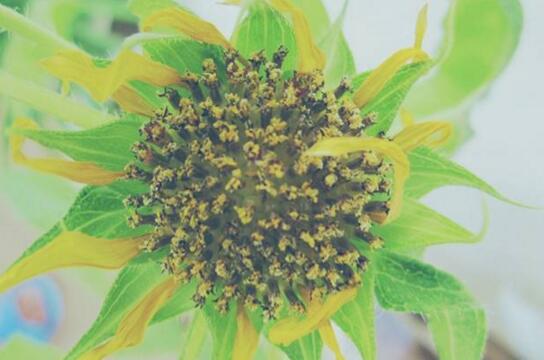
Sunflower leaf wilt falls into two cases: the first is cotyledon wilt, which is nothing to worry about, because cotyledon wilt is normal and the cotyledons will eventually be absorbed and shrivel up; if the leaves growing between the two cotyledons are growing normally, no treatment is needed. The second case is wilt of the leaves during the growth period, and that is when we need to know what to do about sunflower leaf wilt, analyzing the cause and then addressing it specifically.
1. Planting Methods Are Normal
If we are sure there is no problem with our planting methods, then leaf wilt at this point has three main possible causes: leaf blight, over-dense planting, and insufficient nutrients. Corresponding measures need to be taken for these three situations.
1. Leaf Blight
Symptoms: Round spots appear on the leaves, initially 2-4 mm in diameter, grayish-white in the center with brown edges; afterward the spots gradually expand to 5-20 mm, and brown spots appear on the petioles and stems.
Cause: Caused by pathogenic bacteria; when temperatures are high, the bacteria spread further.
Solution: What should be done about sunflower leaf wilt caused by this situation? Spray with carbendazim in the early stage, pay attention to environmental hygiene at ordinary times, clear away the wilted plants, and loosen the soil around the other sunflowers.
2. Over-Dense Planting
Symptoms: Short sunflowers show leaf wilt, while other plants with sufficient light are normal.
Cause: Over-dense planting.
Solution: If over-dense planting is causing sunflower leaf wilt, what should be done? Transplant the wilted sunflowers elsewhere. A more scientific approach is to plant one sunflower per flowerpot, avoiding several sunflowers crowded into one pot.
3. Insufficient Nutrients
Symptoms: The leaf edges wilt, old leaves begin to drop, and new leaves can grow normally.
Cause: Insufficient nutrients.
Solution: Insufficient nutrients may be caused by various factors, such as too little watering, insufficient fertilizing, inadequate light, and so on. Sunflowers should be placed in a spot with light and fairly ample water, and watered and fertilized appropriately, generally once every 5 days.
2. Leaf Wilt Caused by Improper Planting Methods
If our method of growing sunflowers is incorrect, it can also cause their leaves to wilt, so what should be done in this case? First we need to understand the cultivation methods and precautions for sunflowers; only reasonable care techniques can prevent leaf wilt.
Second, change our previous planting method, and after a period of time the sunflower will "turn the corner." However, in this process, note that yellowing leaves and wilted leaves are two different concepts, so they must be distinguished. If sunflower leaves are turning yellow, what should be done? The cause should be sought in watering, fertilizing, and light.
Summary: Sunflower leaf wilt is a headache, but no matter which situation it is, there is a solution. What we need to do is find the cause and then solve the problem, for example, if nutrients are insufficient then increase nutrients, and so on. Never give up on any sunflower easily.
Preventing and Controlling Sunflower Sclerotinia Rot
Sunflower sclerotinia rot, also called white rot and commonly known as head rot, occurs to varying degrees every year in the main sunflower-producing regions, with an incidence rate generally around 50%, and reaching over 80% in severe cases, greatly affecting both the yield and quality of sunflowers.
1. Disease Symptoms
Sunflower sclerotinia rot can occur throughout the entire growth period of the sunflower. The disease symptoms fall into the following two types.
1. Damping-off type. It can occur from the seedling stage until just before the flower head forms. In the seedling stage, the disease mainly occurs at the base of the stem, forming water-soaked lesions around the stem; in humid conditions white cottony mycelium grows out, and after drying the diseased part shrinks and becomes thinner, black sclerotia form inside the stem, and the plant dies in a damping-off manner. In the adult plant stage, the disease also mainly affects the stem base, showing light-brown water-soaked lesions that then gradually spread to the stem of the whole plant; in the later stage the lesions dry up and turn grayish-white with brown edges, and the epidermis splits. Because the vascular tissue inside the stem is destroyed, nutrient transport is affected, and the leaves begin to turn yellow, wilt, and drop progressively from the bottom upward, finally causing the entire plant to die. 2. Head rot type. This symptom is most severe after the blooming period. When the flower head is affected, water-soaked lesions appear on its back, and the receptacle turns brown and softens. In rainy weather, the lesions begin to expand rapidly and can penetrate the flower head from the black center on the back toward the front, and a kind of white mycelium grows out, causing the flower head to rot so that the seeds cannot mature; in severe cases the seed kernels rot or the rotten seeds drop off by themselves.
2. Causes of the Disease It is mainly caused by the germination and infection of sclerotia. The pathogen overwinters as sclerotia in the soil, diseased plant residues, and seeds, and can generally live in the soil for 2 to 5 years. There are two ways it infects: first, after germinating, the sclerotium produces a kind of mycelium, which directly invades once it comes into contact with the "host"; the disease in the seedling stage and adult plant stage occurs through this mode of infection. Second, the sclerotium can produce apothecia, and the ascospores are spread by wind and rain or insects into the "host"; sunflower head rot is caused by infection by ascospores. Generally, when the temperature is 20°C and the relative humidity reaches 80%, it is most suitable for the germination of sclerotia, and this is also the period when flower head disease is most severe. Especially in rainy years, the incidence rate is highest in some low-lying plots with poor drainage, poor ventilation and light transmittance, and continuous cropping or alternating cropping year after year. If July to August brings rainy weather and low temperatures, the incidence rate is also highest.
3. Control Measures
1. Pull out diseased plants. When such diseased plants are found, they must be pulled up and destroyed immediately to prevent spread.
2. Chemical control. (1) Use a 40% validamycin 800-1000 times dilution, and before the sunflower buds or during the full flowering stage, spray the lower part of the plant and the back of the flower head 1 to 2 times; (2) use a 50% thiophanate-methyl wettable powder 1000 times dilution, and spray 1 to 2 times before the sunflower buds or during the full flowering stage; (3) use a 50% procymidone 500-1000 times dilution, and spray at the seedling stage or flowering stage, with a control effect of over 80%; (4) according to the occurrence pattern of sunflower sclerotinia rot, when the temperature reaches 18°C-20°C, the water content of the topsoil at a depth of 0 cm-5 cm is above 11%, and the apothecia begin to emerge, this is the best time to apply chemicals to the ground. Per hectare, 30 kg-45 kg of 70% quintozene can be used, plus 150 kg-225 kg of moist fine soil, mixed evenly and scattered in the sunflower field; this can inhibit the germination of sclerotia and kill the newly germinated tender germ tubes, with an inhibition rate generally reaching 91.3% and a control effect of over 78.5%.
Scientific Prevention and Control of Sunflower Sclerotinia Rot
Sunflower (Latin: Helianthus annuus) belongs to the Heliantheae tribe. It is an annual herb, 1-3.5 m tall. The stem is upright, round and multi-angled, hard in texture and covered with white coarse stiff hairs. The broadly ovate leaves are usually alternate, with a sharply protruding or gradually pointed tip, 3 basal veins, and coarsely serrate edges; both surfaces are rough, hairy, and have long petioles. The capitulum is 10-30 cm in diameter, borne singly at the top of the stem or at the ends of branches.
The involucral bracts are in several layers, leaf-like, arranged in an imbricate pattern, and covered with long stiff hairs. It blooms in summer. The edge of the inflorescence bears neutral yellow ligulate flowers, which do not set seed. The center of the inflorescence bears bisexual tubular flowers, brown or purple, which can set seed. The oblong-ovate achene has a lignified pericarp, gray or black, and is called a sunflower seed.
It is native to South America. The domesticated species was brought from North America to Europe by the Spanish in 1510, initially for ornamental use. At the end of the 19th century, it was introduced back to North America from Russia. It is cultivated throughout China. Sunflower seeds are called kuihua zi (sunflower seeds), often eaten as a snack after being roasted, and they are delicious; they can also be pressed for sunflower seed oil for consumption, and the oil residue can be used as feed.
Sunflower sclerotinia rot, also called white rot and commonly known as head rot, occurs to varying degrees every year in the main sunflower-producing regions, with an incidence rate generally around 50%, and reaching over 80% in severe cases, greatly affecting both the yield and quality of sunflowers.1. Disease Symptoms
Sunflower sclerotinia rot can occur throughout the entire growth period of the sunflower. The disease symptoms fall into the following two types.
1. Damping-off type. It can occur from the seedling stage until just before the flower head forms. In the seedling stage, the disease mainly occurs at the base of the stem, forming water-soaked lesions around the stem; in humid conditions white cottony mycelium grows out, and after drying the diseased part shrinks and becomes thinner, black sclerotia form inside the stem, and the plant dies in a damping-off manner. In the adult plant stage, the disease also mainly affects the stem base, showing light-brown water-soaked lesions that then gradually spread to the stem of the whole plant; in the later stage the lesions dry up and turn grayish-white with brown edges, and the epidermis splits. Because the vascular tissue inside the stem is destroyed, nutrient transport is affected, and the leaves begin to turn yellow, wilt, and drop progressively from the bottom upward, finally causing the entire plant to die.
2. Head rot type. This symptom is most severe after the blooming period. When the flower head is affected, water-soaked lesions appear on its back, and the receptacle turns brown and softens. In rainy weather, the lesions begin to expand rapidly and can penetrate the flower head from the black center on the back toward the front, and a kind of white mycelium grows out, causing the flower head to rot so that the seeds cannot mature; in severe cases the seed kernels rot or the rotten seeds drop off by themselves.
2. Causes of the Disease It is mainly caused by the germination and infection of sclerotia. The pathogen overwinters as sclerotia in the soil, diseased plant residues, and seeds, and can generally live in the soil for 2 to 5 years. There are two ways it infects: first, after germinating, the sclerotium produces a kind of mycelium, which directly invades once it comes into contact with the "host"; the disease in the seedling stage and adult plant stage occurs through this mode of infection. Second, the sclerotium can produce apothecia, and the ascospores are spread by wind and rain or insects into the "host"; sunflower head rot is caused by infection by ascospores. Generally, when the temperature is 20°C and the relative humidity reaches 80%, it is most suitable for the germination of sclerotia, and this is also the period when flower head disease is most severe. Especially in rainy years, the incidence rate is highest in some low-lying plots with poor drainage, poor ventilation and light transmittance, and continuous cropping or alternating cropping year after year. If July to August brings rainy weather and low temperatures, the incidence rate is also highest.
3. Control Measures
1. Pull out diseased plants. When such diseased plants are found, they must be pulled up and destroyed immediately to prevent spread.
2. Chemical control. (1) Use a 40% validamycin 800-1000 times dilution, and before the sunflower buds or during the full flowering stage, spray the lower part of the plant and the back of the flower head 1 to 2 times; (2) use a 50% thiophanate-methyl wettable powder 1000 times dilution, and spray 1 to 2 times before the sunflower buds or during the full flowering stage; (3) use a 50% procymidone 500-1000 times dilution, and spray at the seedling stage or flowering stage, with a control effect of over 80%; (4) according to the occurrence pattern of sunflower sclerotinia rot, when the temperature reaches 18°C-20°C, the water content of the topsoil at a depth of 0 cm-5 cm is above 11%, and the apothecia begin to emerge, this is the best time to apply chemicals to the ground. Per hectare, 30 kg-45 kg of 70% quintozene can be used, plus 150 kg-225 kg of moist fine soil, mixed evenly and scattered in the sunflower field; this can inhibit the germination of sclerotia and kill the newly germinated tender germ tubes, with an inhibition rate generally reaching 91.3% and a control effect of over 78.5%.