-

Are stink bugs beneficial insects or pests? Uncovering the origin of the name "stink ladybug"
Stink bugs, about the size of a woman's fingernail, uniformly dark brown, are called stink bugs, fart bugs, poop bugs, or "stink ladybugs" because they release a foul odor. So are they beneficial insects or pests? According to agricultural records, stink bugs are a general term for a class of insects with abnormally variable wings, with over 30,000 species, of which more than 90% are pests. However, insects also have a beneficial side. Beneficial species include predatory stink bugs that feed on small insects and benefit agriculture, the medicinal jiuxiang bug, the edible guihua cicada, and the field giant water bug and pine algae bug that specifically prey on juvenile fish and harm the aquaculture industry. <p style="text-align: center;"><span style="line-height:1.6; text-indent:2em"></span></p> <p style="text-indent:2em;">Most stink bug species are pests. In the cotton region of the Yellow River basin, 3-5 generations occur each year, overwintering as eggs in dead branches and stubble of alfalfa, broad bean, pomegranate, apple, etc., as well as in dead cotton branches and boll shells. They hatch in early to mid-April and emerge as adults in late April. Mid-June to mid-July is the peak damage period. Adults are phototactic, lay more eggs in densely growing cotton fields, and prefer high temperatures and rain. Temperatures of 25°C-30°C and relative humidity above 80% are suitable for egg hatching and reproduction, and cotton fields near alfalfa plots, green manure fields, or with many weeds suffer the most severe damage.</p> <p style="text-indent:2em;">In the suburbs of Beijing, stink ladybugs mainly harm fruit trees such as pear, peach, and apple, with damage rates generally around 15% to 25%, and fruit damage rates as high as over 70%, turning the fruit into “monkey-head peaches” and “pear lumps” that taste bitter and lose their food value. In urban areas, stink ladybugs harm various landscaping trees and flowers such as willow, elm, mulberry, poplar, pagoda tree, eucommia, paulownia, and pomegranate. They suck the sap of flower buds, petals, leaves, tender leaves, and fruits, greatly reducing the effectiveness of landscaping and beautification.</p> <p style="text-indent:2em;">To control stink ladybugs, you can concentrate on trapping and killing them when they overwinter; in early spring, take measures such as plugging tree holes and scraping off old bark; at noon in summer, gently shake the tree trunk by hand and promptly kill the stink ladybugs after they fall to the ground; in addition, control should be carried out during the nymph stage of stink ladybugs, because during this period they can only crawl and cannot fly. At present, the use of the stink bug's natural enemy, the stink bug egg parasite wasp, for biological control of stink ladybugs at the forestry biological control center has entered the experimental stage. Field surveys show that the stink bug egg parasite wasp has a high parasitism rate on stink bug eggs, with an average parasitism rate of 47.22% on tea-winged stink bug eggs and 30.56% on pear stink bug eggs, making it a natural nemesis of stink ladybugs.</p> <p style="text-indent:2em;">The rice stink bug egg parasite wasp parasitizes rice brown stink bug eggs, singly. In a July 1957 survey of rice fields in Hangzhou, Zhejiang, up to 97.1% of rice brown stink bug eggs were parasitized by black egg wasps, of which this species accounted for 94.2% and the rice stink bug small black egg wasp for 2.9%. The sex ratio of this species was 81.54%. According to another survey in Wangcheng, Hunan, of the 67.24% parasitism rate of rice brown stink bug eggs, this species accounted for 41.75% (Zhou Renlian, 1955). Parasitized eggs appear black before emergence and light yellow after emergence. The emergence hole is on the top surface of the egg, irregularly circular, with an uneven cut edge and strip-like debris connected to the rim of the hole. Creamy egg contents remain on both sides inside the egg. Adult wasps mate immediately after emergence, and the time is extremely short, only 3-5 seconds. When laying eggs, they constantly use their antennae to explore above and to the sides of the egg, and always insert eggs from the side. Laying one egg takes about 30 seconds; after laying, they move slightly and then lay eggs on another host. When reared by introducing fresh stink bug eggs, the period from egg laying to emergence is 7 days, with an average of 22 offspring wasps. Adult wasps live 4 days, and if supplied with diluted honey solution, this can be extended to 20-22 days.</p>
-
How to Raise Ladybugs? A Full Breakdown of Feeding Methods and Key Technical Points
Ladybugs have cute spots on their wings, and because of this, they are welcomed by people all over the world. Although ladybugs are best suited to living in nature, as long as you provide them with plenty of food, water, and a livable place, you can also try
-
Are Ladybugs Beneficial or Pests? A Clear Guide to Telling Them Apart
Ladybugs are small insects with a body shape ranging from short oval to round, an arched back, and red, black or yellow spots on their backs. They generally appear on plants. So, are ladybugs beneficial or pests? Here is an introduction. 1. Are ladybugs beneficial or
-
What kinds of ladybugs are there? A guide to common ladybugs
There are as many as over 4000 species of ladybugs, of which more than 80% are carnivorous. Ladybugs that mainly prey on insects include the seven-spot ladybird, the tortoise-shell ladybird, the harlequin ladybird, and others. Ladybugs that mainly prey on leaf moths include Stethorus punctillum, Scymnus hoffmanni, Scymnus posticalis, and others. With
-
What do 18-spot ladybugs usually eat?
The 18-spot ladybug is a type of 28-spot ladybug and is different from the familiar 7-spot ladybug. It feeds on aphids and spider mites and is beneficial to crops. The 18-spot ladybug is also called the potato ladybug and the Chinese lantern ladybug. Its whole body is covered with fine yellowish-brown hairs,
-
What are the three differences between scarab beetles and ladybugs
The first time I learned about scarab beetles was because a host on "Da Feng Che" had the same name. Later I learned that scarab beetles actually belong to the class Insecta. Many people say scarab beetles are just seven-spot ladybugs? Actually they are not, they are two kinds of insects in the class Insecta, so, what are the
-
Is the seven-spot ladybug a beneficial insect, what does it eat to grow, and does it bite and is it poisonous?
The seven-spot ladybug, also known as the golden tortoise, the new bride, and the flower big sister, is one of the most common beneficial insects in autumn in our country. Because it preys on various pests such as aphids, scale insects, and mites, it is called the guardian of the garden. So what does the seven-spot ladybug eat to grow? Does it bite and is it poisonous? Is it a beneficial insect
-
Are the dragonflies, crickets, longhorn beetles, and seven-spot ladybugs commonly seen in rural areas beneficial insects or pests?
In rural areas, you will often see four kinds of insects: dragonflies, crickets, longhorn beetles, and ladybugs, but few people have really thought about one question: are they beneficial insects or pests to humans? In the entire insect ecosystem, there is actually no distinction between beneficial insects and pests. These two words are purely definitions produced from the human perspective. Generally speaking, those beneficial to humans are beneficial insects, and the opposite are pests.
-
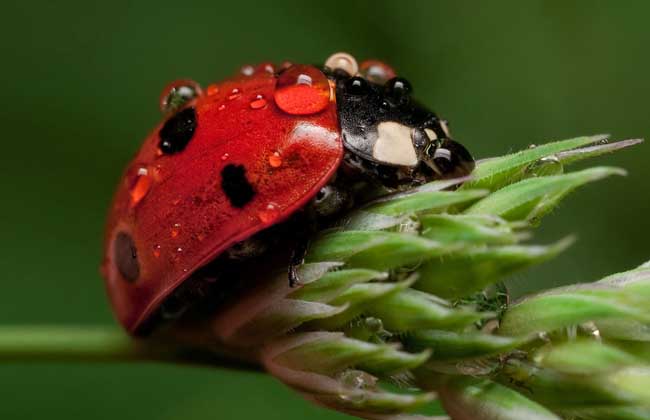
Are ladybugs beneficial insects or pests? You'll understand after reading this
Are ladybugs beneficial insects or pests?
-
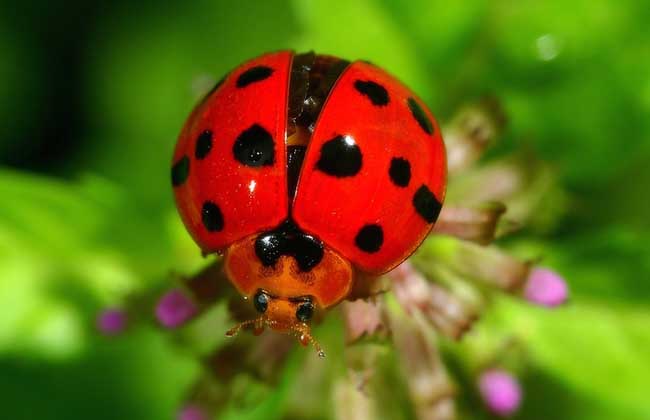
What do thirteen-spotted ladybugs eat? An introduction to their main diet
What do thirteen-spotted ladybugs eat?
条件筛选