-

What are the three differences between scarab beetles and ladybugs
The first time I learned about scarab beetles was because a host on "Da Feng Che" had the same name. Later I learned that scarab beetles actually belong to the class Insecta. Many people say scarab beetles are just seven-spot ladybugs? Actually they are not, they are two kinds of insects in the class Insecta, so, what are the
-
What pesticide can completely kill scarab beetles?
Scarab beetles can be completely killed with pesticides such as phoxim microcapsule suspension, chlorpyrifos emulsifiable concentrate, kung fu emulsifiable concentrate, baode emulsifiable concentrate, fenvalerate, and supracide emulsifiable concentrate. Generally, after they emerge from the soil, 25% phoxim microcapsule suspension or 50% phoxim emulsifiable concentrate or 40% chlorpyrifos emulsifiable concentrate can be used, with a dosage of
-
What Types of Scarab Beetles Are There? With a Complete Picture Guide
The scarab beetle is a common insect with strong adaptability and wide distribution, and it is a pest that harms apple trees, grapevines, peach trees, mulberry trees and willow trees. So what types of scarab beetles are there? How do you prevent and control scarab beetles from damaging crops? With pictures. 1. Scarab
-
What pesticide is effective for controlling scarab beetles
Despite the scarab beetle's nice-sounding name and attractive appearance, it is actually a pest. The scarab beetle is an omnivorous pest that causes a certain amount of damage to many fruit trees such as pears, grapes, apples, and others. So today we will learn about the harm caused by scarab beetles and
-
How to control scarab beetles? Poison bait trapping works well
The copper-green scarab beetle (Anomala corpulenta) has a broad diet and can feed on citrus leaves, ripe peaches, grapes, and more, causing quite serious damage. Currently there is a lack of effective pesticides. For this reason, we used the poison bait trapping method and achieved very good results. When adult scarab beetles appear in large numbers from May to July, cut ripe watermelon (inferior melons also work) into several pieces, sprinkle a small amount of 3% carbofuran granules on the surface of the flesh, then place them separately in containers such as soil baskets and bamboo baskets, and set them on the forks of citrus trees. After a few days, large numbers of scarab beetles will be poisoned to death inside the watermelon. Replace the
-
Scarab Beetle Control Methods and Key Technical Points
Scarab beetles, commonly known as "cangchong," have one generation per year and mainly damage poplars, willows and many other plants; the larvae damage the roots, while the adults feed on the leaves. According to survey statistics from our county's forestry bureau, scarab beetle damage accounts for a very large proportion of the flower and tree pest and disease problems in our county. Control methods: 1. Manual control: taking advantage of the adults' death-feigning behavior, shake the branches in the evening and capture and kill the adults that fall to the ground. 2. Physical control: taking advantage of the adults' phototaxis, hang blacklight lamps from 7-10 in the evening to trap and kill the adults. 3. Horticultural
-
What are the effective control methods for the black scarab beetle?
The black scarab beetle is known locally as "tiewoyang" (iron nest seedling). In Wuhe Township, Tengchong County, it is one of the main pests harming crops, with particularly severe damage to sugarcane and dry-raised rice seedlings. It mainly bites the stem base of sugarcane seedlings and rice seedlings, causing the entire plant to die and having a huge impact on sugarcane and rice. The insect's living habits are: during the day it burrows into the soil to rest, and in the evening and at night it comes out to be active, mostly causing clustered damage with a fierce onset, and the harm to sugarcane and dry-raised seedlings is quite serious. For control, the first method is to use irrigation water to make the scarab beetles float to the surface of the water for manual
-
How to kill scarab beetles? Five effective control methods
The larvae of scarab beetles, commonly known as chicken-manure grubs, gnaw at the roots of seedlings. Besides biting through lateral roots and the main root, they can also strip and devour the root bark completely, causing missing seedlings and broken rows, and in severe cases even disastrous damage. Adult scarab beetles feed on both leaves and flowers, and they reproduce extremely quickly, so they can easily harm seedlings. They are a common major pest in forestry. The period when adults cause rampant damage is roughly from June to October, and this is the best time for control: it both controls the damage caused by adults and keeps the next generation's population density in check, yielding twice the result with half the effort.
-

How to control powdery mildew, leaf spot, aphids and scarab beetles on cypress vine?
Although cypress vine is very tenacious and has strong adaptability to the environment, during cultivation it can sometimes become infected with pests and diseases due to neglect of management, sudden environmental changes and other reasons. Once this happens, the consequences can be unimaginable. Here, the editor will tell you a few common pest and disease control methods for cypress vine.
-
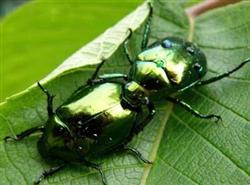
How to control scarab beetles during chrysanthemum cultivation?
How to control scarab beetles when growing chrysanthemums? Please explain the methods. Scarab beetles: They are pests. The adults bite the chrysanthemum leaves, creating net-like holes and notches, and in severe cases only the main veins remain; the damage is even worse when they gather in groups. They feed most heavily from dusk until 10 p.m. The larvae, white grubs, damage chrysanthemum seedlings and tender stems. Control methods: ...
条件筛选