-
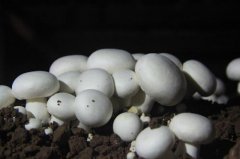
New Cultivation Techniques for Agaricus bisporus: Get to Know Agaricus bisporus - Is It an Argus Mushroom?
Do you know what kind of mushroom Agaricus bisporus is? Agaricus bisporus, commonly known as the button mushroom, is a species in the family Agaricaceae and the genus Agaricus, and is one of the most common edible mushrooms, with thick, fleshy fruit bodies. Is Agaricus bisporus an argus mushroom? No, they are two different species of fungi, only slightly similar in appearance.
-
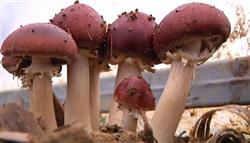
What Is Wine Cap Mushroom? Get to Know This Edible Fungus
What is the wine cap mushroom? Here is an introduction. Zhongdi Network has compiled information on the wine cap mushroom, listed below for readers' reference. The wine cap mushroom, also known as the wrinkled giant stropharia, wrinkled stropharia, or burgundy mushroom, is one of the top ten mushrooms on the international mushroom trade market, and is also one of the fungi recommended by the United Nations [Weibo] Food and Agriculture Organization (FAO)...
-
What is slime mold disease in bamboo fungus? Diseases to know when cultivating bamboo fungus
What is slime mold disease in bamboo fungus? Please provide an introduction and guidance on preventing and controlling slime mold disease in bamboo fungus: Slime mold disease in bamboo fungus mainly occurs on the exposed soil of the bamboo fungus bed surface or on the rice straw covering the bed surface, and spreads rapidly. In the bamboo fungus bed positions harmed by slime mold, the substrate becomes damp and rots, mycelial growth is inhibited or gradually dies out, and the substrate...
-
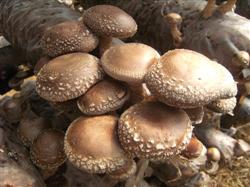
Tobacco stalks can be used to cultivate shiitake mushrooms, did you know?
Using tobacco stalks as a substrate for bag-cultivated shiitake mushrooms produces high yields, good quality, and early fruiting. Tobacco stalks have a loose structure and well-developed vascular bundles, are easy to crush, and the resulting substrate has good aeration. The specific formula is 22.5% tobacco stalks, 1% gypsum, 52% sawdust, 23% bran, and 1% brown sugar. The moisture content of the nutrient substrate is 50%-60%. Other management...
-

What is the story behind "ground bud mushrooms," also known as "soil-topping mushrooms"?
Symptoms: They mainly appear at the early fruiting stage. The fruiting bodies are attached at a low position, usually inside the compost, on the surface of the compost, or in the lower part of the coarse soil layer, and after growing they break through the soil and push up through the mud. Causes: 1. Soil is mixed into the compost, or the casing layer is unevenly dry and wet. When the temperature, humidity, and air conditions inside the compost are suitable for fruiting body growth, the mycelium twists around the soil, thickens, and forms primordia. After the primordia differentiate, they grow upward and push up through the mud. If upward conditions are unsuitable, they will even turn around and grow downward under the bed, forming bottom-of-bed mushrooms. 2. If the coarse soil is watered over too long a period, and after watering the mushroom house is ventilated too much and the temperature in the mushroom house drops, mycelial growth into the coarse soil is inhibited and fruiting is promoted too early. If the fine soil is applied too late or too thickly, if watering is not timely, if watering is too fast or too urgent, or if ventilation lasts too long after watering, the soil layer lacks sufficient moisture and the mycelium does not climb onto the fine soil for a long time, all of which lower the fruiting position. 3. If water is sprayed too early or too urgently at the fruiting stage, or if the amount of water sprayed is too large, upward growth of the mycelium in the soil layer is inhibited, forcing the mycelium to twist together among the coarse soil particles, thereby lowering the fruiting position, causing sparse fruiting and abnormal fruiting positions, and increasing the number of ground bud mushrooms.
-
What are the fan fern and the tuberous sword fern? Get to know these two ferns
Scientific name: Nephrolepis auriculata. Common name: tuberous sword fern. Family and genus: Polypodiaceae, genus Neocheiropteris. Plant category: medium-sized terrestrial fern. Morphological features: plant height 60 cm. Rhizome thick and creeping horizontally, densely covered with scales, dark brown. Fronds distant, nearly papery, sparsely covered with small brown scales beneath. Stipe 30-45 cm long. Blade 25-30 cm long, fan-shaped. Veins reticulate, areoles dense with included branched veinlets. Spores
-
What are the mushroom food products? These 5 are worth knowing about
1. Oil-preserved mushrooms. 10 kg fresh mushrooms, 3 kg to 5 kg vegetable oil, 400 g refined salt. Heat the oil in a pot until it is 80% hot, put the washed and drained fresh mushrooms into the pot and stir-fry thoroughly, add salt, and stir-fry over low heat for 10 minutes. While hot, pour the oil and mushrooms into a container. After cooling, pack them into bottles, seal, and store in a cool place. Oil-preserved mushrooms can be stored for 1 year. When eaten, the cooking method is the same as for fresh mushrooms. 2. Sweet and sour mushrooms. 100 kg fresh mushrooms, 10 kg refined salt. Spread them layer by layer, one layer of mushrooms and one layer of salt, to pickle them in
-
What Is the Wine Cap Mushroom? Getting to Know This New Mushroom Variety
The wine cap mushroom, also known as the wine-red stropharia, has brightly colored fruiting bodies, tender and smooth flesh, a crisp and refreshing stem, rich nutrition, and excellent taste; dried mushrooms have a strong aroma comparable to flower shiitake. It is a rare edible fungus with great market development potential, and it is also one of the new mushroom varieties recommended by the Food and Agriculture Organization of the United Nations to developing countries. It is suitable for cultivation in areas such as western Guangdong and northern Guangdong in our province.
-
How can you tell good straw mushroom spawn from bad? You need to know these few methods
Before cultivating straw mushrooms, the quality of the spawn must be assessed, and high-quality spawn should be selected whenever possible. The appearance of high-quality spawn is: thick and sturdy hyphae, uniform development of the upper and lower hyphae, and aerial hyphae that are white or semi-transparent. The specific identification methods are: 1. For spawn used for cultivation, the spawn age is around 30 days, the hyphae are thick, sturdy and dense white, there are light brown chlamydospores on the hyphae, and after removing the cotton plug, the aroma of straw mushrooms can be smelled. This kind of spawn is high-quality spawn; after sowing, it colonises the substrate quickly and grows vigorously. If there are very few chlamydospores, it means the hyphae are still young and tender, and it can be left to continue growing
-

What Is Matsutake? Get to Know This Edible Mushroom
Matsutake is a delicacy from the mountains. The first ingredient featured in the documentary series "A Bite of China" was matsutake. Matsutake is a delicious mushroom known as a "treasure bestowed by nature." It...
条件筛选