New Cultivation Techniques for Agaricus bisporus: Get to Know Agaricus bisporus - Is It an Argus Mushroom?
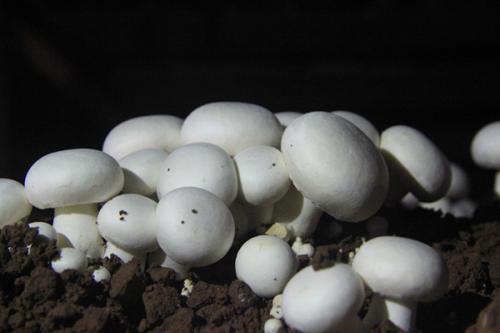
Do you know what kind of mushroom Agaricus bisporus is? Agaricus bisporus, commonly known as the button mushroom, is a species in the family Agaricaceae and the genus Agaricus, and is one of the most common edible mushrooms, with thick, fleshy fruit bodies. Is Agaricus bisporus an argus mushroom? No, they are two different species of fungi, only slightly similar in appearance. What are the new cultivation techniques for Agaricus bisporus?
1. Cultivation season. The fruiting temperature range for Agaricus bisporus is 10°C--28°C. It can be cultivated in spring and autumn, but autumn is better. In the Central Plains region, planting from the end of August to early October is best.
2. Material preparation. Cut corn stalks (including newly harvested corn stalks or corn stalks from the previous year that have not molded) into small sections about 30 cm long, and stack them for fermentation. The formula is: 500 kg corn stalks, 100 kg dry chicken manure, 25 kg cottonseed cake, 2.5 kg urea, 15 kg phosphate fertilizer, 12.5 kg lime.
3. Building the stack for fermentation. Soak the cut corn stalks with 2% lime water, mix well and ferment for 2 days, until the stack temperature reaches 60°C. Then build the stack with the soaked material at a width of 2 m, a height of 1.8 m, and unlimited length. First spread a 20 cm thick layer of corn stalks, then scatter a 3 cm--5 cm thick layer of chicken manure, water once, then spread a layer of material, scatter a layer of manure, and water once. Be careful to spread the manure evenly and water thoroughly. After the stack is built, cover it with plastic film to keep it warm and moist. Be careful not to cover the plastic film too tightly, so as to avoid anaerobic fermentation. Ferment by conventional methods for about 25 days,
4. Inoculation. Evenly spread the well-fermented material on a pre-prepared bed or bed 80 cm wide and of unlimited length, with a thickness of 20 cm--25 cm, press flat, and use bamboo strips to make holes for inoculation at 5 cm intervals. The amount of spawn used is 1 bottle/sq m--1.5 bottles/sq m. After inoculation, cover with plastic film to keep warm and moist and promote mycelial germination. After the mycelium germinates, uncover the film every day to increase oxygen and promote mycelial growth. After about 7 days, the plastic film can be propped up, or the plastic film can be removed and replaced with woven bags covering the surface of the material, which both keeps moisture and allows ventilation, creating suitable conditions for rapid mycelial growth.
5. Casing soil and fruiting. Carry out casing soil by conventional methods. First disinfect the fine soil prepared for casing. Adjust the moisture of the disinfected soil (it should form a ball when squeezed in the hand and break apart when released). When the mycelium grows to 1/4 of the material thickness, apply the first layer of soil about 2 cm thick. When the mycelium grows to 2/3 of the material thickness, apply the second layer of soil about 1.5 cm thick. After casing, be careful to maintain soil moisture.
6. Management. The key points of autumn mushroom management are cooling and moisturizing in the early stage, and warming and moisturizing in the later stage. After the mycelium has fully grown, increase the day-night temperature difference, but also pay attention to maintaining surface humidity to promote mycelial knotting. After 10 days--15 days of management, the first flush of mushrooms can appear. After the second flush of mushrooms appears, spray “Zhuanggu Ling” together with watering to increase fresh mushroom yield. The key points of spring mushroom management are ensuring moisture, resisting high temperatures, and preventing and controlling pests and diseases. After overwintering, both the compost and casing soil are short of water, so spray 0.5% lime water using a light and frequent spraying method to restore mycelial growth and promote rapid fruiting.