-

Key technical points for autumn and winter management of mulberry trees, tea trees and fruit trees
I. Winter management of mulberry fields Doing a good job of winter management of mulberry fields lays a solid foundation for the growth of mulberry trees in the coming year and is also an important measure for increasing the yield and quality of mulberry fields. 1. Clearing the field: After the mulberry leaves fall, collect all the residual leaves and weeds in the mulberry field to make compost or burn them, so as to eliminate pathogenic bacteria and overwintering pests hidden in the mulberry leaves and weeds. 2. Bundling: Before winter plowing, use rice straw to bundle the mulberry branches together, which not only facilitates winter plowing and fertilization, but also lures pests to hide in the bundled straw to overwinter, making it easier to capture and kill them. 3. Winter plowing: Control the plowing depth at
-
Key Points for Initial Management of Tea Seedlings After Winter Planting
In our province, tea seedlings are mostly planted from November to February of the following year, but this year rainfall has been low since the start of autumn, making a continuous drought through autumn, winter and spring highly likely, so attention must be paid to managing newly planted tea seedlings. 1. Drought relief and seedling protection: During the initial period after planting (within one month), keep the nearby soil moist. Because the weather has recently been rather dry, water once a day, and make sure to water thoroughly each time. Since midday temperatures are currently high, do not water at noon; water in the afternoon or evening each day instead.
-
Technique of Intercropping Small Shrubs in Southern Magnolia Fields
In the first 3 years of southern magnolia seedling growth, to offset the drawbacks of large investment and no profitable output from planting trees in open fields in the early stage, small shrubs such as Japanese boxwood, golden-leaf privet, and red-leaf barberry can be intercropped. During the first 3 years of intercropping small seedlings, at 6000-7000 plants per mu, averaging 0.5 yuan per plant, more than 3000 yuan in returns can be obtained. After the 4th year, the southern magnolia has grown to 5-6 cm, and at this point they can be sold selectively, at about 80 yuan per plant. From then on, selling each year yields returns. Cultivation points: when planting 1-year-old southern magnolia seedlings, plant spacing 1.2-
-
Key Technical Points for Interplanting Small Shrubs in Southern Magnolia Fields
In the first 3 years of southern magnolia (Magnolia grandiflora) seedling growth, to offset the drawbacks of large initial investment and no profitable output from field-planted trees in the early stage, small shrubs such as Japanese boxwood (Buxus microphylla), golden privet (Ligustrum sinense 'Variegatum'), and red-leaf barberry (Berberis thunbergii) can be interplanted. During the first 3 years of interplanting small seedlings, at 6000-7000 plants per mu, averaging 0.5 yuan per plant, a return of over 3000 yuan can be obtained. After the 4th year, the southern magnolia has grown to 5-6 cm, and can then be sold selectively at about 80 yuan per plant. From then on, annual sales all generate income. Cultivation points: when planting 1-year-old southern magnolia seedlings, plant spacing 1.
-
How should garlic scapes be stored in winter to keep them fresh longer?
Temperature management of the storage room. Garlic is a plant with relatively strong cold resistance, and garlic scapes, being the flower stalks of garlic, still have relatively strong physiological cold resistance. When the storage ambient temperature reaches their freezing point, the preservation effect is best. The freezing point temperature of garlic scapes is -0.8 to -1°C (varying with solids content). When the scape temperature is above -0.8°C, tissue freezing will not occur, so it is safe. Based on diverse practical experience, the recommended cold storage index for garlic scape room temperature is -1 to 0°C. Within this range, lower the upper
-
Common problems and solutions in wheat-intercropped Three-Cherry pepper cultivation
With the adjustment of the agricultural structure, Three-Cherry pepper began to be planted in Neihuang County in 1993, and by 2004 it had grown to 4300 hectares, with the most concentrated area being Lucun Township, where the planting area is about 2900 hectares, and a trading market covering 6.5 hectares, with an annual trading volume of 87 million t and an annual trading value of 29.58 million yuan, was established, achieving good economic and social benefits, but many problems still exist, restricting farmers' economic returns. 1 Problems existing in production
-
What are the key points of winter management techniques for Sichuan pepper?
The first is "pruning", which means shaping and pruning. Winter is a great season for pruning Sichuan pepper. When pruning, the "seven branches" must be cut off, namely: water sprouts, dead branches, diseased and pest-infested branches, overly dense branches, crossing branches, overlapping branches, and weak slender branches. Then the cut branches should be gathered and burned, which can eliminate pests and pathogens overwintering on the branches and trunks. Through shaping and pruning the Sichuan pepper tree, the tree vigor can be regulated, the lifespan of the Sichuan pepper tree can be extended, and the yield and quality of Sichuan pepper can be improved. The second is "scraping", which means scraping off rough bark. Many insect eggs overwinter in the cracks of the rough bark of the pepper tree,
-
Detailed Explanation of Key Technical Points for Winter Rearing of Broodstock
Broodstock rearing is divided into stages including post-spawning care, autumn rearing, winter rearing and spring rearing. Because winter temperatures are low, broodstock activity decreases, feeding capacity is weaker and fish diseases occur easily; if management is poor, it greatly affects the next year's production links such as artificial incubation, fry and fingerling production and grow-out fish farming. The key technical points for doing a good job of winter broodstock rearing are: 1. Pond selection. Broodstock ponds require an adequate water source, a flat pond bottom, shelter from wind and exposure to sun, and good water and heat retention, with an area of 10-15 mu being suitable. 2
-
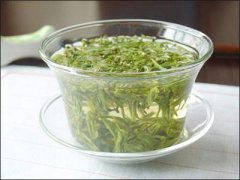
Is Green Tea's Anti-Cancer Effect Real? Interpreting the Latest Research Findings
New Findings on Green Tea's Anti-Cancer Mechanism, Did You Know? Do you drink tea? Do you know whether green tea can really fight cancer? Let's find out together. Professor Thomas A. Gasiewicz and colleagues at the University of Rochester Medical Center found that green tea can fight cancer by affecting cancer-related proteins.
-
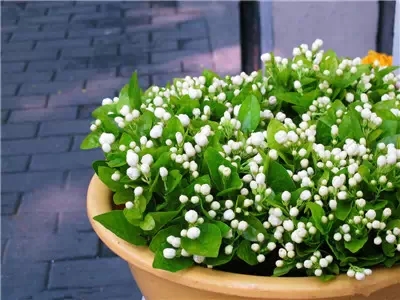
Jasmine Winter Care Methods and Precautions
Winter is just around the corner, and gardening friends who love growing jasmine have begun discussing winter care methods for jasmine. Below, the editor briefly introduces the winter care methods for jasmine. 1. In winter, as long as jasmine shows stopped growth, it is dormant, regardless of whether it drops leaves or not.
条件筛选