-
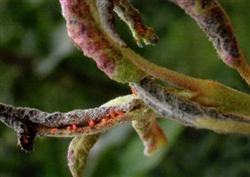
What are the methods for winter pest and disease control on pear trees?
What winter pests and diseases affect pear trees? What methods are there for winter pest and disease control on pear trees? Experienced gardeners, please share your advice. The main winter pests and diseases of pear trees include the pear curculio, pear fruit sawfly, pear gall midge, pear scab, pear black spot, red and yellow spider mites, and scale insects. Based on the above pests and diseases, Zhongdi Network has compiled control...
-
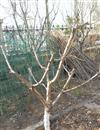
Video Introduction to Winter Pear Tree Pruning Techniques
What are the winter pear tree pruning techniques? How are pear trees pruned in winter? Experienced gardeners are invited to share their advice. Winter pruning of pear trees is carried out after the leaves fall and before bud break. Its main purposes are to develop the tree shape, adjust the canopy structure, develop fruiting branch groups, adjust the number of flower buds, and regulate...
-
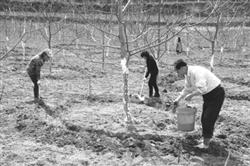
What are the key technical points for managing walnut trees in autumn and winter?
How should walnut trees be managed well in autumn and winter? Please give guidance. Autumn and winter management of walnut trees mainly includes soil, fertilizer and water management, as well as pruning and freeze protection. For detailed operations, you can refer to the following methods: Soil, fertilizer and water management for walnut trees in autumn and winter: For non-bearing trees, after leaf fall and before the soil freezes, deep-till the soil and build tree basins, generally to a depth of 20-25 cm. The base fertilizer should mainly be decomposed organic fertilizer, with an application rate of 25-50 kg per tree, and 2-5 kg of superphosphate can also be added. When fertilizing, the ring trench method can be used, that is, dig a ring-shaped trench 20-40 cm wide and about 30 cm deep around the outer edge of the canopy, placing topsoil and subsoil separately. After digging, put the fertilizer in, then fill in topsoil and mix evenly, and finally fill in an appropriate amount of subsoil to level with the original ground surface.
-
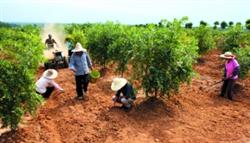
Pest Control Tips and Management Methods for Jujube Trees in Autumn and Winter
How to control pests on jujube trees in autumn and winter? Please provide methods. Pest control on jujube trees in autumn and winter can be carried out with reference to the following methods: 1. Deep plowing of the soil. After the jujube fruit is harvested, promptly deep-plow the soil beneath the trees, generally to a depth of 10-50 cm. This measure can reduce the damage caused by more than 20 species of pests, including the jujube slug moth, jujube gall midge, red spider mite, and peach fruit borer...
-
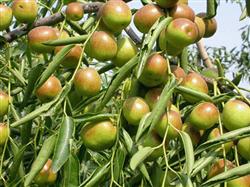
How should winter jujube trees be managed in the early stage?
How to manage winter jujube before harvest? Please give guidance. For the management of winter jujube before harvest, you can refer to the following methods: 1. Loosen the soil and preserve moisture: promptly hoe and loosen the soil, spray 800-fold diluted Xin Gao Zhi Mo solution, so that the soil in the jujube orchard maintains suitable moisture, preventing fruit cracking and improving the yield and quality of winter jujube in the later stage. 2. Prevent damage from wind and rain: winter...
-
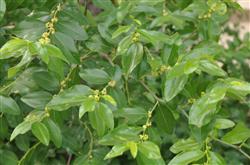
Reasons Why Winter Jujube Bears No Fruit and Management Measures
Why does the winter jujube bear no fruit? Please explain the reasons and solutions. The main factors for the winter jujube bearing no fruit are the following 3 causes: 1. Too little fertilizer applied the previous year, especially insufficient application of organic fertilizer. Because the bud stage of the winter jujube tree is also the period of rapid growth of the fruiting branches, and when it enters the initial flowering stage the jujube heads grow very vigorously, during a period when several organs of the winter jujube tree are simultaneously in a vigorous stage of growth activity, the phenomenon of competing for nutrients will occur...
-
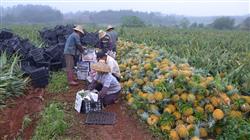
Pineapple Cultivation: What Fertilizer Is Best After Harvesting the Winter Fruit?
What fertilizer is best after harvesting the winter fruit of pineapple? What is the reason for fertilizing? Please give an introduction. During the swelling and ripening period, the pineapple winter fruit consumes a large amount of potassium fertilizer. After the winter fruit is harvested, the potassium content in the plant is at a very low level, which affects the plant's recovery and the flowering and fruiting in spring and summer. After harvesting the winter fruit, a potassium fertilizer must be applied to the roots in a timely manner...
-
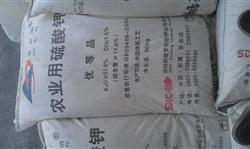
How to manage pineapple in winter? A full analysis of key planting points
How to manage pineapple in winter? Please explain the methods. After pineapple enters winter, it needs supplementary nutrients. The following describes the fertilization method for pineapple after it enters winter (for reference): After winter begins, apply a heavy potassium fertilizer to pineapple once, applying 100-150 kg of potassium chloride or potassium sulfate per mu. After thoroughly clearing the weeds between the pineapple plants, shallow-cultivate the...
-
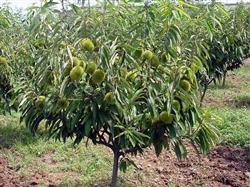
How to prune chestnut trees in winter? Detailed pruning methods
How do you prune chestnut trees in winter? How should chestnut trees be pruned in winter? What methods are best for pruning? Please explain the methods. When growing chestnut trees, pruning is needed in winter. The best pruning time for chestnut trees is from half a month after leaf fall to half a month before spring bud break. For detailed methods, refer to the following list: Chestnut...
-
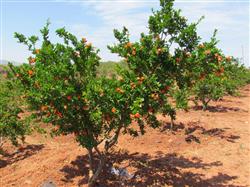
How do you winter-prune a pomegranate tree when planting? Detailed explanation of winter pruning methods
How do you winter-prune an ordinary pomegranate? Is there a reader who can introduce the method to me? To ensure the yield for the coming year, pomegranate trees must undergo winter pruning when winter arrives; the method can follow the operations below. 1. Train the pomegranate tree shape: because the pomegranate's trunk is not obvious, when planting in a courtyard, to prevent harm from livestock and poultry...
条件筛选