-

How to increase yield and ensure quality in off-season greenhouse cultivation of bitter melon
Bitter melon flower Introduction: Bitter melon is a vegetable with a bitter taste but extremely high nutritional value, and it holds a unique position in the vegetable market. As growers, what we focus on...
-
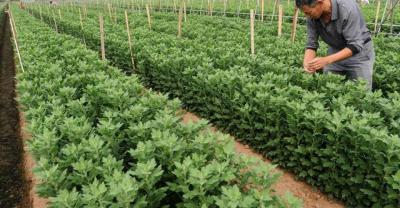
How to Grow Perilla to Increase Yield
How to Grow Perilla to Increase Yield: Perilla, also known as red perilla, black perilla, red perilla, wrinkled perilla, etc. Perilla is the tender leafy shoot of the plant Perilla in the Lamiaceae family, Perilla genus...
-

Villagers in Gongzi Village spray pesticide and apply fertilizer to rice to help increase yields
Villagers near Gongzi Village in Xishan Town, Congjiang County, Guizhou Province, spray rice with pest-control chemicals. It is currently the summer management season, and farmers across Congjiang County, Guizhou Province...
-
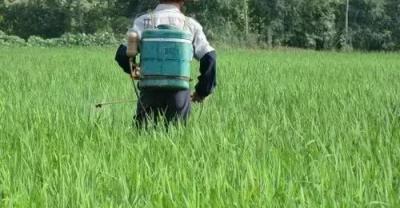
Farmers spray pesticides to increase yields, so washing off pesticide residue is up to you
As the saying goes, "food is the first necessity of the people." With the development of agriculture, pesticides are widely used; without spraying pesticides, pests and diseases cannot be controlled, while the various...
-

New zinc concept for agriculture helps increase yield and income, enviable
New zinc agriculture concept boosts yield and income, enviable
-

New technology to boost photosynthetic efficiency could increase yields
New technology can improve photosynthetic efficiency and increase yields
-

-
Analysis of Cotton Production Misconceptions and Ways to Increase Yield Through Plant Protection (Part 5)
For more than a decade, with the widespread promotion of genetically modified insect-resistant cotton, cotton bollworm is no longer enough to make cotton farmers turn pale at the mention of pests. However, Fusarium wilt and Verticillium wilt have always been the "tightening band" giving cotton farmers headaches, aphids and red spider mites "stir up trouble" every year, cotton stink bugs and tobacco whiteflies have become increasingly rampant in recent years, and together with cotton bollworm suddenly breaking out in certain years, pesticide control of cotton is still an unavoidable matter. At the same time, there are also the following two serious problems in pest and disease control, which directly lead to
-
Mushrooms can achieve increased yields with traditional fertilization methods
Applying mushroom soup. Collect and wash the mushroom bases and broken mushrooms cut off during harvesting and processing, cut them into thin slices, add 1-1.5 kg of water per kg and boil for 15 minutes, take the filtrate and dilute it with water to 10-15 kg, and spray it on 30-40 sq m of mushroom beds. Applying it at the peak of fruiting can make the fruiting bodies thick and fleshy and extend the peak fruiting period. Spraying plant ash. Soak 25 kg of plant ash in 50 kg of water, filter it, and spray it to prevent mushrooms from turning red. Spraying chemical fertilizer solution. Take 0.1%-0.2% urea solution, every
-
Mushrooms can achieve increased yield with traditional fertilization methods
To achieve high mushroom yields, appropriate supplementary fertilization is essential. Based on years of practical experience by mushroom growers in many places, the following nine traditional fertilization methods have proven to have excellent yield-increasing effects. Mushroom growers are encouraged to try them in practice. Applying mushroom soup. Collect mushroom stems and broken mushrooms left over from harvesting and processing, wash them clean, cut them into thin slices, add 1--1.5 kg of water per kg of material, boil for 15 minutes, take the filtrate and dilute with water to 10--15 kg, and spray on mushroom beds of 30--40 sq m. Use during the peak fruiting period,
条件筛选