-
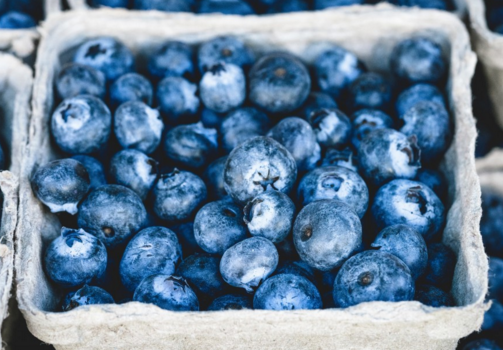
Blueberry Planting Precautions and Methods to Increase Yield
Blueberry is a shrub fruit with high nutritional value, pure flavor and large market demand, so what are the precautions for blueberry planting? How to increase blueberry yield? Precautions for blueberry planting, 1. Site selection For blueberry planting, it is advisable to choose the middle and lower parts of east-facing and south-facing slopes, with a slope of less than 30
-

How to increase yield and ensure quality in off-season greenhouse cultivation of bitter melon
Bitter melon flower Introduction: Bitter melon is a vegetable with a bitter taste but extremely high nutritional value, and it holds a unique position in the vegetable market. As growers, what we focus on...
-
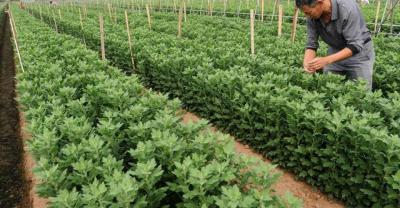
How to Grow Perilla to Increase Yield
How to Grow Perilla to Increase Yield: Perilla, also known as red perilla, black perilla, red perilla, wrinkled perilla, etc. Perilla is the tender leafy shoot of the plant Perilla in the Lamiaceae family, Perilla genus...
-

Analysis of Cotton Production Misconceptions and Ways to Increase Yield Through Plant Protection (Part 5)
For more than a decade, with the widespread promotion of genetically modified insect-resistant cotton, cotton bollworm is no longer enough to make cotton farmers turn pale at the mention of pests. However, Fusarium wilt and Verticillium wilt have always been the "tightening band" giving cotton farmers headaches, aphids and red spider mites "stir up trouble" every year, cotton stink bugs and tobacco whiteflies have become increasingly rampant in recent years, and together with cotton bollworm suddenly breaking out in certain years, pesticide control of cotton is still an unavoidable matter. At the same time, there are also the following two serious problems in pest and disease control, which directly lead to
-
10 Key Measures to Increase Soybean Yield
1. Thinning: On the basis of full stands of soybeans, thin the seedlings when the two opposite simple leaves unfold, generally increasing yield by 10-20%. 2. Pressing seedlings: When the first compound leaf of some soybean seedlings unfolds, choose a sunny midday and use animal power or a machine-drawn wooden roller to press along the ridges, which can increase yield by 8.5-10%. 3. Pinching: At the early flowering or full flowering stage of soybeans, remove about 2 cm from the top of the main stem by hand, which can increase yield by 7.2%-10.8%. 4. Applying rare earth: Mix 2 kg of rare earth per 1 kg of soybean seed for seed dressing, or spray once each with rare earth solutions at concentrations of 0.03-0.04% and 0.08 during the soybean seedling stage and early flowering stage, which can increase yield by 15-20%.
-
Nano magnetic energy liquid can be used to increase soybean yield and promote early maturity
This spring, due to large temperature fluctuations, the effect of pre-emergence closed weeding in soybeans was poor, fields were overgrown with weeds and seedlings were small, the area affected by herbicide damage was large, soybean growth was hindered, root development was poor, stunted seedlings in the field were severe, and the growth process was delayed by an average of 7-10 days. 1. Main manifestations 1. New leaves grow slowly, the lower leaves turn yellow and withered, the root system shows rusty roots and reddening, and at this stage root rot also occurred over a large area; 2. Field plots with normal growth accounted for only about 20% of the total area; 3. Individual plants had fewer branches, reduced by more than 20-30%.
-
Three methods to increase soybean yield, simple and practical
Thinning: After soybean seedlings emerge, thinning early on the basis of a full stand is a proven yield-increasing measure. Its effect depends mainly on how early thinning is done; generally it should be carried out promptly when the two opposite unifoliate leaves have unfolded. Seedling pressing: When the first compound leaf of the soybean seedling has unfolded, choose a sunny noon and press the seedlings along the rows with a wooden roller drawn by animal power or machinery. When pressing, be careful to avoid cloudy days or sunny mornings, so as not to break the seedlings. Pinching: At the early flowering or full flowering stage of soybean, remove about 2 cm from the top of the main stem by hand.
-
Ten Ways to Increase Soybean Yield, Teaching You to Easily Boost Production
1. Checking seedlings and reseeding When soil moisture is sufficient and time still allows, soak seeds of the original variety for 2-3 hours before reseeding; if soil moisture is sufficient but the farming season is already late, you can germinate seeds before reseeding or use early-maturing varieties for reseeding; if the reseeding time cannot be met, you can as early as possible on a cloudy day or a sunny afternoon take seedlings with no less than one compound leaf and transplant them with soil, watering immediately after planting to help them survive. 2. Pinching the growing tip and removing leaves For soybeans showing a tendency toward excessive vegetative growth or late maturation with prolonged greening, you can pinch off about 2 cm from the top of the main stem at the early flowering stage or full flowering stage. Or use a sharp iron strip about 33 cm long
-
Why soybean root cutting and pinching can increase yield
1. High-yield cultivation method for soybean by root cutting and pinching: Direct sow soybeans with a row spacing of 50 cm. On the 8th to 9th day after sowing, carry out pinching; on the 10th to 11th day, carry out root cutting. When cutting roots, use a thin iron shovel to cut the main root at a depth of about 5 cm below the soybean seedling. Insert the shovel at an angle and pull it out from the same position to avoid displacing the soybean seedling and damaging the lateral roots. The root cutting position should be controlled at about 2.5 cm below the soybean seedling stem. Too deep or too shallow will fail to achieve the expected purpose and may even cause seedling death. 2. Several issues to note 1. Density: Soybean density should be determined according to the variety and cultivation conditions,
-
Scientific use of chemical control technology in cotton can effectively increase yield
Scientific chemical control of cotton is an important scientific measure for increasing cotton yield. Chemical regulation technology has three benefits: first, it helps strong seedlings to develop early, controls height and stabilizes growth, making it easier to give play to the yield-increasing advantage; second, it simplifies cotton field management, saving labor and cost; third, it promotes the transformation of second- and third-grade cotton seedlings, achieving balanced development and increasing yield and efficiency. The principle of chemical control is "small amounts, many times; light control, frequent adjustment." One should master "spray every time, control every time" or "control once at every interval" (flexibly according to soil fertility, rainfall, and growth condition), and it is best to "divide the amount for one application into three applications," ensuring the plant grows steadily and robustly "strong but not excessive" from beginning to end. If chemical control is done poorly, it can cause excessive growth or stiff seedlings that do not develop, affecting the normal growth of cotton. Therefore, in the process of implementing chemical control, the dosage of the chemical control agent must be strictly controlled.
条件筛选