How to increase yield and ensure quality in off-season greenhouse cultivation of bitter melon
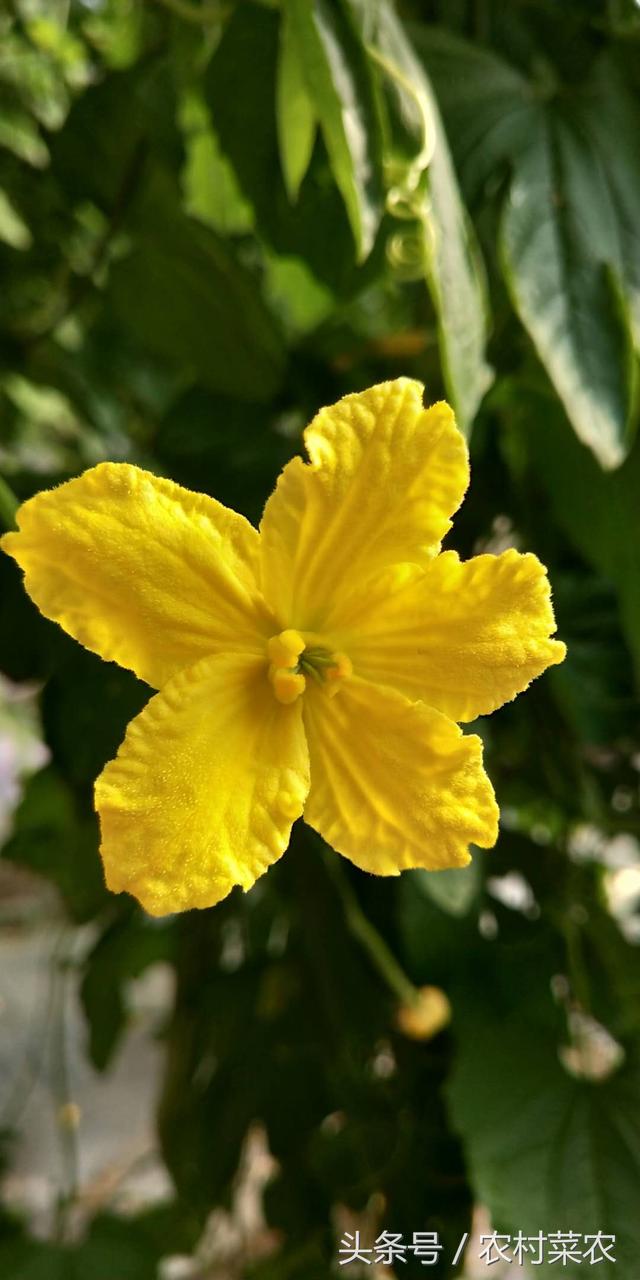
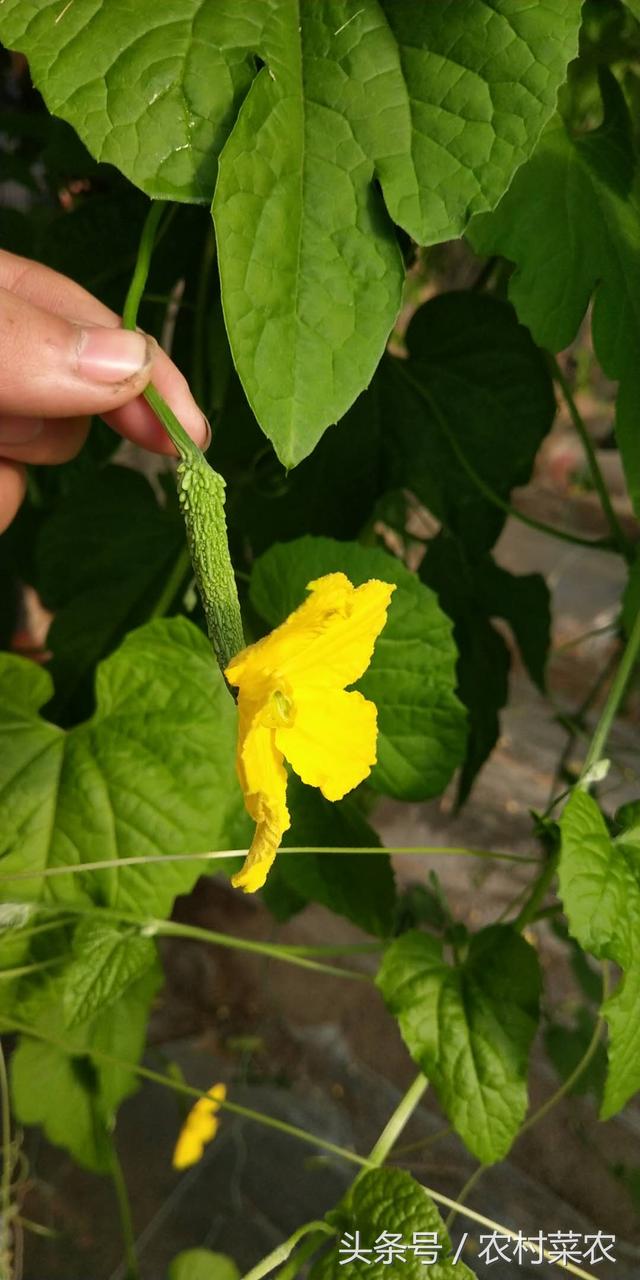
Bitter melon flower
Introduction: Bitter melon is a vegetable with a bitter taste but extremely high nutritional value, and it holds a unique position in the vegetable market. What growers usually focus on is the yield and quality of vegetables, how to work for the greatest returns at the lowest cost, and how to work for the greatest yield in the smallest space. Every method and every technique of vegetable cultivation is the fruit of vegetable growers' painstaking thought and wisdom. Today I will introduce a few small tips for growing bitter melon.
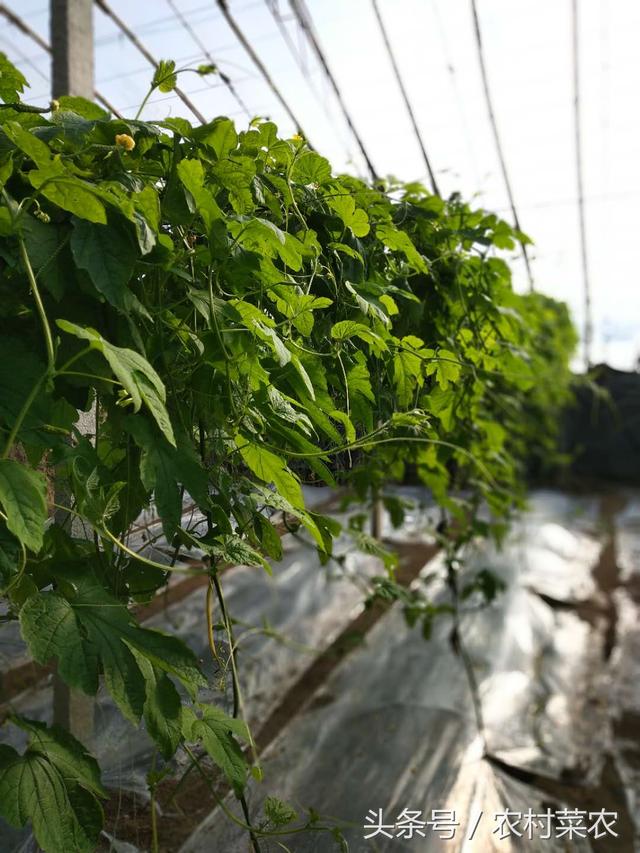
2018.2.9
I. How to increase yield?
The amount of yield is the amount of income. For most vegetable growers, this is a question very much worth thinking about. Yield comes down to just a few aspects: variety, vines, the ratio of female to male flowers, timely picking rate, and pests and diseases. Next we will analyze these aspects one by one.
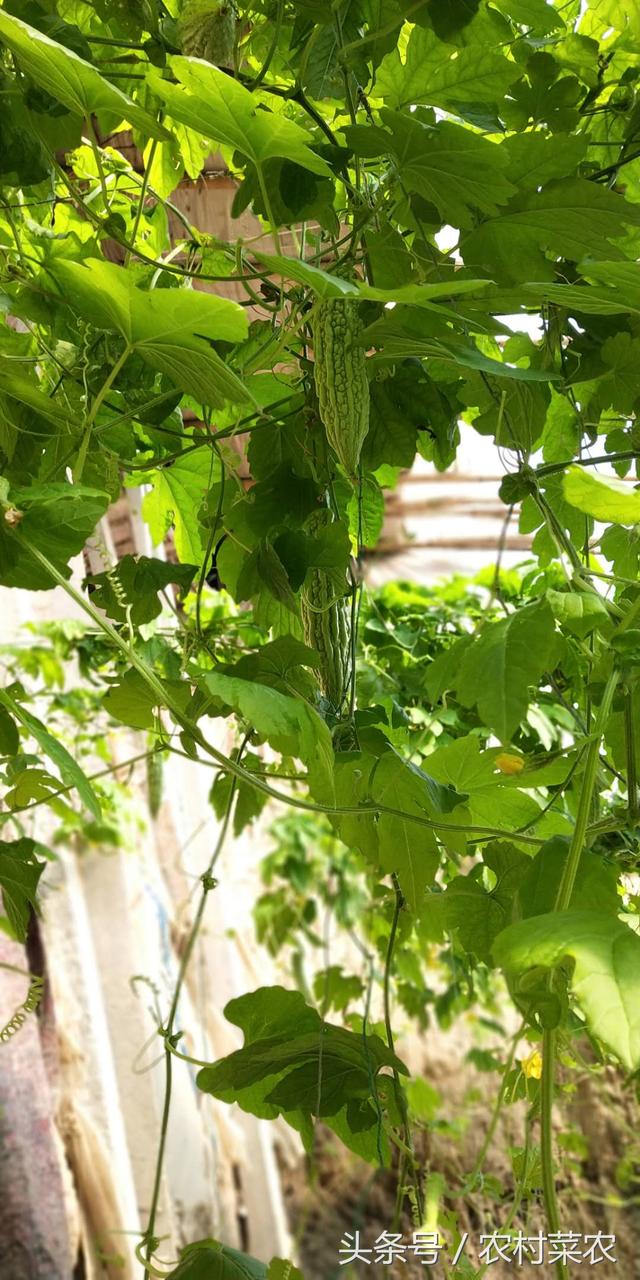
2018.2.9
1. Variety
There are a great many varieties of bitter melon, suitable for winter, suitable for summer, a huge assortment. Today I will focus on introducing a few bitter melon varieties that I think are viable. Lvzhuangyuan (Green Champion) - first, the recent market conditions for Lvzhuangyuan.
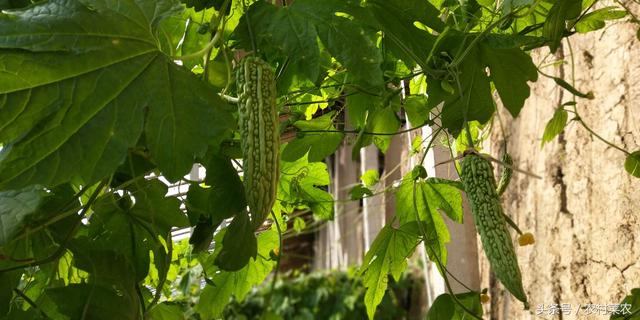
2018.2.9
Market conditions, location Weifang City, Shouguang City, market analysis: the weather is clear, temperatures are rising, Lvzhuangyuan is coming onto the market in large quantities, supply is increasing, and the supply is concentrated from greenhouse cultivation, mainly spot goods. The real peak market period has not yet arrived, buyer enthusiasm is average, movement of goods is steady, and the price of common grade goods remains at 4.50 to 4.70 yuan/jin.
2018.2.9
Variety characteristics: strong fruit-setting ability, good commercial quality, good disease resistance, fruit length about 35-42 cm, single fruit weight about 550-650 g, vigorous plant growth, suitable for greenhouse cultivation.
Second, Lvjian (Green Arrow). The variety is a hybrid first generation, an excellent distinct plant selected from multiple hybrid individuals. It is an early-maturing, high-yielding variety with strong branching. Fruit length is about 30-38 cm, transverse diameter 5-7 cm; generally it is picked before reaching 7 cm. Single fruit weight is 400-550 g, and the skin color is green and glossy, which is its main advantage. This kind of bitter melon variety has good commercial quality.
For now I will introduce just these two varieties. If you are not familiar with them, I suggest you look them up online, or you can exchange views in the comments below.
2. Vines
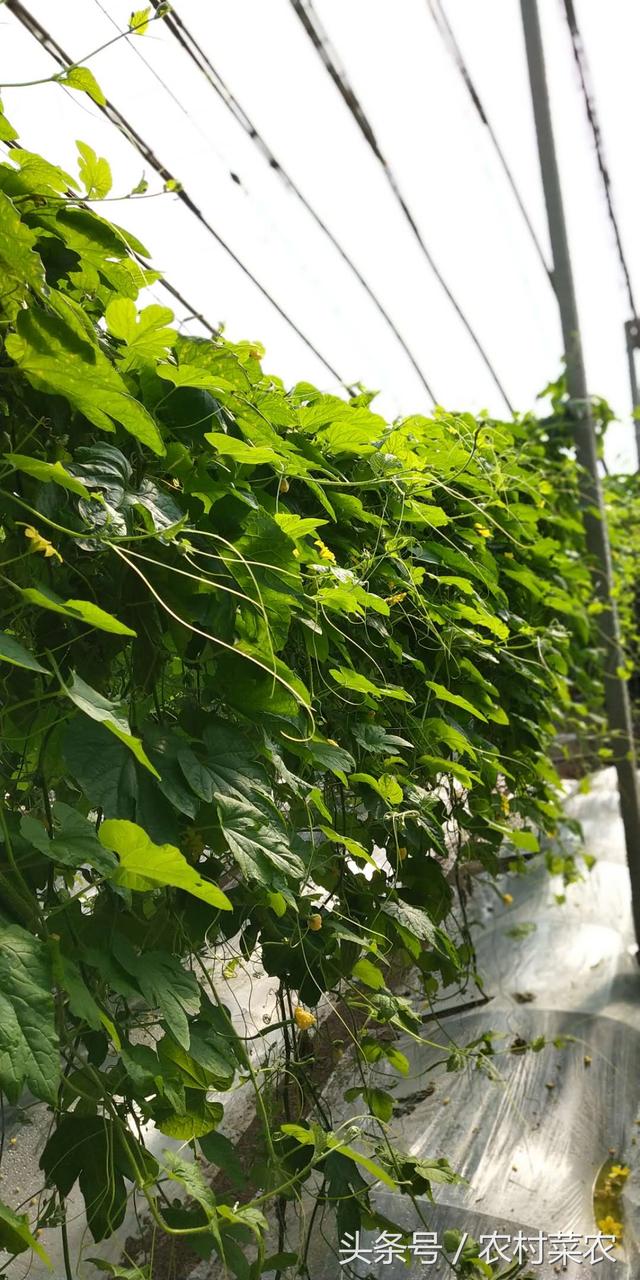
Bitter melon is a vine plant. The robust growth of the vines is directly related to crop yield. When the vines are strong, there are more branches, the leaves are denser, photosynthesis becomes stronger, and the yield increases. For vine care, let me explain a few points.
2018.2.9
First, vine nurturing. Greenhouse bitter melon cultivation is generally intercropped with cucumber. To increase bitter melon yield, you must focus on the bitter melon, end the cucumber cultivation early, and train the bitter melon vines up early, so that the bitter melon vines have enough growth time and space to cultivate strong vines.
Second, temperature. Training the vines up early can increase yield, but at this time it is still winter and the temperature is still low. Ensuring the greenhouse temperature is the key. New greenhouses, quilts, and films can all play a role in heat preservation. For old greenhouses, a reflective film can be set up on the back slope of the greenhouse to increase light and improve photosynthesis efficiency, thereby increasing yield.
Third, water and fertilizer. First is base fertilizer, that is, the fertilizer spread in the soil in advance. Common ones include rice husk manure (chicken and duck manure), chemical fertilizer, and soybean meal (the soybean residue left after pressing soybean oil). Base fertilizer plays a crucial role in crop growth, and before planting the base fertilizer must be applied in sufficient quantity. During fruit setting, some multi-element water-soluble fertilizer can be used. When the crop needs a large amount of fertility and the effective fertility in the soil cannot meet the requirement, the crop yield will decline and the quality will also be reduced. During the fruit-setting period, fertility must be kept sufficient.
2018.2.9
2018.2.9
3. Ratio of female to male flowers
This is also a problem commonly encountered by bitter melon growers. Friends who train the vines up early in winter often encounter an imbalance between female and male flowers. Usually there are fewer male flowers than female flowers. My family encounters this situation year after year, and we go to my relative's greenhouse to pick male flowers to ensure fruit set. The reason? My family's is an old greenhouse, about 5-10 degrees lower in temperature than a new greenhouse. Although it is already the Start of Spring at this time, nighttime temperatures below 5°C are common. When the temperature is low, there are fewer male flowers. The reason? I have not looked into it in detail either. When the temperature rises again, the number of male flowers will exceed the female flowers, and then there is no need to worry about the pollen problem. If you need to set fruit early and seize the market opportunity first, ensuring temperature is the key.
A special reminder: for bitter melon that comes onto the market around February on the solar calendar, that is, bitter melon that comes onto the market early, buyers are not yet very active at this time. Bitter melon trading needs to go to large logistics parks and farmers' markets. You can take a detailed look at the market analysis for Lvzhuangyuan above.
2018.2.9
4. Timely picking rate
Once bitter melon grows to a certain length, it must be picked. You cannot be too reluctant and miss the best fruit-picking period. In this way, while increasing yield, quality is also ensured. This is something most vegetable growers will consider. At this time, do not be lazy; pick when you should. Increasing the timely picking rate can also help maintain the vines.
5. Pests and diseases
Bitter melon Alternaria black mold, which seriously affects bitter melon quality during fruit setting. It produces nearly circular to irregular water-soaked dark brown lesions at leaf margins or between leaf veins. When humidity is high, the lesions expand rapidly and cause early leaf withering, and brown spots appear on the bitter melon.
At this time, pesticides need to be sprayed promptly, organic fertilizer increased, and flood irrigation strictly avoided. Increasing water will only make the situation worse. Improve the plant's disease resistance. For specific pesticides, you can consult your local agricultural supply store.
Prevention and control of bitter melon cottony leak. The diseased area initially appears brown and water-soaked, then quickly softens, and the diseased area becomes soft and rotten. After rain or when humidity is high, white mold grows. This disease condition appears during continuous rainy or snowy overcast days. Dexon is a chemical for controlling cottony leak, but its efficacy is not ideal and it is prone to photodegradation. You can try it when the disease condition appears.
2018.2.9
II. How to ensure quality?
Effective method: sufficient water and fertilizer, vigorous plant growth, and then the fruit-setting quality will be good. Among these, the timely picking rate is a measure to ensure quality.
Small tip: tie a heavy object to one end of a 20 cm nylon thread and tie the other end to the tip of the bitter melon. This can stretch and bend the bitter melon and increase its length.
If you have questions to discuss, you are welcome to leave a message and comment below.