-
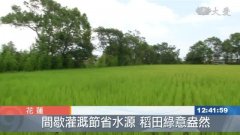
Intermittent Irrigation Method for Rice Saves Water and Increases Yield: Taiwan Agricultural Research Institute Trials Succeed
Agricultural Research Institute's Intermittent Irrigation Method: Success in Saving Water and Boosting Rice Yields. With water conditions severe, the rice farming industry, which relies heavily on water resources, is hit first. An organic smallholder farmer in Hualien uses the intermittent irrigation farming method, an alternating wet-and-dry irrigation model for rice that saves 30% of cultivation water and also increases the rice
-

Hidden concerns behind ten consecutive bumper summer grain harvests: increasing yields through fertilizer worsens arable land quality
Hidden concerns behind ten consecutive bumper summer grain harvests. The National Bureau of Statistics website announced on July 12 that in 2013, the national total summer grain output reached 131.89 million tons, an increase of 1.96 million tons over 2012, up 1.5%; of which winter wheat output was 115.67 million tons, an increase of 1.48 million tons over the previous year, up 1.3%. 201
-
China's Grain Output Rises Year After Year, Yet Supply and Demand Remain Tight: How Much Room Is There to Raise Yields Per Unit Area?
At present, the national winter wheat autumn sowing is drawing to a close. China's wheat has enjoyed bumper harvests for many consecutive years, yet stable development still faces some weak links. Under the rigid constraints of land and water resources, declining comparative returns from planting, and the impact of the international market, how can China's wheat achieve stable production and increased output?
-
Eleventh Consecutive Grain Increase May Involve Deception, Technological Yield Gains Increasingly Difficult
The National Bureau of Statistics issued a notice on December 4, stating that the national total grain output in 2014 reached 607.099 million tons, an increase of 5.16 million tons over 2013. China's total grain output achieved an eleventh consecutive increase. Another grain increase should be good news. However, as soon as the news came out, it triggered numerous doubts.
-
After more than three years of deep cultivation, the peanut industry has increased yield per mu by nearly half
Last October, a foreigner came to my family's field to look at the peanuts. Seeing how well the peanuts were growing, he picked up a bunch of peanuts and started studying them. The foreigner mentioned by Yu Minggang, a farmer from Liangcun Town, Gaotang County, Shandong Province, is the chief expert of the International Crops Research Institute for the Semi-Arid Tropics. Chief
-
No Let-Up in Efforts to Secure Autumn Grain Production: Ministry of Agriculture Goes All Out to Ensure Stable Grain Output and Increased Yields
As the saying goes, the 15th day of the seventh month determines drought or flood, and the 15th day of the eighth month determines the harvest. At present, we are in the critical period for autumn grain yield formation and the decisive stage of field management. The Ministry of Agriculture convened a meeting to make special arrangements for late-stage autumn grain management. Vice Minister of Agriculture Yu Xinrong emphasized that all localities
-
2015 Autumn Grain Harvest Approaching: Manage Well to Boost Yields
Editor's note: Due to the abnormal climate this year, with drought and little rain early on and continuous rain later, the seedling conditions of autumn grain crops, especially dryland grain crops, vary greatly, making crop management considerably more difficult, creating conditions for the occurrence of pests and diseases, and proving rather unfavorable to crop growth. In response
-
Integrated soybean green yield-and-efficiency technology achieves results in the Huang-Huai-Hai region
On September 21, at the "Soybean Green Yield-and-Efficiency Technology Model Demonstration Field Meeting," good news came from the demonstration field in Yongqiao District, Suzhou City, Anhui Province: after preliminary yield measurement by experts, the highest soybean yield in the demonstration field reached 247.51 kg per mu, with an average yield of 195.27 kg, an increase of
-
20 years since the advent of super rice, doubts arise frequently: high water and fertilizer use is not environmentally friendly, and increased yield does not mean increased income
On September 15, Deng Qiyun, chief scientist of the State Key Laboratory of Hybrid Rice, at the planting base of the fourth-phase super rice variety Y Liangyou 900, which set a record yield of 1000 kg per mu. After the storm over ten thousand mu total crop failure, super rice faces new challenges. Will the term "super rice" be abolished? China Economic
条件筛选