-
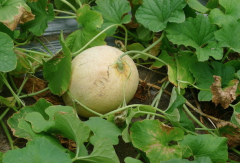
Hami melon varieties include Black Eyebrow, Red Heart Crisp, Yellow Egg, Snow-in-Red, and Jiashi Hami melon
Do you like Hami melon? Then do you know which varieties of common Hami melon there are? Would you like to learn about them? Then let's take a look together! Xizhou Mi: light mottled green, with green stripes, fine and dense netting covering the whole fruit, orange-red flesh, fine texture, crisp and tender, good flavor, sugar content
-
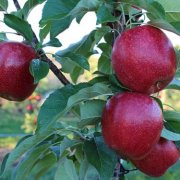
What are the characteristics and price of the US Juici apple?
Apple growers claim the Juici apple is the darling of the apple world, calling it the best apple. In its first year of commercial release, in limited quantities, the newly released Juici apple is a delightful cross between Honeycrisp and Braeburn, combining the best of both varieties'
-
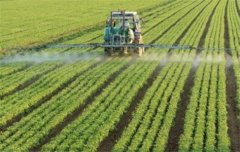
What aspects does agricultural ecological environment monitoring include, and how is monitoring carried out?
Agricultural development means rational and effective cultivation, high-yield harvesting and processing of crops, which promotes the improvement of the scientific and technological level of agriculture, reduces poverty, and supports sustainable ecological and environmental development. Recently, the Ministry of Agriculture and Rural Affairs issued the "Notice on Doing a Good Job in Agricultural Ecological Environment Monitoring."
-
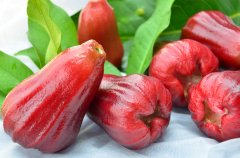
How do the wax apple varieties Summer Love and Spring Peach taste in terms of quality?
In Taiwan, China, wax apple cultivation techniques and production areas are concentrated mainly in Pingtung and Kaohsiung regions. In Pingtung, they are mainly in Fangliao, Yanpu, Neipu, Jiadong, etc., while in Kaohsiung they are mainly in Liugui, followed by Luzhu. In recent years, Xinyi in Nantou and Tianzhong in Changhua have also become new
-

What are the common grape diseases and how should they be prevented and controlled?
Grape is one of the common fruits. It is not only delicious but also highly nutritious, and it is widely planted in our country. During its growth, it may encounter diseases, and if prevention and control are not timely, its yield and quality will be affected. So, common grape dise
-
Ancient rose blooms in a mountain crevice after a thousand years! Where is it located? Can it be grafted? Grafting methods included
As a common cut flower and edible flower, roses are cultivated in many parts of our country. Recently, the news that ancient roses in a deep mountain rock crevice have bloomed has attracted everyone's attention! So where is this thousand-year rose located? Has it really grown for a thousand years? Can it be grafted
-
When to Plant Sweet Potatoes in Northeast China? High-Yield Cultivation Techniques Included
Sweet potato is a coarse grain food with complete and rich nutrition. Its starch has a wide range of uses: it can be mixed with various meats to make food balls, mixed with flour and steamed into cold noodles, or used alone to make pancakes, stir up jelly, and so on. It is widely cultivated in both northern and southern regions of China. So, when in Northeast China
-
What Are the Prospects for Salicornia Cultivation in 2020? Included: High-Yield Cultivation Techniques
Salicornia has long enjoyed the reputation of "sea ginseng" and "plant seafood." Its color is like jade, its shape resembles coral, its texture is crisp and tender, and it has a uniquely fresh seafood flavor. So what are the prospects for Salicornia cultivation in 2020? What are its high-yield cultivation techniques? 1.
-
What other names does daylily have and what are its common varieties?
Daylily is what we call huanghuacai (daylily), a fairly well-known cash crop. Generally, fresh daylily is not eaten; what we eat is the dried daylily that has been steamed, sun-dried and processed. Dried daylily is very delicious and has a chewy texture, and is deeply loved by friends at home and abroad. In addition, the roots of daylily can be used to brew wine, and the leaves can be used to make paper, etc. Daylily has a fairly long history of cultivation in China, so what are the other names for daylily? What are the common varieties? <p style="text-align: center;"></p> <p style="text-indent:2em;"><span style="color:#FF0000"><strong>1. What are the other names for daylily?</strong></span></p> <p style="text-indent:2em;">The other names for daylily are golden needle vegetable, forget-sorrow grass, orange daylily flower, brain-boosting vegetable, calming vegetable, green scallion flower, seven-star vegetable, and boy-favoring grass. Long ago, when children went away to study or travel, because there were no communication tools, the mother at home would worry greatly about the child's situation. To relieve the sorrow of longing, they would plant daylily at home before the child set out, to express their feelings of missing them.</p> <p style="text-indent:2em;">Besides its edible value, daylily also has a certain ornamental value. Because there are many varieties of daylily and different varieties have different characteristics, they can be used to landscape courtyards, lawns and so on. The flowering period of daylily is generally in summer, and the leaves are very emerald green, remaining green until late autumn, and potted cultivation is also a good choice.</p> <p style="text-indent:2em;">Daylily also has the value of stabilizing soil and conserving water, and of predicting the environment. Because the root system of daylily is very well developed, it has a good protective effect on soil and water. In addition, daylily is very sensitive to fluoride pollution in the air. If fluoride pollution in the air is relatively serious, its leaves will show a corresponding reaction, changing from green to brown starting from the leaf tips.</p> <p style="text-indent:2em;"><span style="color:#FF0000"><strong>2. What are the common varieties of daylily?</strong></span></p> <p style="text-indent:2em;">There are many varieties of daylily. When choosing a variety to plant, you need to take into account the characteristics of that variety, the geographical environment of your local area and other factors.</p> <p style="text-indent:2em;">1. Malan daylily</p> <p style="text-indent:2em;">The Malan daylily plant is robust, with black-purple spots at the tip, 6 petals, and yellow anthers.</p> <p style="text-indent:2em;">The Malan daylily has strong drought resistance and cold resistance. Generally, the yield per mu is 40-75 kg, and high-yield fields can reach 175 kg.</p> <p style="text-indent:2em;">2. Short-stalk black-mouth daylily</p> <p style="text-indent:2em;">The flower buds of the short-stalk black-mouth daylily are yellow with a slight emerald green tint, the number of leaves is 12-14, the height of the tube part is 3 cm, and there are no black spots at the mouth part. The yield of the short-stalk black-mouth daylily is relatively high.</p> <p style="text-indent:2em;">3. Thread daylily</p> <p style="text-indent:2em;">The thread daylily has about 12-16 leaves, with two or three branches on the upper part, and each flower stalk can produce twenty or thirty flower buds. The thread daylily is resistant to cold and drought and has excellent quality; its drawback is that the yield is relatively low.</p> <p style="text-indent:2em;">4. Tall-scape daylily</p> <p style="text-indent:2em;">The flower buds of the tall-scape daylily are yellow with a slight emerald green tint, and the yield is not very high.</p> <p style="text-indent:2em;">5. April daylily</p> <p style="text-indent:2em;">The April daylily is named because it blooms during the fourth month of the lunar calendar. Each flower scape of the April daylily has only 4 flowers, making it a good variety as breeding material.</p>
-
How much is a jin of pineapple in 2020? Included planting and management technical points
Pineapple tastes sweet and sour, is rich in vitamins, and is deeply loved by consumers. Besides eating pineapple directly, it can also be processed into canned pineapple, dried pineapple, pineapple rice, and so on, with a unique taste. Let us take a look below at how much a jin of pineapple costs in 2020 and what
条件筛选