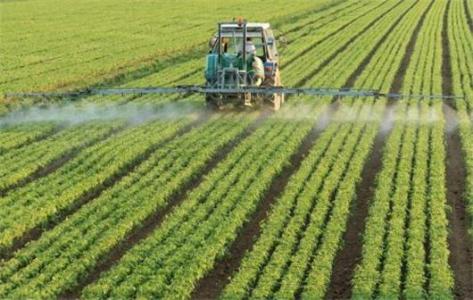
What aspects does agricultural ecological environment monitoring include, and how is monitoring carried out?
Agricultural development means rational and effective cultivation, high-yield harvesting and processing of crops, which promotes the improvement of the scientific and technological level of agriculture, reduces poverty, and supports sustainable ecological and environmental development.
Recently, the Ministry of Agriculture and Rural Affairs issued the "Notice on Doing a Good Job in Agricultural Ecological Environment Monitoring," comprehensively deploying agricultural ecological environment monitoring work. This plays a major role in ecological protection and reduces pollution of the ecological environment.
The "Notice" points out that agricultural ecological environment monitoring is a long-term and fundamental task in agricultural development. Carrying out this work is of great significance for accurately assessing the current situation of China's agricultural ecological environment, ensuring the quality and safety of agricultural products, precisely implementing the action plan for the battle against agricultural and rural pollution, and continuously improving the quality of the agricultural ecological environment.
The "Notice" requires that agriculture and rural affairs departments at all levels focus on four key tasks.
1. Do a good job in soil environmental monitoring at agricultural product production sites. Based on the condition of the soil environment for agricultural crops, the content values of various substances in the soil, and other issues, carry out coordinated monitoring of soil and agricultural products so that growers can promptly grasp the overall status of the soil environment for agricultural products nationwide and in key regions, as well as potential risk trends.
2. Do a good job in monitoring nitrogen and phosphorus loss from farmland. Based on the patterns of nitrogen and phosphorus pollution occurrence in farmland and basic climate information, carry out farmland nitrogen and phosphorus loss monitoring, and analyze how the main farming methods and fertilization measures promoted in different planting regions under different models affect farmland nitrogen and phosphorus loss.
3. Do a good job in monitoring residual plastic film in farmland. In this inspection aspect, it is necessary to comprehensively consider mulched crops, mulching years, recovery methods, and other conditions, carry out residual plastic film monitoring, and clearly determine the amount and recovery situation of residual plastic film in farmland.
4. Do a good job in surveying agricultural biological species resources and monitoring invasive alien species. There are many kinds of plants, but some plants exist in very small numbers and are listed as key nationally protected agricultural wild plants. We must carry out surveys of key nationally protected agricultural wild plants and increase efforts to protect the native habitats of agricultural wild plants. At the same time, we must also strengthen surveys and monitoring of invasive species. There are now many invasive species problems, and we must always carry out early warning and emergency eradication. Otherwise, it will have a major impact on China's ecological environment.
The issue of the agricultural ecological environment should be a concern for every one of us. The quality of the ecological environment is related to human survival and the sustainable development of the social economy. Therefore, every one of us should do our part to protect the agricultural ecological environment.