-
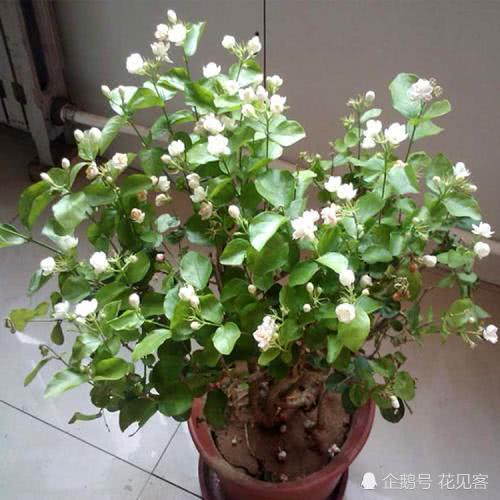
Using potassium dihydrogen phosphate for foliar feeding of flowers and green plants: pay attention to 3 points to avoid fertilizer burn
As people's living standards improve, many people keep some flowers and green plants at home, commonly including clivia, jasmine, and the happiness tree, to decorate the home and add a touch of green. And plants need fertilizer for both growth and flowering, while phosphorus...
-
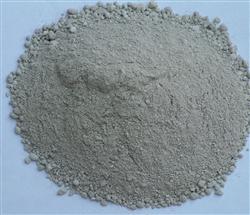
How can you tell good phosphate fertilizer from bad? These methods are simple and practical
The following methods for identifying good and poor phosphate fertilizer are introduced: observe the color and form. Phosphate fertilizer should be grayish white and powdery. If the color is white or yellow, it may be because the acid treatment was incomplete and its phosphorus content is low. Smell the odor. Phosphate fertilizer should have a slight sour odor. If it has no such odor, it means that during production...
-
What happens after applying high-concentration phosphate fertilizer?
What happens when high-concentration phosphate fertilizer is applied? Please explain that the main component of ordinary superphosphate is monocalcium phosphate, and the fertilizer contains 14%-18% phosphorus; the secondary component is calcium sulfate, accounting for about 50%. Therefore, applying ordinary superphosphate not only provides crops with phosphorus nutrition, but also allows crops to obtain sulfur nutrition. However, superphosphate...
-
How to apply calcium magnesium phosphate fertilizer for better results
How to apply calcium magnesium phosphate fertilizer well? Calcium magnesium phosphate fertilizer is a multi-element fertilizer mainly containing phosphorus, along with calcium, magnesium, silicon and other components. Calcium magnesium phosphate fertilizer is insoluble in water, non-toxic, non-corrosive, not easily moisture-absorbing, not easily caking, and is a chemically alkaline fertilizer. It is widely suitable for various crops and phosphorus-deficient acidic soils. Application metho...
-
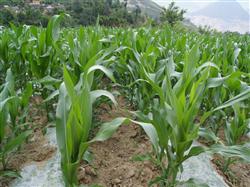
How should phosphate and potassium fertilizers be applied when growing corn?
How should phosphate and potassium fertilizers be applied when growing corn? Please give guidance. When growing corn, the effect of phosphate and potassium fertilizer application varies greatly depending on the soil's available nutrient content. Increasing phosphate and potassium application helps produce strong seedlings that emerge early, strong plants with large ears, a higher grain-to-leaf ratio, and more grains and greater grain weight; it is an important condition for improving population quality. However, after phosphate and potassium fertilizers are applied, ...
-
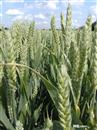
What points should be noted when applying phosphate fertilizer?
What effect does nitrogen fertilizer have on wheat? Please explain that among the elements required for wheat growth and development, nitrogen has the greatest impact on wheat grain quality, and its grain yield and protein content depend to a large extent on the level of nitrogen supplied by the soil. If the supply is very sufficient throughout the entire growth period of wheat, wheat will be both high-yielding and high in protein...
-
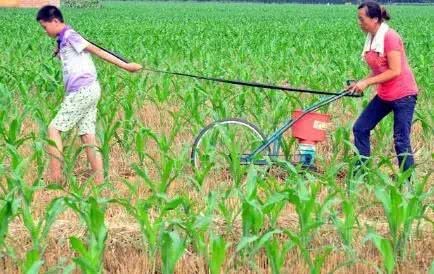
Corn plants turning purplish-red? Use potassium dihydrogen phosphate to help solve it
Can potassium dihydrogen phosphate be used as a top dressing? Of course it can. As a highly efficient binary compound fertilizer, potassium dihydrogen phosphate can be applied both as a foliar fertilizer and through the roots, making it very easy for crops to absorb. That is why it is also a commonly used top dressing in agricultural production....
-
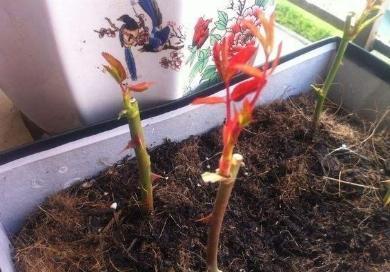
What to do if the concentration of monopotassium phosphate foliar spray is too high and inhibits flower growth
I just finished answering a reader's question about whether monopotassium phosphate can play a role in controlling excessive growth, and then I saw the question about monopotassium phosphate inhibiting flower growth. So here I might as well answer it together. Regarding monopotassium phosphate inhibiting flower growth, it is still...
-
How is biogas humic acid phosphate fertilizer composted? Detailed method and steps
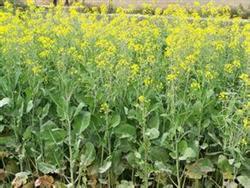
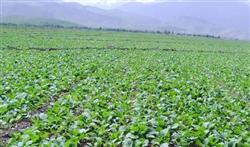
The uptake of phosphorus by rapeseed is greatest during the bolting and flowering stage, but as for the utilization of phosphorus and its yield-increasing effect, applying phosphorus at the seedling stage is best. Because phosphorus can be repeatedly utilized within the rapeseed plant, the earlier the absorption period, the greater the efficiency. Applying more phosphate fertilizer can promote an earlier growth period; generally, the seedling stage can be advanced by 2-4 days, the bolting and flowering stage by 2-6 days, and the maturity stage by 1-2...
-
Why is the seedling stage the key period for applying phosphate fertilizer to rapeseed?
Rapeseed is a crop with a relatively high boron requirement. When boron is deficient at the seedling stage, the root system stops growing, there are no root hairs or no lateral roots, and the growing point turns from brown to scorched and dies; applying rapeseed boron fertilizer in a timely manner plays an important role in achieving high yield and good quality in rapeseed. The specific method is: boron fertilizer applied as a base fertilizer is applied directly into the soil, and can be applied to rapeseed...
条件筛选