What to do if the concentration of monopotassium phosphate foliar spray is too high and inhibits flower growth
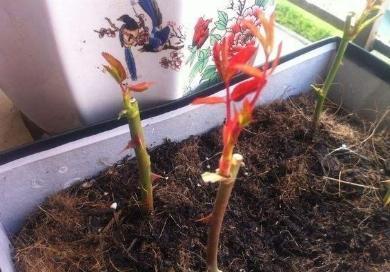
I just finished answering a reader's question about whether monopotassium phosphate can play a role in controlling excessive growth, and then I saw the question about monopotassium phosphate inhibiting flower growth. So here I might as well answer it together.
Regarding monopotassium phosphate inhibiting flower growth, it is still due to the problem of excessive monopotassium phosphate, which causes plants to absorb too much phosphorus and potassium and thus enter dormancy, or to absorb too little nitrogen and thus temporarily slow down their growth. For flowers, excessive monopotassium phosphate usually causes dormancy.
When it comes to fertilizing, we have always advocated scientific fertilization. These simple four words really contain a lot of meaning. Too little fertilizer may have no effect, while too much fertilizer may cause fertilizer burn. In other words, only when fertilizing is just right can it promote plant growth.
Among the three major elements nitrogen, phosphorus and potassium, a fairly simple way to look at it is that nitrogen promotes leaves, phosphorus promotes flowers, and potassium promotes fruit (stems). In principle this is roughly how it is. Therefore, monopotassium phosphate is relatively suitable for spraying on plants grown for their ornamental flowers. When fertilizing near the flowering period of the plant, it can make the flowers bloom brightly and in greater numbers, and it can also play a role in protecting fruit.
What needs attention is that spraying monopotassium phosphate at high concentration or high frequency will cause dormancy in flowering plants.
If the above situation really occurs, everyone should not think the flowers are beyond saving. If you have amino acids or humic acids at home, spray some, and after several consecutive sprays, the dormancy can basically be broken.
In addition, in cases such as mistakenly spraying herbicide or fertilizer burn, this can also be considered, and it can greatly alleviate the symptoms.
It is still necessary to explain the use of monopotassium phosphate again. A 800-fold dilution sprayed continuously at 5-day intervals will cause dormancy; therefore, even if fertilizing little but often, try to widen such intervals. A 1500-fold solution is the normal concentration for use. (Dilute 1 g of monopotassium phosphate into 1500 milliliters)
This is Science Agriculture. You are welcome to follow, and let us grow our knowledge together.