What points should be noted when applying phosphate fertilizer?
What effect does nitrogen fertilizer have on wheat? Please explain that among the elements required for wheat growth and development, nitrogen has the greatest impact on wheat grain quality, and its grain yield and protein content depend to a large extent on the level of nitrogen supplied by the soil. If the supply is very sufficient throughout the entire growth period of wheat, wheat will be both high-yielding and high in protein...
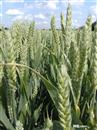 What should be noted when applying phosphate fertilizer? Please provide guidance and explanation
Both superphosphate and calcium magnesium phosphate fertilizer are low-concentration phosphate fertilizers. From the perspective of physicochemical properties, superphosphate is a water-soluble phosphate fertilizer, suitable for use on neutral, alkaline and slightly acidic soils; calcium magnesium phosphate fertilizer is a citrate-soluble phosphate fertilizer, suitable for acidic soils. Overall, superphosphate and calcium magnesium phosphate fertilizer are mainly applied as base fertilizer to different crops.
1. Superphosphate, also known as ordinary superphosphate, abbreviated as SSP, is the earliest industrially produced chemical fertilizer variety in the world, and is currently also the main low-concentration phosphate fertilizer product in China. The main effective phosphorus-containing component is monocalcium phosphate monohydrate, with the molecular formula Ca(H2PO4)2?H2O, containing 12-20% P2O5, about 28% CaO, 11-13% S, and in addition, it also contains various trace elements, as well as a small amount of free acid. The production process mainly involves treating phosphate rock powder with sulfuric acid, then subjecting it to curing, cutting, aging and packaging to obtain the product.
Superphosphate is a loose, porous powdery or granular material, appearing grayish white, pale yellow, grayish yellow or brown depending on the impurity content of the phosphate rock. Because it contains free acid, it is slightly acidic. During storage, when exposed to moisture it will absorb moisture, cake, and corrode packaging containers. After moisture absorption, it will also cause a series of chemical changes, turning the water-soluble phosphate fertilizer back into water-insoluble form and reducing fertilizer efficiency. This change is generally called reversion, so moisture prevention must be noted during storage. After superphosphate is applied to the soil, monocalcium phosphate dissolves in water to form a saturated solution of phosphoric acid, monocalcium phosphate and dicalcium phosphate. Because the dissolved components differ from the original ones, this is called incongruent dissolution. At this time the solution is strongly acidic and can dissolve iron, aluminum, manganese, calcium and magnesium salts in the soil and react with them to form poorly soluble phosphates, reducing the availability of phosphorus. This phenomenon is also called chemical fixation. In acidic soils, poorly soluble iron phosphate and aluminum phosphate are often formed, while in calcareous soils, octacalcium phosphate or hydroxyapatite is formed, both of which reduce the fertilizer efficiency of superphosphate. In acidic soils, especially red and yellow soils, phosphate will also be adsorbed and fixed by clay minerals or hydrated sesquioxides, reducing fertilizer efficiency. Applied superphosphate is easily fixed by the soil and has very little mobility, with its movement range generally between 1 and 4 cm. Therefore, the utilization rate of phosphate fertilizer is very low.
According to the properties and characteristics of superphosphate, the specific application methods are as follows:
1. Apply mixed with organic fertilizer. After superphosphate is mixed with organic fertilizer and applied, the distribution effect of the organic fertilizer can be used to reduce contact with the soil, thereby improving its fertilizer efficiency.
2. In acidic soil, it can be applied together with lime; in calcareous soil, apply together with ammonium sulfate. In acidic soil, when the pH is below 5.5, it is best to apply lime first to neutralize the acidity, so that the pH rises above 6.0 before applying phosphate fertilizer; in calcareous soil, it should be applied together with acidic or physiologically acidic fertilizers such as ammonium sulfate, using the effect of sulfate radicals to reduce the calcium ion concentration in the fertilizer zone, so as to improve the availability of phosphorus.
3. Although some fertilizers can be mixed, they must be applied immediately after mixing. For example, when nitrate nitrogen fertilizer is mixed with superphosphate, the fertilizer deliquesces and absorbs moisture, making it inconvenient to use. If left unused for a long time, the nitrogen will be greatly lost, and the available phosphorus will be converted into poorly soluble phosphorus. Mixing some fertilizers for use will cause massive nutrient loss and great waste. For example, alkaline fertilizers such as plant ash and lime should not be mixed with superphosphate, otherwise water-soluble nutrients will be converted into poorly soluble nutrients, reducing the fertilizer efficiency of phosphate fertilizer.
When selecting superphosphate, attention should be paid to distinguishing it, and the following points should be achieved:
1. Unqualified superphosphate looks the same as qualified superphosphate, being dark gray, loose, relatively dry, and when rubbed by hand it forms a ball and feels greasy. Qualified superphosphate smells slightly sour when smelled. Unqualified superphosphate has an irritating odor or off odor.
2. It is best to buy famous and high-quality products produced by large enterprises.
3. If the purchased superphosphate is found to have an abnormal odor, especially be cautious when applying it.
4. The price of superphosphate products is mainly determined according to the effective phosphorus pentoxide nutrient content (the national standard requires at least greater than or equal to 12%), while calcium, magnesium and the like are only auxiliary components.
2. Calcium magnesium phosphate fertilizer, also known as fused magnesium-containing phosphate fertilizer, is a aluminosilicate glass body containing phosphate radicals (PO43-), with no clear molecular formula or molecular weight. Calcium magnesium phosphate fertilizer not only provides 12%-18% low-concentration phosphorus, but can also provide large amounts of silicon, calcium and magnesium. Calcium magnesium phosphate fertilizer accounts for about 17% of China's current total phosphate fertilizer output, second only to superphosphate. It is made from phosphate rock and ores containing magnesium and silicon through high-temperature melting in a blast furnace or electric furnace, water quenching, drying and grinding. When selecting it, note the following points:
1. Packaging bag label identification: The packaging bag should have the following contents: product name, trademark, nutrients and their content, net weight, executive standard number, production license number, factory name, factory address, telephone, etc., and the printing should be formal and clear.
2. Color and shape identification: Calcium magnesium phosphate fertilizer is mostly in several different colors such as grayish white, light green, dark green and blackish brown, and is powdery.
3. Feel identification: Calcium magnesium phosphate fertilizer belongs to citrate-soluble phosphate fertilizer, dissolves in weak acid, is alkaline, has no corrosiveness when touched by hand, does not absorb moisture, and does not cake.
4. Odor and water solubility identification: Calcium magnesium phosphate fertilizer has no odor at all and is insoluble in water.
Click to get more nitrogen, phosphorus and potassium application techniques
Click to get more fertilizer application techniques