How should phosphate and potassium fertilizers be applied when growing corn?
How should phosphate and potassium fertilizers be applied when growing corn? Please give guidance. When growing corn, the effect of phosphate and potassium fertilizer application varies greatly depending on the soil's available nutrient content. Increasing phosphate and potassium application helps produce strong seedlings that emerge early, strong plants with large ears, a higher grain-to-leaf ratio, and more grains and greater grain weight; it is an important condition for improving population quality. However, after phosphate and potassium fertilizers are applied, ...
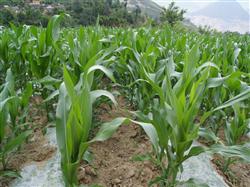
How should phosphate and potassium fertilizers be applied when growing corn? Please give guidance
When growing corn, the effect of phosphate and potassium fertilizer application varies greatly depending on the soil's available nutrient content. Increasing phosphate and potassium application helps produce strong seedlings that emerge early, strong plants with large ears, a higher grain-to-leaf ratio, and more grains and greater grain weight; it is an important condition for improving population quality. However, after phosphate and potassium fertilizers are applied, most is absorbed and fixed by the soil, so the absorption and utilization rate in the current season is low. Their mobility in the soil is poor and they are not easily lost, so their fertilizer effect lasts for several years. Therefore, to improve the absorption and utilization rate of phosphate and potassium fertilizers in the current season, a single application should be made as a basal fertilizer within the sowing row. This gives the best effect, helps corn absorb and use them, and promotes high yields. Research has shown that applying phosphate fertilizer at sowing increased yield by 8.5%, 13.7%, and 14.8% compared with application at the 3-leaf, 6-leaf, and 9-leaf stages, respectively; applying potassium fertilizer at sowing increased yield by 2.1%, 5.1%, and 11.6% compared with application at the 3-leaf, 6-leaf, and 9-leaf stages, respectively.
Click for moreCorn growing techniques
Click for moreNitrogen, phosphorus, and potassium application techniques
Click for more fertilizer application techniques