-

How to cultivate the shaggy ink cap mushroom? Detailed explanation of the key growing techniques
1. Site selection and ingredient mixing. The cultivation site can be indoors or outdoors in open fields or greenhouses for intercropping. Planting can be done in all four seasons: in summer, grow indoors or under shade netting; in autumn, winter and spring, mainly grow outdoors in open fields. Ingredients: for a planting area of 20 sq m, use 400 kg of dry rice straw and 20 kg of lime powder; in addition, auxiliary materials (such as wheat bran and rice bran) may be added as appropriate. 2. Raw material processing. Sprinkle 3% lime water onto the ingredients, building up the compost heap while watering, with a heap height of 2 m, length and width as desired; pat it firm and cover with plastic film to ferment. Insert a thermometer into the material; when the material temperature rises to 60°C, keep it until the next morning, then turn the heap once, sprinkling 3% lime water while turning, cover with film to ferment again as before, and once it has stayed above 60°C for 1 day, it is ready for field cultivation. 3. Sowing and cultivation. (1) Making beds. Dig beds 1.2 m wide and 10 cm deep, length unlimited, totalling 20 sq m, and dig drainage ditches 20 cm deep and 20 cm wide around them. (2) Bed disinfection. A few days before cultivation, pour 3% lime water over the entire bed; on the day of cultivation, scatter a layer of dry plant ash. (3) Sowing method. Use the layer-sowing method with 3 layers of material and 3 layers of spawn; per sq m, use 20 kg of dry material, about 25 cm thick, with a spawn rate of 10%. After cultivation, press and level the material surface with a wooden board, scatter a thin layer of dry plant ash, then cover with 3 cm of soil, scatter another thin layer of plant ash on the soil surface, and cover with film to promote mycelial growth; after 3 days, shake the film to ventilate, twice a day. 4. Mycelial growth management and harvesting. Mimic the method for raising rice seedlings by setting up a small arched shed, and regulate the bed temperature to 10°C-28°C by reducing or increasing the thickness of the straw matting on the bamboo arches and by making double-layer bamboo arches with double-layer film; after 40 days, small mushrooms can be seen breaking through the soil. At this point, remove the film covering the soil layer on the material surface, and spray water lightly and frequently to maintain moisture; after another 10-25 days, at the young mushroom stage, they can be harvested. Pull the mushrooms out by twisting them left and right with your hand, and trim off the soil on the bases with a knife@#@136@#@.
-
Key Points of Fast-Growing, High-Yield Cultivation Techniques for Lion's Mane Mushroom
Lion's mane (Hericium erinaceus) is a kind of edible fungus, and its fruiting body is fresh and meaty with a delicate fragrance and pleasant taste. In recent years, as the area under artificial cultivation of lion's mane has expanded year by year, the yield has also been continuously increasing. The fast-growing, high-yield cultivation techniques for lion's mane are summarized and introduced as follows. 1. Material selection and mixing Select fresh, clean sawdust or cottonseed hulls as the raw material. If the raw material is not fresh, it should be exposed to strong sunlight for 2-3 days before use. For large-scale production, sufficient raw material should be prepared all at once and stored in a moisture-proof, well-ventilated site. When mixing, first mix 65% sawdust (if the sawdust is too fine, add an appropriate amount of wood shavings), 30%
-
The Cultivation Methods and Growing Techniques of the Button Mushroom
The button mushroom, also known as the white mushroom or the cultivated mushroom, belongs to the order Agaricales, family Agaricaceae, genus Agaricus, and is an aerobic, straw-decaying fungus. The cultivation history of the button mushroom in China is relatively short; Fujian Province is a major producer of button mushrooms, accounting for more than 50% of the national output. In northern China, especially in the Northeast, the button mushroom got off to a late start and production techniques are relatively poor, so there is considerable market space for developing button mushroom production. I. Morphological Characteristics of the Button Mushroom 1. Morphological characteristics of the mycelium Mycelium
-
How to Grow Orchids? Master Orchid Growing Methods and Techniques
Do you know how orchids should be grown? What are the growing methods, what should be paid attention to during growing, and how should fertilizer be applied? Let's take a look together. There are many types of orchids, so it is hard to explain orchid growing clearly in just a few words. However, we can briefly
-

A Detailed Guide to Vegetable Growing Techniques and Practical Methods
If you are a first-time vegetable grower, it is best to grow wild vegetables. So-called wild vegetables include such plants as Madeira vine, Gynura bicolor, sweet potato leaves, ginseng herb, aloe, Taiwan angelica, and shungiku. Wild vegetables are easy to grow and high in energy, but they have a distinctive taste of their own, so insects dislike coming near them, and they can grow well without pesticides
-

What are the cultivation requirements for Aconitum carmichaeli? Read this article to understand the growing techniques
Cultivation requirements for Aconitum carmichaeli
-

How to grow Panicled Codonopsis (Codonopsis convolvulacea)? Master these key growing techniques
Growing techniques for Panicled Codonopsis
-
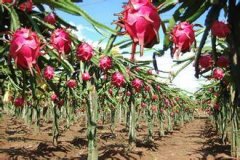
What are the techniques and tips for growing dragon fruit? A detailed guide
To grow dragon fruit, we first need to understand its characteristics and growing environment. Because the dragon fruit's root system is shallow and spreads flat over the soil surface, its soil organic matter should be supplemented by fully applying low-nitrogen, coarse organic fertilizer when clearing the field and preparing the land, in order to raise the soil organic matter content of the top 20 cm
-
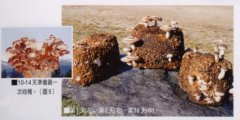
Practical Techniques for Shiitake Cultivation and New Techniques for Fast-Growing, High-Yield Production
The scientific name of shiitake is Lentinus edodes. It is a low-calorie food; eating 50 grams of shiitake per day provides only 15 calories. Its protein and fiber content are also high, and it is rich in calcium; in addition, shiitake contains two components that have been proven to have medicinal effects, namely
-
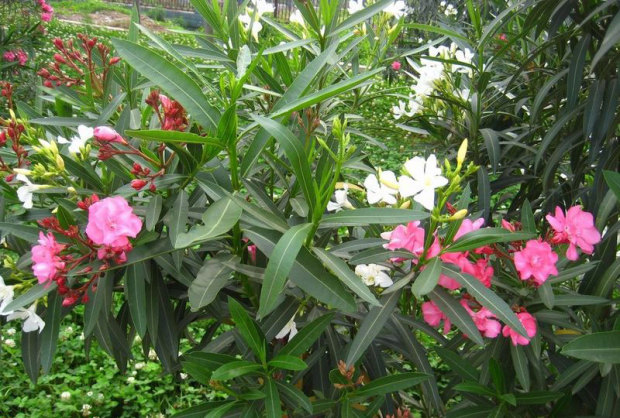
A Detailed Guide to the Cultivation Methods and Growing Techniques of Oleander
The oleander gets its Chinese name "jiazhutao" (lit. "bamboo-leaved peach") because its leaves resemble bamboo and its flowers resemble peach blossoms; some say its leaves resemble willow and its flowers resemble peach, which is why it is also called "liuyetao" (willow-leaf peach). The oleander is an evergreen shrub or small tree in the dogbane family (Apocynaceae), with a height of up to 3 m. The old branches are gray and smooth, and the leaves are simple and dark green. The inflorescence is terminal, and the corolla is funnel-shaped, creamy white or pink
条件筛选