A Detailed Guide to Vegetable Growing Techniques and Practical Methods
If you are a first-time vegetable grower, it is best to grow wild vegetables. So-called wild vegetables include such plants as Madeira vine, Gynura bicolor, sweet potato leaves, ginseng herb, aloe, Taiwan angelica, and shungiku. Wild vegetables are easy to grow and high in energy, but they have a distinctive taste of their own, so insects dislike coming near them, and they can grow very well without pesticides or chemical fertilizers. Growing vegetables is not suitable indoors, so your home must have sunlight, and the sunlight must be sufficient to avoid the problem of nitrates. If you have a courtyard or a rooftop garden with full-day sun, that is the best situation.
Preparation in advance: containers, soil, vegetable seeds
Growing vegetables requires relatively large boxes. You can buy large styrofoam boxes at a fish market, or various trash cans, wooden boxes, ice cream boxes, and cake boxes can also serve as growing containers. Drill holes in the bottom of the container and raise the container up, so as to avoid poor drainage, or roots growing downward and damaging the ground or even buildings. You can also simply set up a rain shelter, but when it is not raining it must be opened to allow sunlight through. In addition, pay attention to the water supply, and be sure to water with cool water.
In choosing soil, if you are not growing on a large scale, you can buy peat moss on the market and mix it into the existing soil to change the medium; or go to a nearby mountain and choose darker soil, which is even better, but soil that is too sticky or too loose is not suitable. Adding some earthworms is even better. At the bottom of the growing box, first place large stones, then medium stones and small stones, and only put soil on the very top.
When choosing vegetables to grow, try to choose those with fewer pests and diseases, such as A-choy, lettuce, Gynura bicolor, sweet potato leaves, Thai basil, mint, Chinese chives, rapeseed, amaranth, water spinach, perilla, scallions, cabbage, and bok choy. You can also buy ready-made seedlings to plant.
The growing process
Whether seeds need to be pre-germinated depends on the situation. Larger seeds must be buried about 1 - 2 cm in the soil. If the vegetable has a longer growing period, it must go through the process of transplanting. Short-term leafy vegetables (bok choy, rapeseed, lettuce, garland chrysanthemum, amaranth, etc.) can be harvested after about 25 - 45 days of growth.
During the growing period, apply topdressing to the crops according to their development. You can make your own compost with organic fertilizer, and you can add some plastic netting to reduce mosquitoes flying in. Some vegetables are more susceptible to pests, so intercropping can be adopted; for example, you can plant vegetables with stronger scents such as scallions, mint, Thai basil, and Chinese chives beside these vegetables to repel insects. Because the growing methods and times of various vegetables are all different, you can buy books on the market to take home for reference and practice.
Harvesting situation
1. For A-choy, bok choy, and the like, you can pick the leaves to eat without having to pull up the whole plant. Generally speaking, one styrofoam box can grow 6-8 plants, and every few days you will have very tender leaves to eat.
2. Lettuce is suitable for planting in autumn. When it has grown to an appropriate size, you will have vegetables to eat every day.
3. After Chinese chives grow up, they must be cut. About three weeks after cutting, they will continue to grow again.
4. Gynura bicolor can be picked, but because it grows quickly, it is not suitable to plant too much, about 1-2 boxes is enough, to avoid having more than you can eat.
5. When scallions can be harvested, do not pull up the whole bunch; you must leave two or three in the soil, so that they will continue to tiller and grow.
6. Bok choy is rather delicate and afraid of pests. It can be harvested all year round, and can be harvested after about one month of planting. It is best to plant vegetables with stronger scents nearby to protect it.
7. Sweet potato leaves grow no matter how you plant them. Plant about 1-2 boxes, do not plant too many.
Rotate melons and vegetables for more variety
In winter, growing celery, spinach, garland chrysanthemum, cilantro, cabbage, and mustard greens is very suitable. In summer, sponge gourd and pumpkin are best. Growing melons and fruits requires soil with plenty of fertilizer, otherwise the melons and fruits will not grow. Melons and fruits have a longer growing period and require patience. But if it is something like sponge gourd or loofah, once planted successfully, you will have more than you can eat, so do not plant too many.
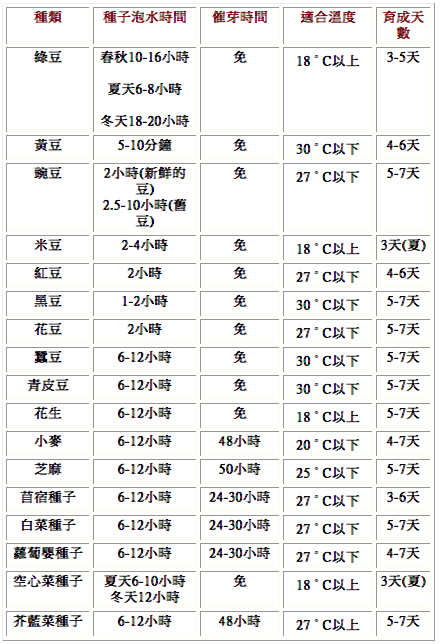
Table 1. Growing times for various sprouts