-
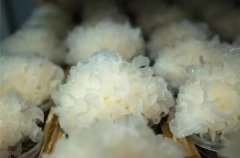
Tremella (white fungus) cultivation and growing techniques: how long can a mushroom bag be used, and how many times can it be harvested repeatedly?
There are three cultivation methods for Tremella: log cultivation, bag cultivation, and bottle cultivation. Today I will introduce the bag cultivation method. How long can a Tremella mushroom bag be used at one time? Bag-cultivated Tremella can generally be harvested 2 times. So can the Tremella mushroom bag be reused? Actually it cannot.
-
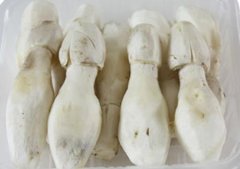
A Detailed Guide to the Cultivation Methods and Growing Techniques of the Shaggy Mane Mushroom
The shaggy mane mushroom is a common edible mushroom. Would you like to try growing it yourself? In fact, growing it is quite easy. As long as you have the needed materials and pay a little extra care, you can cultivate shaggy mane mushrooms. Cultivation materials Main materials: horse manure, cow dung, wheat
-

A Detailed Guide to the New Bag-Cultivation Method and Growing Techniques for Straw Mushroom
Straw mushroom cultivation originated in South China and was later spread by overseas Chinese to Southeast Asia and parts of Africa; it has a cultivation history of more than 200 years to date. Its flesh is plump, tender and crisp-smooth, its flavor is delicious, and it has high nutritional value, containing abundant protein, essential amino acids for the human body, and vitamin C. Regularly eating straw mushroom can strengthen the body's immunity to disease. It also has certain anti-cancer and therapeutic effects, lowers plasma cholesterol, and has a blood-pressure-lowering effect; it is also a good food for diabetes. It is a food that is both tasty and health-promoting, and it is extremely popular in domestic and international markets
-
How to cultivate the shaggy ink cap mushroom? Detailed explanation of the key growing techniques
1. Site selection and ingredient mixing. The cultivation site can be indoors or outdoors in open fields or greenhouses for intercropping. Planting can be done in all four seasons: in summer, grow indoors or under shade netting; in autumn, winter and spring, mainly grow outdoors in open fields. Ingredients: for a planting area of 20 sq m, use 400 kg of dry rice straw and 20 kg of lime powder; in addition, auxiliary materials (such as wheat bran and rice bran) may be added as appropriate. 2. Raw material processing. Sprinkle 3% lime water onto the ingredients, building up the compost heap while watering, with a heap height of 2 m, length and width as desired; pat it firm and cover with plastic film to ferment. Insert a thermometer into the material; when the material temperature rises to 60°C, keep it until the next morning, then turn the heap once, sprinkling 3% lime water while turning, cover with film to ferment again as before, and once it has stayed above 60°C for 1 day, it is ready for field cultivation. 3. Sowing and cultivation. (1) Making beds. Dig beds 1.2 m wide and 10 cm deep, length unlimited, totalling 20 sq m, and dig drainage ditches 20 cm deep and 20 cm wide around them. (2) Bed disinfection. A few days before cultivation, pour 3% lime water over the entire bed; on the day of cultivation, scatter a layer of dry plant ash. (3) Sowing method. Use the layer-sowing method with 3 layers of material and 3 layers of spawn; per sq m, use 20 kg of dry material, about 25 cm thick, with a spawn rate of 10%. After cultivation, press and level the material surface with a wooden board, scatter a thin layer of dry plant ash, then cover with 3 cm of soil, scatter another thin layer of plant ash on the soil surface, and cover with film to promote mycelial growth; after 3 days, shake the film to ventilate, twice a day. 4. Mycelial growth management and harvesting. Mimic the method for raising rice seedlings by setting up a small arched shed, and regulate the bed temperature to 10°C-28°C by reducing or increasing the thickness of the straw matting on the bamboo arches and by making double-layer bamboo arches with double-layer film; after 40 days, small mushrooms can be seen breaking through the soil. At this point, remove the film covering the soil layer on the material surface, and spray water lightly and frequently to maintain moisture; after another 10-25 days, at the young mushroom stage, they can be harvested. Pull the mushrooms out by twisting them left and right with your hand, and trim off the soil on the bases with a knife@#@136@#@.
-
Key Points of Fast-Growing, High-Yield Cultivation Techniques for Lion's Mane Mushroom
Lion's mane (Hericium erinaceus) is a kind of edible fungus, and its fruiting body is fresh and meaty with a delicate fragrance and pleasant taste. In recent years, as the area under artificial cultivation of lion's mane has expanded year by year, the yield has also been continuously increasing. The fast-growing, high-yield cultivation techniques for lion's mane are summarized and introduced as follows. 1. Material selection and mixing Select fresh, clean sawdust or cottonseed hulls as the raw material. If the raw material is not fresh, it should be exposed to strong sunlight for 2-3 days before use. For large-scale production, sufficient raw material should be prepared all at once and stored in a moisture-proof, well-ventilated site. When mixing, first mix 65% sawdust (if the sawdust is too fine, add an appropriate amount of wood shavings), 30%
-
The Cultivation Methods and Growing Techniques of the Button Mushroom
The button mushroom, also known as the white mushroom or the cultivated mushroom, belongs to the order Agaricales, family Agaricaceae, genus Agaricus, and is an aerobic, straw-decaying fungus. The cultivation history of the button mushroom in China is relatively short; Fujian Province is a major producer of button mushrooms, accounting for more than 50% of the national output. In northern China, especially in the Northeast, the button mushroom got off to a late start and production techniques are relatively poor, so there is considerable market space for developing button mushroom production. I. Morphological Characteristics of the Button Mushroom 1. Morphological characteristics of the mycelium Mycelium
-
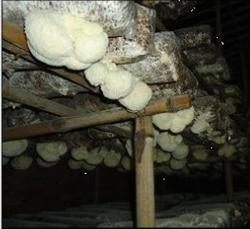
Detailed Explanation of Fast-Growing, High-Yield Cultivation Techniques for Lion's Mane Mushroom
Lion's mane (Hericium erinaceus) is a type of edible fungus whose fruiting body is tender and delicious with a delicate fragrance. In recent years, as the area under artificial cultivation of lion's mane has expanded year by year, yields have also continued to increase. The fast-growing, high-yield cultivation techniques for lion's mane are summarized and introduced below. 1. Material selection and mixing: Select fresh, clean sawdust or cottonseed hulls as the raw material. If the raw material...
-
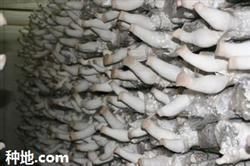
How to cultivate king oyster mushrooms? Detailed explanation of key growing techniques
How to use a cold room to cultivate off-season king oyster mushrooms? What should be noted? When cultivating king oyster mushrooms in a cold room, note the following: 1. The cold room should be chosen on flat, sunny ground at a higher elevation, close to a water source and with good drainage. Generally, each cold room is 10m long, 6m wide and 4m high; the cold room should not be too large, otherwise it is difficult to regulate the temperature; cold...
-
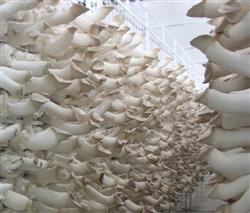
How to cultivate king oyster mushrooms for high yields? Detailed explanation of the key growing techniques
How can king oyster mushrooms be cultivated for high yields? Please advise. For high-yield king oyster mushroom cultivation, you can refer to the following methods: 1. Selection and ratio of raw materials. The king oyster mushroom is a fungus with a strong ability to decompose cellulose and lignin. Its main cultivation materials are sawdust, cottonseed hulls, corncobs, etc., with supplements such as wheat bran, rice bran, corn...
-
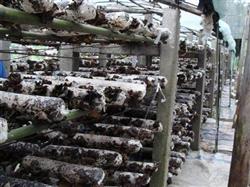
How to grow black fungus (wood ear mushroom) using vertical/three-dimensional cultivation? Detailed growing techniques
How to grow black fungus using vertical/three-dimensional cultivation? Please explain the method. For vertical/three-dimensional cultivation of black fungus, you can refer to the following methods: 1. Spawn preparation: The spawn production technique for wood ear mushroom is the same as for conventional edible fungi. 2. Spawn-running management: For the culture medium for cultivating wood ear mushroom, you can adapt to local conditions and use local materials, using cottonseed hulls or mixed wood sawdust as the culture medium. April-May...
条件筛选