Detailed Explanation of Fast-Growing, High-Yield Cultivation Techniques for Lion's Mane Mushroom
Lion's mane (Hericium erinaceus) is a type of edible fungus whose fruiting body is tender and delicious with a delicate fragrance. In recent years, as the area under artificial cultivation of lion's mane has expanded year by year, yields have also continued to increase. The fast-growing, high-yield cultivation techniques for lion's mane are summarized and introduced below. 1. Material selection and mixing: Select fresh, clean sawdust or cottonseed hulls as the raw material. If the raw material...
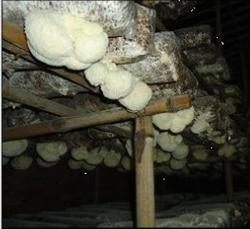
Lion's mane (Hericium erinaceus) is a type of edible fungus whose fruiting body is tender and delicious with a delicate fragrance. In recent years, as the area under artificial cultivation of lion's mane has expanded year by year, yields have also continued to increase. The fast-growing, high-yield cultivation techniques for lion's mane are summarized and introduced below.
1. Material selection and mixing
Select fresh, clean sawdust or cottonseed hulls as the raw material. If the raw material is not fresh, it should be exposed to strong sunlight for 2-3 days before use. For large-scale production, sufficient raw material should be prepared in one go and stored in a moisture-proof, well-ventilated site. When mixing, first blend 65% sawdust (if the sawdust is too fine, add an appropriate amount of wood shavings), 30% rice bran, and 5% garden soil evenly, then weigh out sugar at 1% of the total dry material, urea at 0.2%, ammonium nitrate at 0.3%, magnesium sulfate at 0.5%, gypsum powder at 2%, superphosphate at 1%, and potassium dihydrogen phosphate at 0.1%; add water at a ratio of total material to water = 1:1.2-1.3 and stir evenly, then add 0.01% potassium permanganate, stir thoroughly so that it is fully mixed, bring the moisture content to about 60% (when squeezed in the hand it forms a ball with a water mark between the fingers), and adjust the pH to 5.5-6. If cottonseed hulls are used as the raw material, mix according to the ratio of 90% cottonseed hulls, 3% garden soil, 5% wheat bran, 1% gypsum powder, and 1% sucrose, with a ratio of total material to water of 1:1.4, then add water to each component separately, stir, and mix evenly, adjust the pH to 5.5-6, and the moisture content should be such that when the material is held in the hand, a slight amount of water appears between the fingers; never use excessive water, to prevent nutrients from leaching away with the water and affecting normal mycelial growth. If conditions permit, an appropriate amount of potato juice, soybean cake water, etc. may be added, all of which have varying degrees of yield-increasing effect.
2. Bag making and bag filling
Cut polypropylene film into lengths of 50-60 cm and a width of 26 cm, fold in half, and use a heat sealer to process it into a long narrow tube, then seal one end to form a plastic bag. The bag edges and bag opening must be sealed tightly to prevent bacterial contamination. Then fill the mixed raw material into the bag, pressing firmly while filling until full, then tie the bag opening tightly with string, forming a cylindrical shape, and press it slightly flat so that it has a slightly flat surface, to facilitate culturing and arrangement.
3. Sterilization and inoculation
Place the filled culture bags in a sterilization pot for disinfection and sterilization; the sterilization time can be determined according to the volume of the pot and the amount of material loaded. Generally, atmospheric steam sterilization at 100°C lasts 6-8 hours, then the bags are taken out and placed in a cooling room, and inoculation is carried out when the material temperature drops to about 20°C. When inoculating, select spawn with white, robust, vigorously growing mycelium and no contamination by foreign fungi, and carry out inoculation in a sterile room or inoculation box in strict accordance with sterile operating procedures; the entire procedure must be tight and rapid to prevent the invasion of foreign fungi. When inoculating, first open the mouth of the stock spawn (secondary expanded spawn) bottle, seal the opening with the flame of an alcohol lamp, then untie the opening of the culture bag, use an inoculation hook to quickly take out the stock spawn and insert it into the culture bag; the inoculation amount per bag is about 25-50 g. After inoculation, plug the bag opening with a cotton ball, with appropriate tightness, and tie the bag opening well, which facilitates ventilation and oxygen supply and promotes robust growth of lion's mane mycelium.
4. Cultivation and management
After inoculation, move the culture bags into the cultivation room and place them on the ground or on angle-iron shelving. The room temperature should preferably be controlled at 25-30°C; after about 30-35 days, the mycelium will have covered the culture bag. Below 12°C growth is slow, and above 33°C ventilation and cooling are needed. After lion's mane primordia appear, the room temperature can be lowered to 18-28°C, but development is best and primordia appear fastest at 20-23°C. When the primordia grow to nodular protrusions, a small hole can be torn in the plastic film above them, or the bag opening can be untied, and the room temperature then lowered to 16-18°C. At this time, management should pay attention to ventilation and air exchange, opening doors and windows once each in the morning, noon, and evening, with each ventilation lasting about 15-20 minutes. The requirements for relative air humidity differ greatly at each stage; during the mycelial growth stage, generally 10%-20% is best; during the fruiting body growth stage, 90%-95% is suitable. Below 90%, growth is slow, the flesh is inferior, and the fruiting body is thin and small; below 90%, growth is slow, the flesh is inferior, and the fruiting body is thin and small; below 60%, primordia are very difficult to form, and even if young primordia appear, they will quickly dry up; above 95%, deformed primordia are likely to appear, mostly of the loose branching type, and they are prone to rot and deterioration. Lion's mane is light-loving and requires certain scattered light conditions; under completely dark conditions, although the mycelium can grow, it is very difficult to form fruiting bodies. Therefore, when cultivating lion's mane, the room must be kept bright, preferably with scattered light, avoiding direct sunlight. Generally, during the growth period of lion's mane fruiting bodies, attention should be paid to frequent fine mist spraying to help increase yield.
Autumn has a cool climate, abundant rainfall, and relatively high air humidity, making it the best season for cultivating lion's mane. In other seasons, corresponding measures should be taken according to the environmental requirements of lion's mane so that cultivation can succeed.
5. Harvesting
When the fruiting body's spherical mass is covered with spines, with spines about 1 cm long and white in color, it can be harvested. When harvesting, press the bag with the left hand and with the right hand grip the fruiting body and slowly twist it off downward; note that the stipe should not be left with too high a stub, to avoid rot after watering and to prevent attracting foreign fungi and insect pests.