Tremella (white fungus) cultivation and growing techniques: how long can a mushroom bag be used, and how many times can it be harvested repeatedly?
There are three cultivation methods for Tremella: log cultivation, bag cultivation, and bottle cultivation. Today I will introduce the bag cultivation method. How long can a Tremella mushroom bag be used at one time? Bag-cultivated Tremella can generally be harvested 2 times. So can the Tremella mushroom bag be reused? Actually it cannot, because this will cause bacteria to increase, which has a negative impact on both the yield and quality of Tremella.
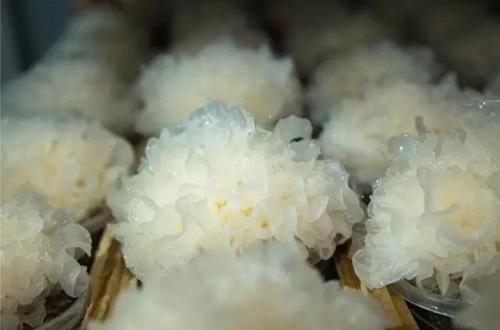
Plastic bag cultivation method: Tremella bag cultivation uses plastic bags of a certain size, filled with some culture material; under certain culture conditions, the Tremella mycelium spreads and grows inside the bag, and the Tremella fruiting bodies grow out from the holes on the surface of the bag.
Nutrient material formula: There are many culture material formulas for Tremella, and each region should select raw materials with high cellulose and lignin content according to local conditions. The formula must include Gang of Liaoning mineral element materials.
(1) Sawdust medium: broadleaf tree sawdust 75%, gypsum 2%, soybean powder 1.5%, white sugar 1%, magnesium sulfate 0.3%, potassium dihydrogen carbonate 0.2%, material: water 1:1.1-1.3, pH 5-6
(2) Cottonseed hull medium: cottonseed hull 80%, wheat bran 15%, gypsum powder 2%, soybean powder 1.5%, white sugar 1%, magnesium sulfate 0.3%, potassium dihydrogen carbonate 0.2%, material: 1.1—1.3, pH 5-6
(3) Mulberry branch medium: mulberry branches (crushed) 70%, wheat bran 25%, gypsum powder 2%, white sugar 1%, soybean powder 1.5%, magnesium sulfate 0.5%, material: water 1:1.3, pH 5-6
Mixing material and filling bags: Mix all the powdered raw materials evenly. First dissolve the sugar, magnesium sulfate, potassium dihydrogen carbonate, etc. in a small amount of water, then slowly add water according to the proportion, and then repeatedly mix all the raw materials evenly.
Before filling the culture material, first blow air into the plastic bag. Check whether it leaks air. Then fill the above culture material into the bag, filling one section and compacting one section to keep the tightness consistent. When filled to 3 to 5 cm, tie the bag opening tightly, and use a flame to melt and seal the opening, wipe the surface of the bag clean with a cloth, then use a template to press the bag into a flat round shape, and then use a specially made hole puncher to punch four small holes evenly on the bag surface. The holes are 2 cm in diameter and 2 cm deep, then seal them with 3 cm square medical adhesive tape, and then transfer to a sterilization pot for sterilization.
Sterilization and inoculation:Whether the culture medium is thoroughly sterilized is the key to cultivating Tremella. Usually, atmospheric pressure sterilization is used, that is, using an earthen steaming stove for disinfection. After disinfection, pile it in a cool place, and when the temperature drops to about 28 degrees, it can be inoculated. One day before cultivation, close the doors and windows of the culture room. For strict disinfection, fumigate each cubic meter of space with a mixture of 8 grams of potassium permanganate and 15 ml of formalin solution.
Managing fungus culture: The management of fungus culture mainly involves controlling the relationship among temperature, humidity, and air so as to favor the growth of Tremella mycelium. From 1 to 3 days after inoculation, high temperature is required to promote germination. The Tremella spawn is transferred from the spawn bottle to the plastic bag, and after several stages of handling, it suffers a certain amount of damage. In the first three days, the room temperature should be slightly higher than the suitable temperature. It can be adjusted to 28 degrees to prompt the spawn to recover and become active as soon as possible.
From 8 to 13 days after inoculation is the period of Tremella primordium formation, and it is also the key period that determines high yield of Tremella. At the beginning, the white hyphal mass of Tremella forms rapidly inside the holes, and the primordium is about to form. In order to have enough air, the adhesive tape sealed at the hole openings can be torn off so that air enters the holes through the openings. Water management must be more careful. If standing water is found in the holes, it should be poured out promptly or absorbed dry with medicinal cotton to avoid ear rot and major losses.
From 14 to 18 days after inoculation is the fruiting stage. When 70% of the small fruiting bodies have grown out one after another, at this time, all the adhesive tape can be removed, the original holes can be cut open and expanded with a blade to about 4 cm in diameter, and new newspaper can be placed on the bag surface. Then, according to the size of the fruiting bodies, rearrange the plastic bags, placing the large ones on the lower layer and the small ones on the upper layer, because the temperature on the upper part is higher than that below, so that the fruiting bodies can grow in a balanced way.
From 26 to 40 days after inoculation is the stage of fruiting body maturation. The focus of this stage is moisture retention, requiring spatial spraying and watering on the ground, with the relative air humidity required to reach 90-95%. In a humid environment, the fruiting bodies grow very well, the ear pieces are plump and expanded without shrinking, and give off waves of delicate fragrance. In order to prevent pest invasion, window screens should be installed on the windows.