How to cultivate king oyster mushrooms? Detailed explanation of key growing techniques
How to use a cold room to cultivate off-season king oyster mushrooms? What should be noted? When cultivating king oyster mushrooms in a cold room, note the following: 1. The cold room should be chosen on flat, sunny ground at a higher elevation, close to a water source and with good drainage. Generally, each cold room is 10m long, 6m wide and 4m high; the cold room should not be too large, otherwise it is difficult to regulate the temperature; cold...
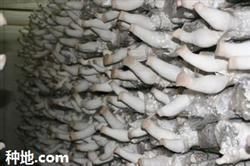 How to cultivate king oyster mushrooms? Please advise
The king oyster mushroom, also known as Pleurotus eryngii, is called yukitake in Japan. In fungal classification it belongs to the class Holobasidiomycetes, order Agaricales, family Pleurotaceae, genus Pleurotus.
The king oyster mushroom is a high-quality large fleshy mushroom found in the high mountain, grassland and desert zones of southern Europe, northern Africa and Central Asia. The king oyster mushroom is very nutritious; the protein content of the dried product reaches as high as 25%, it contains 18 amino acids, and it is rich in polysaccharides and oligosaccharides. The king oyster mushroom has thick, plump flesh and a crisp, tender texture; in particular, the stipe is snow-white, thick and long, with a dense, firm structure, making it one of the best-tasting mushrooms. In 1998, China introduced it from Japan for research, cultivation and demonstration promotion, and domestic king oyster mushroom production has shifted from seasonal cultivation to factory cultivation. At present, China, Japan, South Korea, Thailand and Taiwan, China and other countries and regions have all begun commercial production.
II. Growth and development of the king oyster mushroom and common cultivated varieties
The conditions for the growth and development of the king oyster mushroom are: temperature range 22-28°C (mycelium), 15-18°C (fruiting body); moisture and humidity: the water content of the substrate is 60%-63%, the relative air humidity during the mycelium growth stage is below 70%, and the relative air humidity during the fruiting body formation stage is 90%-95%; substrate pH: the most suitable pH is 6.5-7.5; light: fruiting body differentiation and growth require 500-1000Lx of scattered light.
There are many cultivated varieties of the king oyster mushroom, for example: Taiwan No. 6, Fujian No. 1, Henan No. 3, Beijing No. 4, Japan No. 5 and Shandong No. 8, etc. Each region should select king oyster mushroom varieties suitable for local conditions according to the local natural climate conditions.
III. King oyster mushroom cultivation techniques
The cultivation process of the king oyster mushroom mainly includes the following five aspects; the main cultivation steps are introduced below: spawn preparation → bag making and mycelium incubation → fruiting management → fruiting → resting-flush management
1. Obtaining spawn and selection criteria
The selection criteria for king oyster mushroom spawn are: strong growth vigor, uniform and consistent mycelium, adaptation to local climate conditions, and strong productivity.
2. Selection, formulas and treatment of the substrate
Various agricultural by-product residues such as cottonseed hulls, broadleaf tree sawdust, sugarcane bagasse and wheat straw can all be used to cultivate the king oyster mushroom, among which cultivation with cottonseed hulls gives the highest yield and the largest fruit body shape. The most suitable pH of the substrate is 6.5-7.5, and the substrate-to-water ratio is 1:1.2-1:1.3. The commonly used formulas are mainly the following:
Formula one: cottonseed hulls 65%, sawdust 18%, wheat bran 15%, calcium carbonate 2%.
Formula two: cottonseed hulls 40%, sawdust 38%, wheat bran 20%, calcium carbonate 2%.
Formula three: cottonseed hulls 37%, sawdust 37%, wheat bran 24%, white sugar 1%, calcium carbonate 1%.
Formula four: soybean stalk powder 30%, cottonseed hulls 22%, sawdust 22%, wheat bran 19%, corn flour 5%, white sugar 1%, calcium carbonate 1%.
3. Cultivation methods and fruiting management
The main cultivation methods for the king oyster mushroom are: plastic bag cultivation, soil-covered raised bed cultivation and semi-buried cultivation, etc. Taking bag cultivation as an example, the cultivation and management of the king oyster mushroom are introduced below:
(1) Bag making and mycelium incubation
Key technical points: First, bag selection: use low-pressure high-density polyethylene plastic bags with a diameter of 17-20cm and a length of 33-35cm for filling; second, sterilization operation: use conventional sterilization, inoculation and mycelium culture; third, culture conditions: during the mycelium growth stage, a temperature of 20-25°C is required, the culture time is about 50d, and culture is done in the dark.
(2) Fruiting management
In order to cultivate king oyster mushrooms of better quality, temperature conditions, humidity conditions and ventilation conditions need to be well controlled during the cultivation period.
Temperature conditions: 10-15°C (primordium formation stage) → 15-18°C (fruiting body growth stage). If the temperature is higher than 18°C, the fruiting body grows faster and quality declines; when the temperature exceeds 22°C, primordia rarely appear.
Humidity conditions: during the cultivation period, spray water onto the air space and the ground as much as possible so that the relative air humidity is maintained at 90%-95%. Ventilation conditions: during the cultivation period, ventilate frequently to keep the air in the mushroom house fresh, which is beneficial to the normal growth of the fruiting bodies.
(3) Harvesting
The harvesting time can be properly determined according to its commercial requirements. From the appearance of mushroom buds to harvest is generally about 15d; at this time the mushroom caps are about to flatten and the spores have not yet been discharged, so harvesting is most suitable.
4. Resting period management
After the first flush is harvested, stop watering for 4-5d, and at the same time strengthen ventilation work. After the mycelium has recovered, enter the normal management procedure. After about 14d, the second flush appears. However, the yield and quality of the second flush are a little worse than those of the first flush.
In addition, after the first flush is harvested, the plastic bags can also be removed for soil-covered cultivation, which can significantly increase the yield of the second flush.
IV Comprehensive control of diseases, pests and contaminating microorganisms
During the cultivation and growth period of edible fungi, especially during the fruiting body growth period, they are often attacked by diseases, pests and some contaminating microorganisms. The diseases and pests that cause relatively serious damage to the king oyster mushroom in production are:
(1) Diseases
Common diseases of the king oyster mushroom include yellow rot and wilt, etc.
★Symptoms when yellow rot occurs: yellow-brown spots spread over the entire mushroom body, finally causing yellowing and rot. This disease is mainly caused by bacteria of the genus Pseudomonas.
Causes of the disease: This disease often occurs when the temperature is relatively high (above 20°C), the humidity is relatively high and ventilation is poor, and it is mainly transmitted through water.
Control measures: During the growth period of the king oyster mushroom, strengthen ventilation management and avoid high-temperature, high-humidity environments. After each watering, carry out ventilation management at the same time to reduce the moisture on the surface of the mushroom bodies, which can prevent bacterial diseases. After the disease appears, promptly remove the diseased mushrooms and strengthen ventilation management to prevent infection of other mushroom bodies.
★Symptoms when wilt occurs: the young king oyster mushrooms stop growing, shrink and die, and finally turn yellow and rot.
Causes of the disease: it is mainly caused by high temperature (above 22°C), which causes the young mushrooms to die, and finally bacterial infection occurs, turning them yellow and causing rot. Control measures: during the cultivation period of the king oyster mushroom, once high temperature occurs, cooling measures should be taken immediately. After the young mushrooms wither and die, remove them promptly to prevent bacterial reproduction, mushroom body rot, and attraction of pests to feed and reproduce, resulting in pest damage.
(2) Pests
During the cultivation process of the king oyster mushroom, the common pests mainly include mites, nematodes and mushroom gnats, etc.
Mites, commonly known as mushroom lice, are tiny in form, like to live in groups, and come in white and pink colors; they are the main pests of edible fungi. Mites move slowly and mostly lay eggs on the substrate or in the gills of mushrooms. After mites appear on the mushroom bed, the mycelium in the bags is first bitten by the insects, resulting in no mycelium germination after inoculation; they bite off the mycelium, causing the mushroom buds to shrink and die; the mites attach to the fruiting bodies and bite up and down, causing the bitten areas to discolor, and in severe cases holes appear, causing rot and spoilage.
Nematodes are a kind of lower animal, with very many species and a very wide distribution. Most nematodes harmful to edible fungi are saprophytic nematodes, a few are semi-parasitic, and only very few are parasitic pathogenic nematodes. Nematodes damage both the mycelium and the fruiting bodies.
There are many kinds of mushroom gnats; their larvae often appear in damp places and like to feed on the substrate and growing mushroom fruiting bodies. Mushroom gnats cause great harm to edible fungus cultivation, and the damage by mushroom gnats can also cause other diseases of edible fungi.
After pests appear, they seriously affect the yield and quality of the king oyster mushroom, so control should be strengthened. First, the substrate must be thoroughly sterilized to kill insect eggs; second, the inside and outside of the mushroom house should be cleaned and disinfected frequently to keep the environment clean and hygienic; third, the mushroom house should be ventilated frequently to keep the air inside fresh.
Click to get more king oyster mushroom cultivation techniques
Click to get more edible fungus cultivation techniques