-
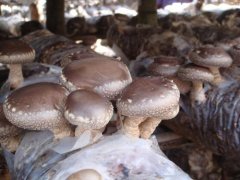
How to grow mushrooms on coffee grounds: cultivation and growing method, can spent mushroom substrate be reused?
Coffee shops today produce a fairly large amount of coffee grounds every day, so someone discovered that coffee grounds can be used to grow mushrooms, and this is a usable resource. Coffee grounds are an excellent medium for growing mushrooms (especially suitable for oyster mushrooms). Here we should thank the coffee brewing process
-
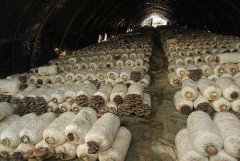
Using coffee grounds to grow mushrooms has many clever uses; how much is a ton of spent mushroom substrate?
What are some of the clever uses of coffee grounds? Coffee grounds are usually treated as waste, but they actually have many clever uses, such as being used to remove odors, and they can also be used as soil for growing mushrooms. Coffee grounds contain a large amount of antioxidants and are very suitable as a nutrient source in soil.
-
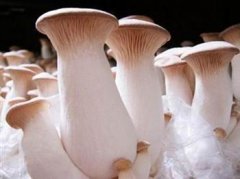
Growing mushrooms with coffee grounds: can you plant mushrooms with the stems stuck into coffee grounds?
Do you know how to grow mushrooms with coffee grounds? Let's find out below. First, you need to prepare the spawn you want to grow, then find the coffee grounds you need. Now let's take a look at how to grow them. 1. Fill the bag or container to 2/3 full, and the coffee grounds should ideally be fresh from the same day.
-
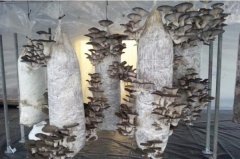
Can Coffee Grounds Be Used to Grow Mushrooms? A Detailed Guide to Substrate Recipes
Do you know what coffee grounds are good for? As far as we know, they can be used as a raw material for dehumidifying and deodorizing, and they are also rich in nutrients. Because of these rich nutrients, some people saw a business opportunity and started using coffee grounds to grow mushrooms,
-

Semi-underground three-dimensional cultivation of oyster mushrooms yields high output and good returns
Semi-underground three-dimensional bed-frame cultivation of oyster mushrooms is a new approach explored in recent years to achieve high yields and improve economic returns. According to trials, on an area of 20 sq m, with 2000 kg of substrate, the annual output of oyster mushrooms is about 2500 kg, with a biological efficiency of over 120%. The key technical points are as follows: 1. Building the greenhouse: first dig a pit 1.8 m to 2 m deep and 4 m to 5 m wide, with the length determined as needed, and place the three-dimensional bed frames inside. On top, use bamboo poles and plastic film to build an arched shed, pack the surrounding edges firmly with soil, and cover with straw mats. Leave ventilation openings of about 30 square cm on all four sides, east, west, north and south, and build a small door on the west side for workers to enter and exit.
-
Detailed Explanation of Underground Shiitake Cultivation Methods and Techniques
Underground shiitake cultivation uses underground tunnels, natural caves and other underground facilities to grow shiitake mushrooms, allowing year-round spawn production and fruiting in all four seasons. This is another new cultivation site for shiitake production after wild forest areas, mushroom houses and plastic sheds. This cultivation method has developed rapidly in China, with a history of more than 20 years, and a complete set of production models for large-scale underground shiitake cultivation has been formed. It can be done both in bags and in blocks. Underground shiitake cultivation makes full use of the low-temperature and moisture-retaining properties of this site, and with the addition of cultivation bed racks and light sources, it can
-
New Shiitake Mushroom Ground Cultivation Technology Helps Cultivation in High-Altitude Cold Mountain Areas
Shiitake mushroom is a temperature-variable fruiting fungus; when the day-night temperature difference exceeds 10°C, it grows well, yields high, produces large and thick-fleshed mushrooms of good quality. In high-altitude cold regions, the day-night temperature difference in spring and summer is large, often exceeding 10°C, making it suitable for cultivating shiitake mushrooms, with a per-mu yield of 3000-4000 kg. The ground cultivation technology for shiitake mushrooms in high-altitude cold mountain areas is a new cultivation model following ground cultivation and bag cultivation of shiitake mushrooms, and it is also a good project for mountain people to escape poverty and become prosperous. The main cultivation techniques are introduced as follows: Cultivation season and temperature. The general sowing period is from April 20 to May 10 each year
-
What is the story behind "ground bud mushrooms," also known as "soil-topping mushrooms"?
Symptoms: They mainly appear at the early fruiting stage. The fruiting bodies are attached at a low position, usually inside the compost, on the surface of the compost, or in the lower part of the coarse soil layer, and after growing they break through the soil and push up through the mud. Causes: 1. Soil is mixed into the compost, or the casing layer is unevenly dry and wet. When the temperature, humidity, and air conditions inside the compost are suitable for fruiting body growth, the mycelium twists around the soil, thickens, and forms primordia. After the primordia differentiate, they grow upward and push up through the mud. If upward conditions are unsuitable, they will even turn around and grow downward under the bed, forming bottom-of-bed mushrooms. 2. If the coarse soil is watered over too long a period, and after watering the mushroom house is ventilated too much and the temperature in the mushroom house drops, mycelial growth into the coarse soil is inhibited and fruiting is promoted too early. If the fine soil is applied too late or too thickly, if watering is not timely, if watering is too fast or too urgent, or if ventilation lasts too long after watering, the soil layer lacks sufficient moisture and the mycelium does not climb onto the fine soil for a long time, all of which lower the fruiting position. 3. If water is sprayed too early or too urgently at the fruiting stage, or if the amount of water sprayed is too large, upward growth of the mycelium in the soil layer is inhibited, forcing the mycelium to twist together among the coarse soil particles, thereby lowering the fruiting position, causing sparse fruiting and abnormal fruiting positions, and increasing the number of ground bud mushrooms.
-
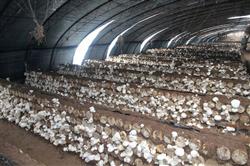
What should be noted when growing White Lingzhi mushrooms (Pleurotus nebrodensis) in soil-covered ground beds?
The White Lingzhi mushroom (Pleurotus nebrodensis) is a culinary mushroom variety with relatively low yields; generally, three-dimensional wall-style cultivation can achieve a biological conversion rate of 30-40%. To increase the yield of White Lingzhi mushrooms, a soil-covered ground bed cultivation model can be adopted; with proper management, this method produces very high yields. According to the author's extensive trials, the biological conversion rate of ground-bed-cultivated White Lingzhi mushrooms can reach 80-100...
条件筛选