-

What are the control methods for underground pests of licorice?
The main underground pests at the seedling emergence stage of licorice are mole crickets and the Oriental beetle (He's Oriental chelifer), while at the mature plant stage the main ones are click beetles, scarab beetles, cutworms and darkling beetles, which cause serious damage. After wild licorice is damaged by underground pests, because the wild root head is deep below the soil surface, it is mainly the underground stem that is eaten and damaged, and after damage the adventitious buds can grow rapidly and regenerate, so the whole plant does not die. In contrast, what is mainly eaten and damaged in cultivated licorice is the root, and the plants are young and small with weak recovery ability; accompanied by rot infection, this often leads to the whole plant rotting and dying. In
-
Control methods for the Ningxia ground pearl (Porphyrophora ningxiana) pest on licorice
It is distributed in all licorice-producing areas nationwide, generally causing damage from the seedling stage to the mature plant stage. The Ningxia ground pearl has 8 host plant species, all of which are perennial leguminous herbaceous perennials, with licorice suffering the most severe damage, while other hosts are only slightly affected. (1) Damage period and damage symptoms: Overwintering nymphs can move intermittently when the surface soil temperature reaches 6°C, and become frequently active when the daily average temperature exceeds 12°C, in order to search for hosts. Early March is the initial activity stage, mid-to-late April is the peak period for searching hosts, and by mid-May they have basically all settled. From late May to late July
-
What is ground bed cultivation of Gastrodia elata? Let us walk you through this cultivation method
In low-lying flat land with a high water table, relatively low temperatures, and damp, rainy conditions, or when cultivating Gastrodia elata on a small scale in a new area, this planting method can be used. Bed cultivation is also divided into two methods: single-layer planting and double-layer planting. ① Single-layer planting method: Level the ground and make a bed 60-70 cm wide; the bed length depends on the terrain and the amount of Gastrodia elata to be planted. On the leveled bed surface, first spread a 2-3 cm thick layer of base culture material, then lay the fungus logs horizontally with a spacing of 6 cm. On both sides of the fungus logs, first add culture material up to half the height of the logs,
-
New technique for semi-underground arched shed cultivation of reishi mushroom
The method of cultivating reishi mushroom by stacking fungus bags into walls and covering with soil in a semi-underground arched shed has many advantages. First, a semi-underground shed costs less to build than a ground-level shed, saving 40% on shed construction costs; second, water management is convenient, as it is only necessary to keep the casing soil layer adequately moist; third, mushrooms emerge from one end, concentrating nutrients, so the reishi mushrooms grown are robust and of good quality; fourth, a semi-underground arched shed is warm in winter and cool in summer. When the outdoor ground temperature is around 40°C in summer, the temperature inside the shed does not exceed 36°C, and in winter it is 3°C--4°C higher than ground level. The skylights on the shed roof can meet the light requirements and provide ventilation. The technique is briefly described as
-
Methods for Controlling Underground Pests of Codonopsis pilosula and Key Technical Points
The main underground pests harming Codonopsis pilosula are white grubs, cutworms and mole crickets; the above-ground pest is spider mites. Control methods for underground pests: use poisoned soil and poisoned bait to lure and kill them. Poisoned soil preparation: use 0.5-1.5 kg of 35% endosulfan per mu, 15 kg of soil, mix and scatter among the seedling roots; poisoned bait preparation: use 1 kg of roasted cake meal per mu, add 35 g of trichlorfon, mix well with water, scatter on the bed surface and beside the beds, in the furrows or on the ridges. Control methods for above-ground pests: the above-ground pest of Codonopsis pilosula is spider mites, generally
-
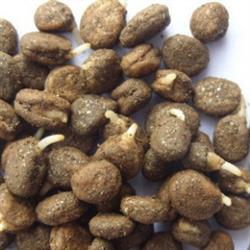
How should ginseng seeds be treated before flat-ground planting?
How should ginseng seeds be treated for flat-ground planting? Please explain the method. Before planting ginseng, you can refer to the following methods for treatment: after the water seeds are dried until the skin turns white, spread them in sunlight at a temperature of around 25°C and turn them for 30 minutes; this uses ultraviolet light to kill bacteria on the seed coat. Mix weathered sand (river sand also works, but it has a high bacterial content...) with ginseng seeds at a ratio of 5:1, keeping moisture between 15% and 18%, that is, it forms a ball when squeezed in the hand and breaks apart when released. Store the mixed ginseng seeds with moderate moisture in a jar or wooden box, or dig a pit in ground that does not accumulate water, wrap it with mesh netting, and build a rainproof and sun-shading shelter above. Before the seeds crack, control the temperature at 18°C-20°C. After the cracking rate reaches 80%, lower the temperature of the seed storage container to 13°C-15°C. Too high a temperature and too much moisture easily cause seed rot. Ginseng seeds stored in sand should be turned once every 10-15 days to ensure consistent moisture in the container. When moisture is low, supplement with a warm water spray; when moisture is high, dry them in the air promptly.
条件筛选