What should be noted when growing White Lingzhi mushrooms (Pleurotus nebrodensis) in soil-covered ground beds?
The White Lingzhi mushroom (Pleurotus nebrodensis) is a culinary mushroom variety with relatively low yields; generally, three-dimensional wall-style cultivation can achieve a biological conversion rate of 30-40%. To increase the yield of White Lingzhi mushrooms, a soil-covered ground bed cultivation model can be adopted; with proper management, this method produces very high yields. According to the author's extensive trials, the biological conversion rate of ground-bed-cultivated White Lingzhi mushrooms can reach 80-100...
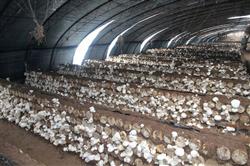 The White Lingzhi mushroom (Pleurotus nebrodensis) is a culinary mushroom variety with relatively low yields; generally, three-dimensional wall-style cultivation can achieve a biological conversion rate of 30-40%. To increase the yield of White Lingzhi mushrooms, a soil-covered ground bed cultivation model can be adopted; with proper management, this method produces very high yields. According to the author's extensive trials, the biological conversion rate of ground-bed-cultivated White Lingzhi mushrooms can reach 80-100%. However, ground bed cultivation of White Lingzhi mushrooms is not simply a matter of burying the mushroom bags under the soil; there are many practical issues that require attention.
1. Primordia should be induced before covering with soil. According to the author's investigation, when growers adopt the ground bed cultivation model, they generally cover the mushroom bags directly with soil. This approach has three drawbacks: first, if the bags are not well matured, mushroom emergence will be very slow; second, it is extremely likely to cause uneven mushroom emergence across the bed surface, with some areas producing many mushrooms while others produce none; third, the yield is very low. The correct approach is to first carry out primordium induction management on the mushroom bags. At this time, relatively strong light should be maintained, the temperature should be kept in the range of 8-20°C, and the humidity should be maintained at 85-95%. If the humidity is insufficient, plastic film can be placed over the mushroom bags to retain moisture. Once small millet-grain-sized white dots appear at both ends and in the middle of the bags, soil covering can proceed. This process generally takes about 15 days. After this treatment, White Lingzhi mushrooms emerge uniformly and quickly, with individual mushrooms being uniform and attractive.
2. The gaps between mushroom bags must be tightly filled with soil and thoroughly irrigated with water, leaving no voids. When covering the mushroom bags with soil, gaps of about 5 cm or more should be left between the bags, filled completely with soil, and thoroughly irrigated with water. The advantage of doing this is uniform primordium formation, and because each mushroom bag is tightly separated by soil, it can prevent bags infected with contaminant fungi from spreading the contamination to healthy bags. This point deserves even more attention during periods of higher temperatures.
3. When mushrooms emerge at high temperatures, ventilation must be adequate; otherwise, poor ventilation can easily cause diseases that lead to yellow rot of the mushroom bodies, with serious consequences. At this time, if humidity is insufficient, measures such as irrigating the bed with water and spraying water into the air can be taken; on the one hand, this can increase the humidity in the mushroom shed, and on the other hand, it can also lower the temperature in the shed.
4. When covering with soil, bags contaminated with foreign fungi should be picked out and handled separately; they must not be mixed in, which would cause the contamination to spread.
5. Mushroom bodies should be thinned promptly; they should not be allowed to grow freely, otherwise the mushroom caps will grow too densely, pressing against each other and seriously affecting the market quality of White Lingzhi mushrooms.
6. The soil covering the mushroom bags should not be too thick; it is best to just slightly cover the mushroom heads. Otherwise, overly thick soil will make mushroom emergence difficult, affecting both yield and quality.