-

Rice Pesticide Registration Certificate No. 88-39-4 Information Overview
Excellent variety in the rice regional trial of rice-growing areas. 88-39-4 is a conventional japonica rice variety bred by the Institute of Agricultural Sciences of Changshu City, Jiangsu. Characteristics: In 1998, it participated in the national southern rice region double-season late japonica group regional trial, with an average yield of 7208.9 kg/hm2, 9.6% higher than the control Xiushui 11, extremely significant, ranking first; in the 1999 continued trial, the average yield was 7157.9 kg/hm2, 2.22% higher than the control Xiushui 11, not significant, and 3.12% lower than Xiushui 63, not significant, ranking seventh
-
How is scorpion venom produced? A detailed explanation of its formation process
The medicinal value of scorpions depends mainly on scorpion venom. The poisoning symptoms caused when people are stung by scorpions are also the effect of scorpion venom. The toxicity of scorpion toxin is similar to that of snake toxin and is extremely severe. Scorpion venom acts on frogs, guinea pigs, rabbits and other animals, and can produce poisoning in all of them. Its median lethal dose (LD50) for mice is 1.6 milligrams per kilogram of body weight (male mice) and 1.4 milligrams (female mice). However, its toxicity is destroyed when heated to 100°C for 30 minutes. The pharmacological functions of scorpions depend mainly on scorpion venom. Scorpion venom
-
A Complete Guide to Management Key Points During the Cotton Yield Formation Period
This year, the light and heat conditions in the early stage were relatively favorable for cotton growth, but the recent low temperature, scant sunlight, and rainy weather have been extremely unfavorable to cotton growth, and boll shedding has increased noticeably. We are currently in the critical period for cotton yield formation. To secure a high cotton yield, the following management measures should be strengthened: 1. Supplemental application of top-covering fertilizer and foliar spraying. For cotton fields with many set bolls and fields showing premature senescence, apply 5-7.5 kg of urea per 667 sq m, or combine this with pest control for foliar spraying. 2. Reasonable pruning and chemical regulation. Due to the recent rain
-
Upland rice 297 approved, variety information at a glance
1. Variety origin: Bred by the College of Crop Science, China Agricultural University in 1993. The parents are: Mujiao 78-595 x khaomon. Approved in Beijing in 2000. 2. Characteristics: Grown as a single-season spring-planted upland rice in Beijing, Tianjin, Hebei, southern Liaoning and northern Shandong, the full growth period is 130-140 days; when dry-direct-seeded after wheat in the Huang-Huai region, the full growth period is 110-120 days. Strong drought tolerance, well-developed root system, thick and sturdy stems, relatively lush growth, fairly strong lodging resistance. Plant height 100-120 cm, weak tillering ability, relatively compact plant type
-
Detailed Explanation of Key Technical Points for Inducing Bud Formation and Shelf Fruiting of Shiitake Mushrooms
After the substrate bags change color, they enter the fruiting stage. The key management points during the bud induction period are: manually increase the temperature difference and the wet-dry difference, keep the temperature at 15-20°C and the humidity at 85%-90%, combine with ventilation, and apply temperature difference stimulation; after 3-5 days, mushroom buds will appear in large numbers. In winter, bud induction focuses mainly on heat preservation. The methods are: (1) Induce buds on indoor shelves: arrange the substrate bags neatly on the shelves with 2 cm between bags, place 1-2 stoves in the room, keep the temperature at 15-20°C, ventilate 3 times a day for about 1 hour each time, remove coal
-
Methods and Key Technical Points for Controlling Peach Shoot Growth and Promoting Flower Formation
Many peach growers have called to ask how to stop peach shoot growth and form more flower buds. The main factor affecting flower bud differentiation is the conflict between reproductive growth and vegetative growth. When vegetative growth is too vigorous, it seriously affects reproductive growth, that is, flower bud differentiation. Therefore, during the flower bud differentiation period (late May to before leaf fall), attention must be paid to the balance between the two in order to ensure normal flower bud differentiation. 1. From late May to June, pinch off the shoot tips at the 10-12 leaf position on autumn shoots to promote flower bud differentiation and branching, or spray Shoot Control Ling (Kongshao Ling).
-
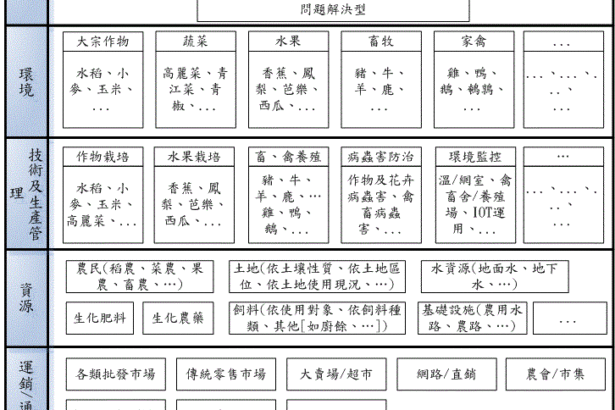
How to establish a goal-oriented systematic review framework for agricultural development and transformation
Establishing a goal-oriented systematic review framework for agricultural development and transformation
-
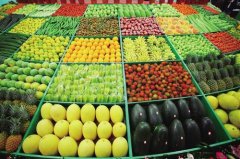
Revision of the format of the agricultural product inspector certificate, what are the regulations on agricultural product labeling?
What are the buffer period regulations for product labeling after the revision of the format of Taiwan, China organic agricultural product verification certificates? Let's take a look together. 1. On August 24, 2018 (the 107th year of the Republic of China), the Council of Agriculture, Executive Yuan amended the specifications for the organic agricultural product label stipulated in Article 3 of the Regulations on the Administration of Agricultural Product Labels
-
Rice variety approval information for Min-Shen-Dao 2008G02
Characteristics: The average whole growth period over two years of regional trials was 144 days, 5 days longer than the control Shanyou 63. The population is uniform, with fairly strong tillering ability, large panicles and many grains, and good color development in the late stage. The effective panicle number per mu is 163,000, plant height 122.3 cm, panicle length 25.7 cm, total grain number per panicle 195.2, seed setting rate 85.12%, and 1000-grain weight 27.1 g. In Sanming City, two years of field natural induction identification for rice blast resistance rated it as moderately resistant to rice blast. Rice quality test results: brown rice rate 79.2%, milled rice rate 70.7%,
-
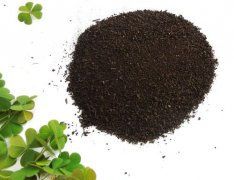
DIY Method for Turning Kitchen Waste into Organic Fertilizer
In many European countries, when dealing with kitchen waste and yard weeds and fallen leaves, people often use their own yards for natural composting, and some use machines for high-speed fermentation. In the early days, farming families in Taiwan, China all had compost sheds and manure pits, and these can provide us with space for reflection and thought.
条件筛选