-
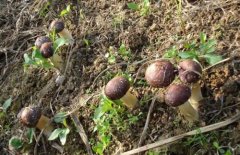
The Latest Cultivation Techniques, Formulas and Planting Times for Wine Cap Stropharia (Stropharia rugosoannulata): A Detailed Guide
Do you know how to grow wine cap stropharia? Would you like to grow it yourself? Below we introduce a simple yet high-yielding cultivation method. Let's take a look. 1. Substrate preparation: rice straw 100%, plus wheat bran or rice bran 10%, cornmeal 5%, gypsum powder 2%,
-
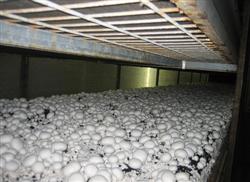
What precautions should be taken for topdressing after mushroom planting?
What should be noted for topdressing after mushroom planting? Please explain that mushrooms need relatively more nutrients to grow. If nutrients cannot be supplied in time, the fruiting bodies will grow poorly, especially in the later stage, and premature senescence may also occur. Especially when the compost quality is poor, with little manure and much straw, and the casing layer is thin, this will significantly affect yield...
-
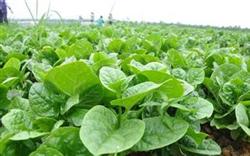
Methods for Raising Seedlings and Transplanting Ceylon Spinach (Malabar Spinach) and Key Technical Points
Prepare the seedbed well, sow dry seeds, and seedlings emerge in 3 to 5 days at a suitable temperature of around 28°C; if the soil temperature is on the low side, the seeds should be pre-germinated before sowing. During the seedling stage, keep the temperature appropriately low, and transplant when the plants have 4 to 5 true leaves. For harvesting tender shoots, use a row spacing of 20 to 25 cm and a plant spacing of 15 to 20 cm; for growing on trellises to harvest tender leaves, use a row spacing of 60 cm and a plant spacing of 25 to 35 cm, keeping...
-
What are the key technical points for planting bamboo fungus (Dictyophora indusiata) in open fields?
How do you plant bamboo fungus in open fields? Here is a detailed introduction. For open-field planting of bamboo fungus, you can refer to the following methods: 1. Cultivation season. "D89 Dictyophora indusiata" is a mesophilic fungus, and the cultivation period is when the local temperature is stable at 8-28 degrees C. In our city, February to April is generally the sowing period, and May to October (temperature not lower than 16 degrees C) is the mushroom growth...
-
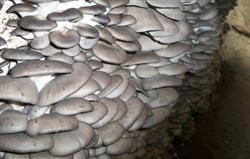
How to Cultivate Oyster Mushrooms for High Yields? Detailed Explanation of Key Planting Techniques
How to cultivate oyster mushrooms for high yields? A detailed introduction to the methods. Oyster mushroom cultivation has the advantages of low investment, quick results and small risk. Planting in autumn makes full use of the scraps and by-products of agricultural production and the idle labor of autumn and winter, and it takes only 1 month from input to output, making it a short, quick and efficient money-making project. Culture...
-
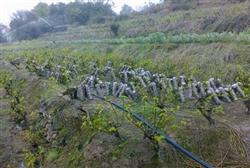
Key Technical Points for Interplanting Black Wood Ear Mushrooms in Orchards
Interplanting black wood ear mushrooms in trenches between orchard rows yields fairly considerable returns. The main cultivation methods are as follows: 1. Stock culture substrate formula: sawdust 78%, rice bran (or wheat bran) 5%, corncob 15%, gypsum powder 1%, sucrose 1%. Weigh each ingredient according to the above proportions. First dissolve the sucrose in water, then stir the sawdust, rice bran and gypsum powder...
-
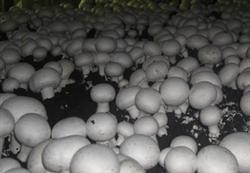
Cultivation Techniques for Interplanting Button Mushrooms in Greenhouse Cucumbers
Greenhouse standards required for this technique: build a greenhouse about 60 m long and 7 m wide, in a location with fertile soil, convenient irrigation and drainage, and unpolluted water. After the greenhouse is built, apply a heavy dose of organic barnyard manure plus potassium and phosphorus fertilizers, deep-plow and level the soil, and give it one thorough watering. Then evenly spray every corner inside the greenhouse with 0.5% dichlorvos, ...
-

Detailed Cultivation Techniques for White Ferula Mushroom: Planting Methods and Management Key Points
White Ferula Mushroom, also known as White Ferula Mushroom, originates from **, hence it is also called Tianshan Divine Mushroom. Its cultivation technique is simple, with a short cycle and strong adaptability; it is tender in texture and fresh in taste, with pure white color, and is a rare edible mushroom of high nutritional value. The mycelium of White Ferula Mushroom is denser and whiter than common Pleurotus varieties, with strong resistance to contamination; the fruiting bodies grow in clusters or singly, the mushroom body is pure white, the flesh is plump and thick, the stipe is thick and long, the cap is crisp and tender in texture, with white gill lines, and the strips are straight; at maturity the cap top curls inward, and it is suitable for long-distance transport, with a single fresh mushroom weighing 50-160 grams. This mushroom belongs to the medium-low temperature type mushroom fungi, and the mycelium
-
Detailed Explanation of Key Technical Points for Field-Cultivated Shiitake Mushroom Planting and Management
Field-cultivated shiitake mushroom is a new technology developed through practical research by Hou Baocang, a large-scale edible mushroom grower in Miaohou Village, Wolong Town, Pingquan County, Hebei Province. The emergence of this technology filled the gap that fresh shiitake mushrooms could not be produced during the high-temperature season from June to September in northern China, and it has strong market competitiveness. 1. Shed construction: Build spawn-running sheds according to the number of bags planted. Generally, every 10,000 bags occupy 120 sq m. The brightness inside the shed must not be too high, otherwise it will affect the normal growth of the mycelium. 2. Material preparation: Calculated for 10,000 bags, 11 tonnes of wet coarse sawdust, 3 cubic meters of fine broadleaf sawdust, 2 tonnes of bran
-
Key Cultivation Techniques for Interplanting Oyster Mushrooms in Pear Orchards
After the pears are harvested, the pear orchard has a relatively long fallow period. Using the empty rows between pear trees to grow one season of oyster mushrooms can yield good returns. 1. Choosing the bed site: It is best to choose a pear orchard relatively close to the village, with good soil quality, convenient irrigation and drainage, and smooth transportation. 2. Carefully preparing the beds: The mushroom beds are 8-10 m long and 1.2 m wide. The bed soil should be plowed 15-20 cm deep and carefully prepared so that the soil is loose and free of weeds, loose on top and firm below, forming a ball when squeezed by hand and breaking apart when dropped on the ground. Build a ridge 4-5 cm high around the bed surface to conserve moisture. After the mushroom beds are prepared, dig drainage
条件筛选