Cultivation Techniques for Interplanting Button Mushrooms in Greenhouse Cucumbers
Greenhouse standards required for this technique: build a greenhouse about 60 m long and 7 m wide, in a location with fertile soil, convenient irrigation and drainage, and unpolluted water. After the greenhouse is built, apply a heavy dose of organic barnyard manure plus potassium and phosphorus fertilizers, deep-plow and level the soil, and give it one thorough watering. Then evenly spray every corner inside the greenhouse with 0.5% dichlorvos, ...
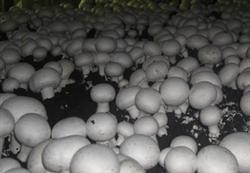
Greenhouse standards required for this technique: build a greenhouse about 60 m long and 7 m wide, in a location with fertile soil, convenient irrigation and drainage, and unpolluted water. After the greenhouse is built, apply a heavy dose of organic barnyard manure plus potassium and phosphorus fertilizers, deep-plow and level the soil, and give it one thorough watering. Then evenly spray every corner inside the greenhouse with 0.5% dichlorvos, and fumigate with 6 kg of sulfur for 3 days to thoroughly kill the miscellaneous fungi and insect pests inside the greenhouse.
Cultivation and management of cucumbers: choose the Xintai Mici cucumber variety. In early October, after the cucumber seedlings in the seedling bed have grown their first true leaf, graft them onto pumpkin seedlings with fully expanded cotyledons used as rootstock, and transplant them into cucumber beds 1.2 m wide that have been thoroughly watered. Plant two rows per bed, with a row spacing of 40 cm and a plant spacing of 25 cm; after they survive, set up trellises and carry out normal management.
Cultivation techniques for button mushrooms:
1. Preparation of the compost. Carry out compost fermentation in early October. For every 100 sq m, prepare materials in the following proportions: 1500 kg of wheat straw, 2000 kg of wet cow manure, 500 kg of chicken manure, 20 kg of urea, 50 kg of superphosphate, and 50 kg each of lime and gypsum powder. Then mix and ferment for 25 days, during which the pile must be turned 4 times. Well-fermented compost is coffee-colored, has a fragrant aroma, a pH of 7.5, and a moisture content of 65%.
2. Moving the compost into the greenhouse and sowing. At the end of October, move the fermented compost into the greenhouse; before that, spray it with an appropriate amount of decis and 400-fold kemeiling solution and pile it up to sit for 24 hours. When moving it in, place the compost on both sides of each cucumber row at 20 cm each and shape it into waves. Practice has proven that this method gives high yields and good mushroom quality. After all the compost is in the greenhouse, sow by broadcasting at a rate of 1 bottle of spawn per sq m, and gently press the surface of the compost flat.
3. Casing soil. About 20 days after sowing, when the mycelium has colonized 2/3 of the compost, apply the casing soil. Before casing, give the reserved watering channels one thorough watering. The next day, dig down 7 cm and evenly cover the excavated soil over the wavy compost surface to a thickness of about 3.5 cm.
4. Fruiting. About 40 days after sowing (mid-December), pinheads begin to form and mushrooms emerge. At this time the cucumber vines have grown to more than 1 m, creating a good shading environment for the button mushrooms. In terms of management, water promptly and correctly control the amount of water sprayed. When pinheads form, spray fruiting water for 3 days, doing so in the morning and evening when temperatures are lower, with each spraying amount being 400-700 ml per sq m. After stopping watering for 2 days, spray quality-maintaining water in the same way as above. Button mushrooms and cucumbers can both be marketed before New Year's Day; at this time temperatures are lower and it is the off-season for vegetables, so stretch out the fruiting period as much as possible to let the mycelium recuperate fully and thereby increase the total yield.
Integrated management
1. Strictly control the temperature inside the greenhouse. During fruiting, the daytime temperature inside the greenhouse should be controlled at 20°C-30°C and the nighttime temperature above 10°C. On cloudy days when light is insufficient and the greenhouse temperature is lower, appropriately use electric lights at night to boost light and heat, installing one 100-watt bulb every 6 m. Because button mushrooms are cultivated on the ground and are mainly affected by soil temperature, as long as the greenhouse temperature is not too high or too low, it generally will not affect the yield of button mushrooms.
2. Correctly control humidity and moisture. The humidity inside the greenhouse should generally be kept at 60%-80%. After watering or spraying, if the outside temperature is relatively high, ventilate appropriately. In intercropping, the button mushroom mycelium can absorb underground moisture, so the amount of water sprayed should be reduced by 1/3 compared with ordinary mushroom houses; during fruiting, it is enough for the casing soil to remain moist.
3. Reasonable fertilization. Cucumbers should be regularly given additional trace-element fertilizer when watering. After button mushrooms have produced three flushes, spray a solution of 0.2% potassium dihydrogen phosphate and 0.5% urea on the cucumber leaves and the button mushroom bed surface.
4. Prevent pests and diseases. Brown rot: (1) Transmission routes: casing soil is the main source of infection, and it can also spread through tools, mushroom flies, or human activity. (2) Control measures: when taking soil, choose a place far from the cave and avoid taking soil from plots where button mushroom compost has been used. The casing soil should be disinfected with 40% formaldehyde or sprayed with 500-fold carbendazim. For affected mushrooms, stop spraying water, increase ventilation, and lower the temperature inside the cave to below 15°C. In affected areas, spray 40% formaldehyde or 500-fold carbendazim for disinfection. Brown blotch: (1) Transmission routes: the pathogen mainly enters the cave through the casing soil; inside the cave it mainly spreads through splashing water, and it can also spread through mushroom flies, mites, and human activity. (2) Control measures: strictly take soil from disease-free places and carry out disinfection well; strengthen ventilation and air exchange inside the cave to reduce humidity inside the cave; prevent mushroom flies and mites from entering the cave. When there is a localized outbreak, formalin can be used for control. Mushroom mites: fumigate and disinfect the cave with formaldehyde and dichlorvos. Use 3-4 ml of formaldehyde or 1-2 ml of dichlorvos per m3. After mushroom mites are found on the mushroom bed, spray 500-fold dichlorvos solution.