-
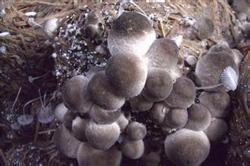
How to cultivate straw mushrooms for high yields? Master these five key elements
1. Reasonably arrange the production season. Straw mushrooms are high-temperature edible fungi. To ensure that straw mushrooms can normally develop mycelium and produce mushrooms after spawning, the cultivation season should be chosen when the daily average temperature is above 25°C. This is beneficial to the growth of mycelium and the development of fruiting bodies. With a plastic greenhouse, spawning can be advanced to mid-May; with a greenhouse mushroom house, they can be cultivated all year round.
-
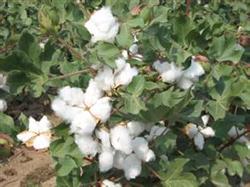
Detailed explanation of the high-density cotton cultivation model with five rows per film
Management of cotton during the boll-opening stage focuses on "four skillful practices" (skillfully managing fertilizer and water, skillfully pruning, skillfully picking rotten bolls, and skillfully promoting ripening). 1. Skillfully manage fertilizer and water to promote nutrient translocation. First, foliar topdressing. For cotton fields where leaves lose greenness too early and show fertilizer deficiency and premature aging, spray 50-60 kg per mu of 1%-2% urea solution on the leaves to extend leaf...
-
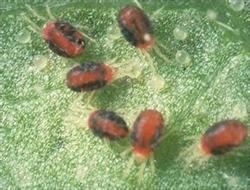
Detailed Explanation of Five Post-Harvest Management Methods for Field-Grown Wood Ear Mushrooms
Remove contamination sources: culture material that is contaminated or severely affected by pests should be promptly disposed of and removed, and the contaminated environment should be cleaned and disinfected at the same time.
-
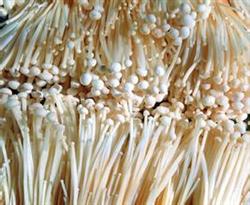
"Five Measures" for Effectively Controlling Black Head Disease in Enoki Mushrooms
Black head disease, also known as bacterial brown blotch disease, is caused by a Pseudomonas bacterium belonging to the phylum Schizomycophyta and the class Schizomycetes. The pathogen is rod-shaped, forms white colonies, and shows a negative reaction to Gram staining. 1. Conditions for occurrence: The internal cause of this disease is the variety's lack of disease resistance, while the external causes are high temperature, high humidity, or spraying unclean...
-
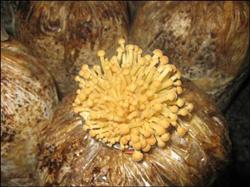
The five-character formula for water management during the fruiting period of bag-cultivated enoki mushrooms (Flammulina filiformis)
Enoki mushroom cultivation and management have high requirements, especially since fruiting body development is very sensitive to water requirements; water management during this period is the key to achieving high yield and quality. The "five-character" formula water management method is introduced here for reference. First, maintain. After the mycelium reaches the bottom of the bag, immediately open the bag and scratch the mycelium, rake away the old mycelial skin, and cover with wet newspaper or plastic film to maintain moisture and promote pinning. For those covered with newspaper, spray water in small amounts and frequently (3-4 times per day) to keep the newspaper moist; for those covered with plastic film, spray water onto the floor and into the air to maintain air humidity at around 90%. During this period, open windows for ventilation once a day, keep the room temperature at 10-14°C, and after 5-7 days mushroom pins will emerge in large numbers.
-
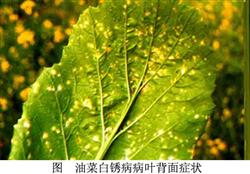
Five key steps for transplanting rapeseed on stubble fields
1. Symptom characteristics. Rapeseed white rust mainly infects leaves, stems, flower stalks and floral organs. The symptoms on leaves and stems are characterized by blister-like lesions. The blister surface is white or milky white, slightly raised, small (ranging from 1 to 3 mm), and numerous; after rupturing, it releases a white powdery substance (the sign of disease), eventually causing the leaves to turn yellow and drop early....
-

Five simple tips to keep cut flowers fresh: bought or cut flowers last longer
After flowers are cut from the stem, if you want them to stay ornamental for longer, you need to put them in clean water or in a cold storage room. Below are five very practical tips for keeping cut flowers fresh, in...
-
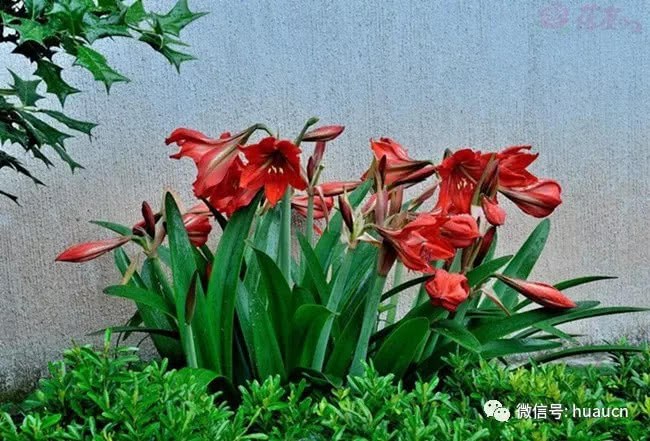
Flowers and green plants in companion planting rely on the mutual generation and mutual restraint of the five elements to achieve mutual benefit
I. Mutually beneficial flowers and green plants 1. Planting pot marigold (Calendula officinalis) together with Chinese rose (Rosa chinensis) can effectively control soil nematodes and make the Chinese rose grow vigorously; 2. Amaryllis (Hippeastrum) and night-blooming jasmine (Cestrum nocturnum), camellia and red Zephyranthes, pomegranate flower and sunrose (Portulaca grandiflora), lacecap hydrangea and Chinese rose, scarlet sage...
-
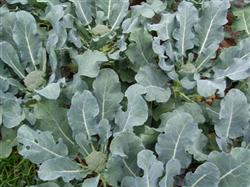
Five key techniques for open-field cultivation of broccoli in spring
When broccoli for export is grown in open fields in spring, its growth and development take place in a season of gradually rising temperatures and increasingly severe pests and diseases. In cultivation, as long as the five key points are handled well, high yields and high efficiency can be achieved, and the requirements of foreign buyers can also be met. 1. Sowing at the right time. For spring open-field broccoli, varieties with strong resistance, tolerance to high temperatures, and tight, uniform heads can be used, such as Hei Lu and Dongjing Lu...
-
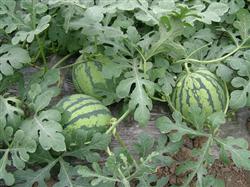
Five scientific measures for spring cultivation of mini watermelons
Cultivating mini watermelons in early spring has become a planting project favored by many melon growers, but due to climate and other reasons, the cultivation of mini watermelons still requires very scientific methods. Below, we explain 5 measures for scientifically cultivating mini watermelons: 1. Temperature management. Because the natural temperature in early spring is low, after transplanting the focus should be on keeping warm, keeping the greenhouse film tightly closed...
条件筛选