Five key techniques for open-field cultivation of broccoli in spring
When broccoli for export is grown in open fields in spring, its growth and development take place in a season of gradually rising temperatures and increasingly severe pests and diseases. In cultivation, as long as the five key points are handled well, high yields and high efficiency can be achieved, and the requirements of foreign buyers can also be met. 1. Sowing at the right time. For spring open-field broccoli, varieties with strong resistance, tolerance to high temperatures, and tight, uniform heads can be used, such as Hei Lu and Dongjing Lu...
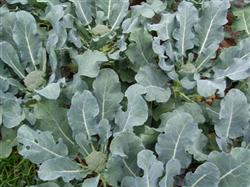
When broccoli for export is grown in open fields in spring, its growth and development take place in a season of gradually rising temperatures and increasingly severe pests and diseases. In cultivation, as long as the five key points are handled well, high yields and high efficiency can be achieved, and the requirements of foreign buyers can also be met.
1. Sowing at the right time. For spring open-field broccoli, varieties with strong resistance, tolerance to high temperatures, and tight, uniform heads can be used, such as Hei Lu and Dongjing Lu. In the middle and lower reaches of the Yangtze River region, sow from late March to early April in small arched sheds, using about 15 grams of seed per mu, with a seedbed of 7-8 sq m. After sowing, cover with 1 cm of sifted fine soil and sprinkle water once each morning and evening. When the seedlings have 2-3 leaves, transplant them once; when the seedlings have 5-6 leaves, they can be transplanted to the field.
2. Transplanting at the right age. At transplanting, select strong seedlings 25-30 days old with 5-6 true leaves, thick stems, well-developed root systems, and no pests or diseases, water thoroughly to settle the roots, and water again the next morning to help them establish. The plant and row spacing is 40-45 x 50 cm, with about 300 plants per mu.
3. Three fertilizers, three waterings, three management tasks. About 10 days after transplanting, apply 10 kg of urea as a seedling-promoting fertilizer; about 20 days later, when the plants enter vigorous growth, apply 20 kg of compound fertilizer as a growth-promoting fertilizer; after budding, apply 15 kg of urea as a bud fertilizer. At the same time, spray the leaves with 0.3% borax and 0.05-0.1% ammonium molybdate, each twice. For harvesting side heads, after the main head is harvested, apply fertilizer and water to promote the development of side heads.
Three waterings. First, water thoroughly to settle the roots; second, 4-5 days later, water with 1000 kg of diluted manure as a green seedling water; third, the bud-promoting water, watering promptly when the main head grows to 3-6 cm, filling more than half the furrow with water, and draining after the bed surface is moist. If rainy weather occurs, clean the furrows promptly so that the field dries when both rain and irrigation stop.
Three management tasks. First, carry out intertillage and hilling; intertill 3-4 days after the water that helps the seedlings recover, and hill soil appropriately at the second and third intertillings. Second, remove side shoots; harvest only the main head, and rub off with the hand any side branches that appear early. Third, carry out pruning; for plants harvested for side shoots, keep 4-5 side shoots and remove the rest.
4. Prevent three diseases and two insects. The three diseases and two insects are black spot, downy mildew, black rot, diamondback moth, and cabbage caterpillar. To prevent black spot, use 3% polyoxin at 600-1000 times dilution or 4% agricultural antibiotic 120 water agent at 1200-1500 times dilution; to prevent black rot, use 72% agricultural streptomycin at 200 mg/kg plus 10% superphosphate extract, or use Xinzhiromycin at 100 mg/kg; to prevent downy mildew, use Telike or Lutai Bao at 600-800 times dilution; to prevent cabbage caterpillar and diamondback moth, use "Chongwen No. 1" virus type B at 800-1500 times dilution, or use Bacillus thuringiensis at 100-150 grams mixed with 30-50 kg of water for spraying.
5. Harvesting. The suitable harvest period for green broccoli is short, so it must be harvested at the right time. Harvest standard: the head has fully grown, the color is emerald green, the surface is slightly concave, the buds are tight, and the head is firm. If harvested too early, the head has not fully grown and the yield is low; if harvested too late, the head will turn yellow and loose, and the quality will be poor. It is best to harvest after the morning dew has dried. Use a small knife to cut diagonally at the base of the head, leaving 7 cm of tender flower stalk; for side heads, leave 7-10 cm of tender flower stalk. Broccoli does not store or transport well, so after harvest, package or sell it promptly, and protect it from shock and pressure during transport.