Flowers and green plants in companion planting rely on the mutual generation and mutual restraint of the five elements to achieve mutual benefit
I. Mutually beneficial flowers and green plants
1. Planting pot marigold (Calendula officinalis) together with Chinese rose (Rosa chinensis) can effectively control soil nematodes and make the Chinese rose grow vigorously;
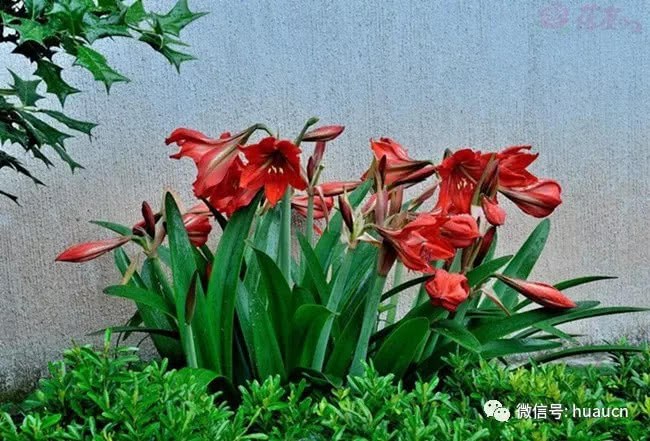
2. Amaryllis (Hippeastrum) and night-blooming jasmine (Cestrum nocturnum), camellia and red Zephyranthes, pomegranate flower and sunrose (Portulaca grandiflora), lacecap hydrangea and Chinese rose, scarlet sage and pea flower planted together benefit both sides. Pine, poplar and Caragana planted together also have good effects.
Amaryllis
3. If nasturtium (Tropaeolum majus), whose flowering period lasts only one day, is placed together with cypress, its flowering period can be extended to 3 days;
4. Placing camellia, sasanqua camellia, red-flowered oil tea, etc., together with Litsea cubeba can significantly reduce sooty mold disease.
Camellia
5. Planting grapes together with violets makes the resulting grapes more fragrant;
6. Interplanting tree peony (Paeonia suffruticosa) and Chinese peony (Paeonia lactiflora) can noticeably promote the growth of the tree peony, making its branches and leaves lush and its flowers large and brightly colored;
7. Red-twig dogwood and maple, elderberry and spruce, walnut and hawthorn, Chinese chestnut and Chinese pine can promote each other.
8. Planting or arranging lilies and roses together, or placing them together in a vase, can extend their flowering period.
9. Grass-family forage grasses have many roots and can secrete organic acids that promote the formation of granular structure, which legumes can make use of. And the root systems of legumes can not only help the soil form granular structure, but also produce nitrogen fertilizer to promote the growth of grass-family forage grasses.
10. Onions and carrots are good friends; the scents they release can drive away each other's pests;
11. When Lycopodium clavatum, whose roots, stems and leaves all release chemical substances, is mixed-cropped with radishes, large radishes grow within half a month.
II. Mutually antagonistic flowers and green plants
1. Grapes cannot be interplanted with small-leaved elm;
2. Elm cannot be interplanted with oak or white birch;
3. Pine and spruce cannot be interplanted;
4. The secretions from the root system of elderberry inhibit the growth of pine and poplar;
5. The secretions of black locust and lilac both inhibit the growth of nearby flowers and trees; lilac and violet cannot be mixed-planted;
6. Bird cherry inhibits the growth of certain plants;
7. The leaves and roots of walnut can secrete a substance that inhibits crabapple and other Rosa genus flowers and trees as well as many herbaceous flowers,
8. It is also unsuitable to plant fir trees around peach trees;
9. Planting various flowers beside fruit trees will accelerate the withering of the flowers.
10. Narcissus and lily of the valley cannot be neighbors; grown together they will "perish together";
11. Planting hydrangea and jasmine, dahlia and Chinese rose, narcissus and lily of the valley, rose and lilac together will harm both sides or one of them. Pine cannot coexist with elderberry; it not only strongly inhibits the growth of pine, but also prevents pine seeds under nearby elderberry from germinating, and it cannot crowd out the growth of white poplar. Pine has antagonistic relationships with white ash, spruce, oak and white birch, and the result is that the pine withers. Cypress and orange trees also do not easily grow together.
12. Lilac planted beside fragrant lily of the valley will immediately wilt. The fragrance of lilac will also endanger the life of narcissus.
13. Keeping lilac, violet, tulip and forget-me-not together will harm each other.
14. Flowers such as mint and Chinese rose that can secrete aromatic substances have a certain inhibitory effect on the ecology of nearby flowers.
15. Chinese juniper should not be planted together with pear or crabapple, lest the latter suffer from rust disease, leading to leaf and fruit drop.
16. When rose and mignonette are together, the former crowds out the latter and makes it wither; and before and after withering, mignonette releases a chemical substance that poisons the rose to death.
17. If ripe apples, bananas, etc., are placed together with blooming roses, Chinese roses, narcissus, etc., the ethylene released by the former will make the potted flowers wither early, thus shortening the viewing period.
18. The leaves, bark and roots of oleander secrete oleandrin and juglone, which will harm other flowers.
19. Cabbage and mustard are a pair of irreconcilable "enemies"; if they are placed together, they will "both suffer";
20. In addition, lilac, mint and laurel can secrete large amounts of aromatic substances that inhibit the ecology of neighboring plants, so it is best not to place them together with other potted flowers for a long time; the volatile oils of Chinese juniper contain ether and chloroform, which will slow the respiration of other flowers and plants, stop their growth and cause symptoms of poisoning.
Lilac
III. Autotoxicity
In flower gardens, the same species of flowers and plants should be avoided, and different varieties should be rotated. When two plants are grown together, some interesting phenomena often appear. Some show "mutual affection" and help each other grow; others are mortal enemies, "mutually incompatible", ending up with either one side harmed or both sides suffering. This phenomenon is the mutual attraction and mutual antagonism between plants.
1. If castor bean and mustard are planted together, although the former is much sturdier than the latter, the lower leaves of the former will turn yellow in large numbers and gradually die.
2. If tomato and cucumber live in the same "house", they will sulk at each other every day and not grow well, thus leading to reduced yield.
3. If cabbage and celery are interplanted, neither will grow well, and they may even die.
4. Planting cabbage in a vineyard will inhibit the growth of the grapes.
5. In a forest, if oak and elm meet, you will find that the oak's branches bend and grow away from the elm, striving to avoid this "bad neighbor".
·END·
An interactive platform for flower growing, flower planting and green plant enthusiasts to exchange ideas, joke around and show off. An online home for sharing flower cultivation methods and household flower-growing tips. A fresh flower subscription platform.
Fresh flowers: hyacinth|violet|plum blossom| carnation|camellia|kalanchoe|jasmine|gardenia|peach blossom|balloon flower|osmanthus|calla lily|lily|forget-me-not|clivia|apricot blossom|honeysuckle|milan|tree peony|sunflower|chrysanthemum|serissa|crown of thorns|tulip|narcissus
Green plants: poinsettia|money tree|pothos|spider plant|peace lily|lucky bamboo|asparagus fern|aloe|ivy|anthurium|monstera|bougainvillea|silk tree|spathiphyllum|schefflera|boxwood|sago palm|rubber plant|maidenhair fern|snake plant|
huau.cn
……
Search the public account " " or " huaucn " to get the latest information
Business cooperation, promotion. Please contact WeChat private account:ihuaucn