To grow Reishi mushrooms for three harvests a year, these five points need attention
Reishi (Ganoderma lucidum) is a medicinal fungus and one of China's nine legendary herbs. With the development of modern medicine, its medicinal value is constantly being discovered, and market demand is growing day by day, so artificial cultivation of Reishi has attracted widespread attention. Below, OPE Sports introduces the five key points that must be mastered to achieve three harvests a year with Reishi...
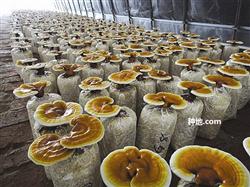 Reishi (Ganoderma lucidum) is a medicinal fungus and one of China's nine legendary herbs. With the development of modern medicine, its medicinal value is constantly being discovered, and market demand is growing day by day, so artificial cultivation of Reishi has attracted widespread attention. Below,OPE Sportsintroduces the five key points that must be mastered to achieve three harvests a year with Reishi.
1. Reasonable cultivation season
Reishi is a high-temperature, constant-temperature fruiting fungus. During its growth and development, it requires relatively high temperatures, with 26°C~28°C being optimal. The optimum temperature for mycelial growth is 28°C; below 27°C growth is clearly inhibited, and above 30°C the mycelium can age and self-lyse. The optimum temperature for fruiting body growth is 24°C~28°C, and below 18°C it cannot grow normally. The primordium formation and fruiting body growth stages of Reishi do not require temperature-difference stimulation; too great a temperature difference can produce deformed mushrooms. Using this as a reference, in Anhui Province only the temperatures from May to October can meet the needs of Reishi growth and development. Considering three harvests a year, the final harvest period should be in early September; counting backward from this, mother spawn must be propagated in early March, stock spawn in early April, and cultivation inoculation carried out in early May, so that three harvests can be taken in early July, early August and early September.
2. Select good varieties
There are many kinds of Reishi. According to form and color, they can be divided into six types: red Reishi, black Reishi, green Reishi, white Reishi, yellow Reishi and purple Reishi. The commonly cultivated variety is red Reishi. Among red Reishi, good varieties include: Xinzhou, Huizhou, South Korea, Taishan No. 1, Dabie Mountain Reishi and others. Xinzhou Reishi has strong stress resistance, large and thick caps, good commercial quality and high yield, and is an excellent variety for earning foreign exchange through export. South Korea Reishi spawns quickly, fruits early, has large and uniform slices and relatively high yield. Taishan Reishi grows rapidly and is suitable for substitute-material cultivation, but its yield is somewhat lower. Dabie Mountain Reishi has large caps and deep color, making it more suitable for log cultivation. Therefore, each locality must determine the variety according to local production conditions (for example, whether substitute-material or log cultivation) and production purpose (for example, export or domestic sale). If substitute-material cultivation is adopted to achieve three harvests a year, South Korea Reishi can be selected.
3. Reasonably choose substitute-material formulas
Reishi is a wood-rotting fungus. Suitable tree species include oak, wild jujube, Chinese tallow, elm, poplar and others. Substitute-material cultivation should be based mainly on sawdust from suitable tree species, appropriately combined with some cottonseed hulls, corn cobs and so on. Commonly used formulas may be selected as follows:
1. Mixed wood sawdust 83%, corn flour (or wheat bran) 15%, gypsum powder 1%, sucrose 1%.
2. Cottonseed hulls 39%, mixed wood sawdust 39%, corn flour (or wheat bran) 15%, gypsum powder 1%, sucrose 1%.
3. Corn cobs 78%, bran 15%, gypsum 2%, sucrose 1%, superphosphate 1%, urea 0.5%, lime 2.5%.
The older the sawdust selected, the better, but it must not be moldy. Bran can also be replaced with rice bran, and gypsum with calcium carbonate. The material-to-water ratio is generally 1:1.4~1.6.
4. Bagging, sterilization and mycelial culture
For cultivation bags, low-pressure polyethylene or polypropylene tube material 17 cm wide and 0.4 mm thick can be selected, cut into 33 cm long bags, with one end tied tightly with a rubber band (cut from an inner tube). After one of the above formulas is mixed evenly, it is put into the bags. Where conditions permit, a bagging machine can also be used. When filling, strive to make the tightness consistent, and after filling tie the other end. After filling the appropriate number of bags, place them in a normal-pressure sterilization pot for sterilization. The sterilization time is 10~12 hours; preferably fire it during the day and let it sit overnight before taking it out. After taking it out, when the bag temperature drops to about 30°C, inoculation can be carried out.
The inoculated bags can be placed in a culture room for mycelial culture. During the mycelial culture process, when the temperature exceeds 28°C and the humidity exceeds 65%, ventilate to dissipate heat and lower the temperature. During mycelial growth, pay attention to shading and ventilation. After about 40 days, the mycelium will have covered the bags.
5. Strengthen management and harvest in good time
Bags fully covered with mycelium can be transferred into the cultivation room. The bags can be stacked; a stacking height of 8~10 layers is appropriate so they do not fall over. Once fruiting bodies appear at the bag opening, cut off the rubber band to let them fruit. During this period, it is essential to maintain suitable temperature, humidity and light, and to control the amount of ventilation. The indoor temperature should be kept at 26°C~28°C, the relative air humidity at 85%~95%, and scattered light is suitable for lighting. Reishi is very sensitive to carbon dioxide, and poor ventilation can produce deformities. When the edge of the cap stops growing and brownish-red spores appear, it can be harvested. When harvesting, it is best to cut with a knife, so that new fruiting bodies can quickly grow again on the original base. After the second flush matures, harvest again and let it grow again, and let it grow again and harvest again. After harvesting two flushes, the bags can also be removed and buried in soil to make up for the insufficient water in the bags. As long as the temperature is suitable, three harvests can be obtained. Under normal circumstances, 100 kg of dry material can yield 8~10 kg of Reishi over three harvests. The harvested Reishi should be dried promptly.