-

Grandparent stock imports of white-feathered broilers to continue decreasing by 10% in 2015
January 8, 2015 marks the 1st anniversary of the founding of the White-Feathered Broiler Alliance. The Alliance once again convened a special meeting on grandparent stock imports to jointly discuss the healthy development of the white-feathered broiler industry. Alliance President Li Jinghui analyzed the industry's situation and the difficulties it faces, and proposed continuing to implement the reduction plan.
-
White-feathered Meat Duck Industry Working Committee Officially Established
Recently, the White-feathered Meat Duck Working Committee of the China Animal Agriculture Association was officially established in Beijing. More than 150 people attended the meeting, including representatives from the Ministry of Agriculture, industry experts and scholars, and white-feathered meat duck breeding and processing enterprises. The conference was chaired by Gong Guifen, Secretary-General of the Poultry Branch of the China Animal Agriculture Association.
-
China's chicken meat is exported to 52 countries and regions, announces the White Feather Broiler Alliance
Recently, it was learned from the White Feather Broiler Alliance of the Poultry Industry Branch of the China Animal Agriculture Association (abbreviated as the China White Feather Broiler Alliance) that in 2013 China's total chicken meat exports reached 430,600 tons, an increase of 1.91% over 2012. This year chicken meat exports are expected to continue growing, and white feather chicken meat exports are expected to
-
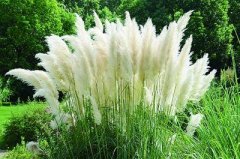
Physical Characteristics of Feather Reed Grass and Soil Requirements of Its Growing Regions
What is feather reed grass? Feather grass is a clump-forming ornamental grass with many varieties. It is a deciduous plant, but it is the first among the family to show foliage in early spring. Feather reed plants may grow to 3 to 5 feet tall and in June produce an inflorescence that starts green and slowly
-
Is chicken-feather greens the same as baby bok choy? The differences explained clearly in one go
Chicken-feather greens are simply seedling greens, edible as soon as a few true leaves have grown, rich in vitamins and effective at relieving nervous stress, and very popular in the market, so is chicken-feather greens the same as baby bok choy? 1. Is chicken-feather greens the same as baby bok choy? Chicken-feather greens are baby bok choy
-
Key Technical Points and Rearing Management Methods for Yellow Feather Chicken Farming
Abstract The construction of a chicken house for Yellow Feather Chickens requires a good site selection, and a dedicated brooding room needs to be set up for brooding to improve the survival rate. Daily feeding requires balanced nutrition, improved cleanliness, and strengthened work on heat prevention and cold protection and warmth. Strengthen daily epidemic prevention and disinfection work to avoid
-
At What Age Do Young Pigeons Begin to Molt? A Detailed Guide to Raising Young Pigeons
The pigeon is a fairly common bird in daily life, and it has high food value, so it is deeply loved by consumers. Young pigeons refer to pigeons that have just hatched, and in the process of raising them there are certain differences from adult pigeons, so what are the specific
-
What to Do When Goslings Peck Each Other's Feathers? Solutions for Back-Feather Pecking
Those who raise geese know that at a certain stage of growth, geese will peck each other's feathers, and the weaker ones may even be pecked to death by their companions. So why does this happen? Is it because the geese have some disease? Is it because they lack something in their bodies? When this happens
-
How to Raise Black-Feathered Green-Shelled Laying Hens? A Detailed Guide to Breeding Techniques
The difference between black-feathered green-shelled laying hens and ordinary green-shelled laying hens is that the feathers of black-feathered green-shelled laying hens are black, and they are mainly concentrated in Yichang, Hubei. Because of their different feathers, they are quite attractive to consumers during the sales process. Today, let us briefly
-
Prevention and Control Methods and Technical Key Points for Feather-Pecking Disorder in Captive Hwamei Birds
The so-called hwamei feather-pecking disorder refers to a small number of hwamei birds during ordinary keeping that, due to various causes, bite off their own tail feathers, wing feathers, back feathers and so on, one by one (sometimes called self-biting disease), so that the tail feathers are sometimes pulled until they are bare and sparse, curled
条件筛选