-

What herbicide is used to control rice barnyardgrass? Rongjie is a highly effective herbicide.
Rongjie is a rice field herbicide newly developed by Dow AgroSciences of the United States, with penoxsulam (25 g/L oil suspension concentrate) as its main ingredient. Years of trials and demonstrations have proven that Rongjie is particularly outstanding in controlling rice barnyardgrass, a vicious weed in paddy fields in Northeast China. In the rice fields of the Fushun area, there are two types of barnyardgrass: water barnyardgrass and rice barnyardgrass. Water barnyardgrass has no auricle or ligule, while rice barnyardgrass, though also lacking an auricle and ligule, has fine hairs on the internodes between the leaf and leaf sheath. In recent years, after conventional barnyardgrass-killing herbicides were applied in rice fields, water barnyardgrass has been effectively controlled,
-
How to effectively prevent and control common pests and diseases of Euonymus japonicus?
Euonymus japonicus, as an evergreen shrub, is one of the most commonly used landscaping plants in urban streets, squares, parks, institutional courtyards, and residential green spaces. Due to the large differences in its growing environment and relatively extensive management measures, the occurrence and damage of its pests and diseases are also relatively severe, seriously affecting the urban landscaping landscape. Investigating and studying the occurrence characteristics of the main pests and diseases of Euonymus japonicus can help formulate and implement prevention and control measures according to local conditions, achieving the goal of controlling damage and beautifying the environment. 1. Occurrence characteristics of main pests and diseases (1) Euonymus japonicus powdery mildew. Powdery mildew is a common
-
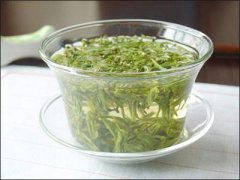
Is Green Tea's Anti-Cancer Effect Real? Interpreting the Latest Research Findings
New Findings on Green Tea's Anti-Cancer Mechanism, Did You Know? Do you drink tea? Do you know whether green tea can really fight cancer? Let's find out together. Professor Thomas A. Gasiewicz and colleagues at the University of Rochester Medical Center found that green tea can fight cancer by affecting cancer-related proteins.
-
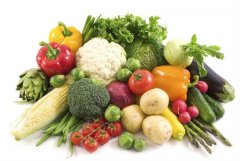
The Brazil mushroom scam: cadmium metal detected, what effect does it have on the human body?
Cadmium metal has been detected in Brazil mushrooms, so have you ever eaten this mushroom? Vegetables nowadays are becoming less and less safe, and when we buy them, we all have to choose carefully. Major newspapers have all reported that Brazil mushrooms are contaminated with the heavy metal cadmium, and the place of origin is "Puli Nenggaoshan
-
How effective is azadirachtin as an insecticide, really?
Neem - nature's insecticide. Neem has insecticidal and sterilizing properties and has long been used as a herbal medicine. But do you know its effects on insects, the residual activity of azadirachtin, the systemic action of azadirachtin, the efficacy of azadirachtin products, and so on? If not,
-
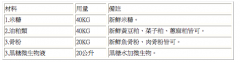
What does microbial composting do? Understanding microbially enhanced composting in one article
Microbial oil cake compost: Organic farming places special emphasis on cultivating the soil so that it can maintain the highest productive capacity, and one of the best ways to improve the soil is to apply organic fertilizers such as microbial oil cake fertilizer and oil cake liquid fertilizer. This not only significantly shortens the production time of organic fertilizer, but the method is also very simple, clean and hygienic, and crop yield and quality are markedly improved.
-
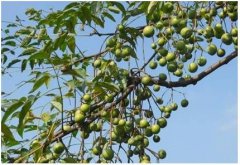
How effective are neem seed extract and neem oil as insecticides?
Have you heard of neem plant insecticide? This is an insecticide made from insecticidal compounds extracted from a plant. The development and use of neem plant insecticide seems to have become a worldwide trend. In Thailand, I saw that some places already use neem as street trees, and flower markets everywhere
-
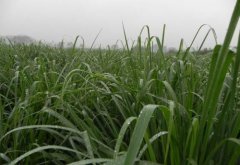
The Benefits and Effects of Lemongrass, and an Introduction to the Lemon-Scented Plant
Lemongrass: In Taiwan, China, during the 40s to 50s of the Republic of China era (1951-1961), it was once cultivated on a large scale to extract lemongrass oil for export trade. At that time, together with peppermint oil and camphor oil, it was one of the important agricultural products that earned foreign exchange for our country. After the 57th year of the Republic of China (1968), due to the development of chemical synthesis technology
-
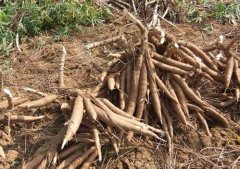
What Is Cassava? The Benefits and Effects of Cassava and Whether It Is Yam
Organic Cultivation of Cassava. Cassava, an erect shrub, 1.5-3 m tall; tuberous roots cylindrical. Leaves papery, outline nearly circular, palmately parted almost to the base, lobes 3-7, oblanceolate to narrowly elliptic, apex acuminate; petiole 8-22 cm long, slightly peltate, with inconspicuous fine ridges; stipules triangular-lanceolate, entire or with 1-2 bristle-like fine lobes. Panicles terminal or axillary, bracts linear-lanceolate; calyx purplish red with a white powdery bloom; male flowers: calyx about 7 mm long, lobes oblong-ovate, subequal, hairy inside; stamens 6-7 mm long, anthers tipped with short white hairs; female flowers: calyx about 10 mm long, lobes oblong-lanceolate, stigma recurved, fan-folded. Capsule elliptic, surface rough, with 6 narrow wavy longitudinal wings; seeds about 1 cm long, more or less trigonous, seed coat crustaceous, mottled, smooth. Flowering period September-November.
-
What are the varieties of cauliflower? An introduction to the benefits and effects of broccoli
Broccoli is a perennial overwintering herbaceous plant of the genus Brassica in the crucifer family. Because the part eaten is mainly the flower stalk formed by dense flower buds, it is called broccoli. It originated along the coast of Western Europe and came from a wild variety of cabbage. Its cultivation history is earlier than that of cauliflower. At present
条件筛选