-

A Complete Analysis of the Chemical Components, Effects and Pharmacological Actions of Reishi Mushroom
Reishi mushroom [Ganoderma lucidum (Fr.) Karst] is a fungus of the genus Ganoderma in the class Basidiomycetes. Since ancient times it has been known as the "immortal herb" and "auspicious herb". It is a precious traditional Chinese medicine for strengthening the vital essence and consolidating the constitution, and for nourishing and invigorating the body. It has a long history of medicinal use in our country and extremely high medicinal value, and is regarded as a precious Chinese medicinal material and a treasure in the treasury of traditional Chinese medicine. In the Eastern Han dynasty, the (Shennong Bencao Jing) listed reishi mushroom as a top-grade substance, holding that "taken over a long time, it lightens the body, prevents aging, and prolongs life like an immortal." Modern medicine has proven that reishi mushroom contains a variety of physiological
-
How to control the ginger skipper? These methods are simple and effective
1. Morphological characteristics Adult: body and wings dark brown, forewings with 5 grayish-white spots, the spot located below the discal cell is larger. The center of the hindwing has one large white spot. Egg hemispherical, flat at the top, with the rim in contact with the leaf surface forming a brim shape, slightly wrinkled, with more than 50 raised fine striations on the side. Larva grass-green, after the 3rd instar two nearly crescent-shaped yellow spots appear on both sides of the dorsal line of the sixth abdominal segment, spiracles white. Pupa elongated spindle-shaped, yellow-green, body covered with white waxy powder. 2. Life habits and occurrence pattern The ginger skipper occurs
-
What pesticide gives the best control effect against older larvae of the rice leaf roller?
Chlorpyrifos and abamectin-monosultap are effective agents for controlling the rice leaf roller, but they must be applied during the 1st-2nd instar young larval stage (at this stage the rice leaf roller has not yet rolled leaves and caused damage, or has just begun rolling the leaf tips and causing damage), when the rice in the field has just begun to roll leaves. For rice leaf roller larvae of the 3rd instar and above, on the one hand they are protected because they are wrapped inside the rice leaves, and on the other hand they are insensitive to nereistoxin-type pesticides such as monosultap and to organophosphorus pesticides such as chlorpyrifos, methamidophos and monocrotophos, so the control effect after spraying is poor. Relatively speaking, older rice leaf
-
How can cold-water fish farming effectively prevent and control pathogens?
1. Establish a strict quarantine system. When introducing and exporting fish eggs and fry, all farming areas must strictly carry out quarantine to prevent and control the occurrence of diseases. Farms should set up quarantine ponds to isolate introduced fish species; only after the introduced fish are confirmed free of important diseases may they be temporarily reared. Quarantine ponds are generally located at the end of the drainage ditch. The length of quarantine time should be determined by the transport season, water temperature, and the characteristics of the disease. When the average temperature is not lower than 12°C, 20 days are required; when the water temperature is higher, it can be shortened, which is determined on the basis that the lower the temperature, the longer the incubation period. If
-
What to do about a high egg breakage rate? Sharing effective reduction methods
Broken eggs account for about 6-8% of total egg production, bringing considerable losses to laying hen production. Below are methods to reduce egg breakage. 1. Meet nutritional needs, especially calcium and vitamin D3 levels, while keeping phosphorus at an appropriate level and managing the calcium-to-phosphorus ratio well, generally around 3.4-4.6:1. 2. Increase the frequency of egg collection, avoid eggs colliding with each other, especially during peak laying hours, and handle eggs gently when collecting and moving them. 3. In hot seasons, appropriately increase
-
What pharmacological effects does goji berry have? A detailed explanation in one article
Goji berry is a deciduous shrub, with a tree height of 1.5 m-2 m and a growth period of 35-50 years. It bears small eggplant-red or pale red flowers and produces bright red fruits the size of jujube pits. It is a rare and precious traditional Chinese medicinal herb and a fine tonic, with effects of tonifying, treating deficiency, anti-aging, protecting the liver, and promoting and regulating immune function. As a medicinal material, goji berry has a long history in China. In addition to the records in the Book of Songs, Su Dongpo of the Song Dynasty wrote in the poem "Xiaopu Goji": "Roots, stems, flowers, and fruits, nothing is discarded when gathered,"
-
What are the main medical effects of Codonopsis pilosula?
Medical effects of Codonopsis pilosula. Codonopsis pilosula is sweet in flavour and neutral in nature, entering the spleen and lung meridians. It has the effects of tonifying the middle and boosting qi, strengthening the spleen and benefiting the lungs, and quenching thirst and promoting fluid production. It is used to treat conditions such as weakness of the spleen and lungs, weakness of the spleen and stomach, insufficiency of lung qi, shortness of breath and palpitations, poor appetite and loose stools, asthmatic cough due to deficiency, internal heat with wasting-thirst, and fatigue and weakness. It is a commonly used tonic and strengthening medicine.
-
30% Daowudi Wettable Powder: Effects and Methods of Use
A herbicide specially for paddy fields, suitable for weed control in the middle and late stages in paddy fields, seedling-throwing fields, and direct-seeded fields. A single application can control barnyardgrass, various broadleaf weeds, and annual and perennial cyperaceous weeds throughout the entire growth period of paddy rice, making it an ideal herbicide for paddy fields. The suitable timing for use is when barnyardgrass is at the 2-3 leaf stage and broadleaf weeds have all emerged. Method of use: 50-60 g per 667 sq m, sprayed with 30 kg of water. At the time of application, the field should be kept moist, or evenly sprayed under a shallow water layer. However, the field
-
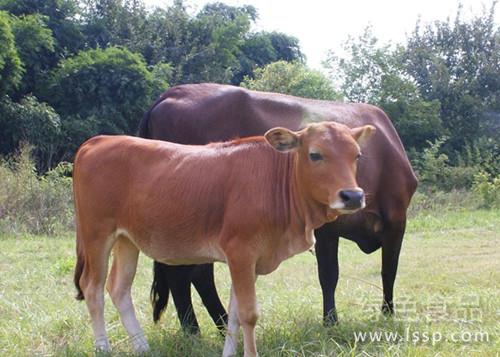
What causes diarrhea and loose stools in cattle? Effective prevention and treatment require targeting the cause
Targeted treatment is what makes prevention and control effective: causes of diarrhea and loose stools in cattle and their prevention and treatment
-

Pingtung and Taichung Flora Expo mascots meet: Exchange creates a mutual-benefit effect
Visitor numbers at the Taichung Flora Expo have surpassed 3 million, and the wave of enthusiasm shows no sign of stopping, drawing mascots from various places to visit. After Chiba-kun, the mascot of Chiba Prefecture, Japan, and "Gaotongtong," the mascot of the Kaohsiung City Agriculture Bureau, toured the Waipu Park, Pingtung County's...
条件筛选