How effective are neem seed extract and neem oil as insecticides?
Have you heard of neem plant insecticide? This is an insecticide made from insecticidal compounds extracted from a plant.
The development and use of neem plant insecticide seems to have become a worldwide trend. In Thailand, I saw that some places already use neem as street trees, and flower markets everywhere commonly supply neem seedlings. They call neem "Neem". A one-meter-tall Neem seedling sells for 40 Thai baht, equivalent to only 32 New Taiwan dollars, which is still considered cheap; and in Malaysia, I saw its monthly magazine Agro-World continuously promoting neem. They transliterate the genus name as "Anning tree", and seem to be promoting it in the direction of health-care medicinal herbs.
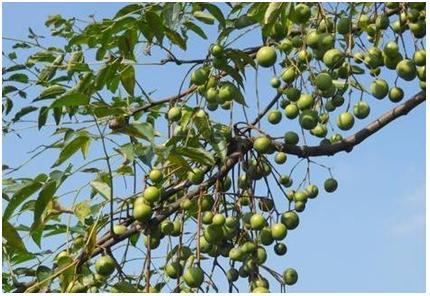
The dazzling new star among insecticidal plants - neem
Neem (Azadirachta indica A. Juss), also called Indian garlic neem, is an evergreen tree native to tropical regions such as Myanmar and India. It is generally 15 to 40 meters tall and botanically belongs to the Meliaceae family, genus Azadirachta. Besides its native range, it is distributed and cultivated in many areas of southern Asia and South America, but currently India and other Asian countries still produce the largest amount. It can grow in tropical and subtropical mountains at an altitude of about 700 meters. In recent years, through introduction, it has been promoted and planted in more than 70 countries. It is said that a seedling grower in southern Taiwan once imported seeds twice, but unfortunately neither attempt succeeded.
The fast action and low price of chemically synthesized pesticides once doubled agricultural production overnight and solved many famines, but their damage to the environment and their far-reaching impact on ecology are even more shocking. Today, as the world loudly calls for protecting the natural ecology, countries around the world all view the production and use of chemically synthesized pesticides with more caution and hesitation. However, food is the first necessity of the people. With a continuously increasing population and relatively scarce natural resources, increasing agricultural production is still a necessary means for governments to feed their people. Therefore, compared with chemically synthesized pesticides, botanical insecticides, which have advantages such as not polluting the environment, being able to overcome pest resistance, being able to stimulate the growth of some crops, being convenient for local sourcing and processing, having simple manufacturing methods, and being low in cost, have received great attention in recent years. Many countries have invested much manpower and financial resources in actively developing them.
The use of neem can be traced back more than two thousand years. At first, for a long period, it was used only in medicine. Its use as an insecticide developed widely around the world only after Butterworth and Morgan successfully isolated azadirachtin in 1968. Up to now, the chemical structures of ten analogues have been identified, commonly called azadirachtin A, B, C, D, E, F, G, H, I, J, K, L. Among them, azadirachtin A has the highest content in neem seed kernel extract, while the content of azadirachtin B can reach 20 %. It is generally believed that azadirachtin E has the strongest growth-regulating activity.
Azadirachtin is similar to some bitter triterpenoid compounds commonly present in plants of the Meliaceae, Rutaceae and Simaroubaceae families. These substances with multiple biological activities are collectively called limonoids. In addition to being widely used in medical health care, animal husbandry and veterinary medicine, the food industry, detergents and other daily chemical products, they also occupy an important position in the prevention and control of crop diseases and insect pests. Systematic research on the insecticidal effects of limonoids began in the 1930s. Between 1926 and 27, a particularly severe locust plague swept across western India. "Neem" showed good insect-repellent activity and survived the disaster, so some scientists noticed the insecticidal effects of this "sacred tree of India". However, in the following more than 30 years, progress was slow. After entering the 1960s, Germany, the United States, India and other countries successively invested large amounts of manpower and material resources, setting off a wave of research. Four international neem conferences were held in Germany (1980, 1983), Kenya (1986) and India (1993), which made related research progress rapidly and achieve considerable results. In 1985, Margosan-O, the first commercial pesticide with azadirachtin as its main component, was first approved for registration in the United States, becoming the second botanical pesticide approved for use after pyrethrins. Entering the 1990s at the end of the twentieth century, neem insecticides such as Azatin, Turlex, Align, Neemrich, Neemix, Neemgaurd, Nemidin, Nemol, Nemicidine, Margocideck OK, Ackook, RD-9 (Repelin), Neemark, Azalan and Trilogy came out one after another. The latter two were introduced into Taiwan by Known-You Seed Co., Ltd. Among them, Azalan comes from Sri Lanka and is a powder, still in the trial stage, while Trilogy is an oil formulation and a patented product of an American company. Known-You has officially promoted it under the trade name "Qingxiang neem oil" as a substitute pesticide for organic cultivation.
Azadirachtin and neem preparations have multiple effects on insects, including antifeeding, repellency, growth regulation and sterilization. Because the active ingredients and applied doses differ, azadirachtin can show different biological activities toward insects. Azadirachtin is currently recognized worldwide as the most active antifeedant, and its activity in regulating insect growth is also the most stable, showing a very good dose-effect relationship. Even more valuable is that in addition to insecticidal activity, it also shows fungicidal and nematicidal activity. The United States has already developed an insecticide with azadirachtin as its main component. Therefore, "neem" is regarded as the representative of botanical insecticides and is also the resource plant most suitable for commercial development.
Recently, while on leave, the author twice visited Thailand to investigate plant resources and learned that in addition to large-scale cultivation of neem in its native areas, Australia and African countries are also vigorously promoting it. Many countries even encourage investment in planting by reducing or exempting income tax. A generally 10-year-old neem can produce 50 kg of fruit annually. After removing the seed coat, 30 kg of seeds can be obtained, from which 6 kg of oil can be pressed. Data from 1995 show that this oil was priced at 375 US dollars per kilogram, much higher than pyrethrum oil at 75 US dollars per kilogram, and the remaining 24 kg of oil cake after pressing is also a top-grade organic fertilizer. Some neem orchards that have not reached fruit-bearing age collect leaves, dry them and grind them into powder, using them as both insecticide and fertilizer.
In short, it is said that a foundation in Taipei City, China is recently preparing to import 100 grams of neem seeds from India. If successful, they will be promoted as a plant for home greening and pest prevention. However, neem seeds, which have a strong garlic odor, have an extremely short lifespan, so problems such as timely harvesting and long-distance transport must be overcome. We wish them success.