-

Clever foliar feeding for tea plants effectively improves quality
If famous tea is contaminated, especially export products, its output value and reputation will both suffer severe setbacks. To improve tea quality and yield, in addition to measures such as planting green manure in tea gardens, mulching to retain moisture, applying sufficient farmyard manure after each harvest, and improving tea-processing techniques, foliar fertilizer should also be used cleverly. This is a good method that uses little fertilizer, takes effect quickly and gives high returns, generally increasing yield by more than 20%-30%. The techniques are: Fertilization timing. When the new shoots of each round of spring, summer and autumn tea flush grow out to the initial unfolding of one bud and one leaf, choose a windless sunny morning, evening
-
What are the medicinal values of Codonopsis pilosula? A detailed explanation of its effects and functions
The root of Codonopsis pilosula (poor man's ginseng) is used as medicine; it is sweet in taste and neutral in nature. It has the functions of tonifying the spleen and replenishing qi, quenching thirst and promoting fluid production, and is used to treat weakness of the spleen and stomach, insufficiency of lung qi, fatigue and weakness, shortness of breath with wheezing and coughing, weak voice, dizziness and palpitations due to blood deficiency, dry tongue due to depletion of fluids, thirst, and other conditions. The cultivation history of Codonopsis pilosula is relatively short, and no record of cultivated Codonopsis pilosula has been seen in the materia medica of past dynasties. Shanxi Province was the earliest to cultivate Codonopsis pilosula artificially. Changzhi County, Shanxi Province, is the "hometown of Codonopsis pilosula" in China.
-
What are the effective methods for protecting pepper seedlings from freezing in winter?
During winter pepper seedling raising, sudden cold waves often strike, the temperature drops abruptly, and the seedlings are prone to freezing damage. If the temperature drops slowly, they are less likely to freeze. If the temperature is not very low but lasts for a long time, especially when low temperature is accompanied by rain, a condition known as "wet cold", the seedlings are also very prone to freezing damage. The severity of freezing damage to the seedlings is also related to how quickly the temperature rises after the low temperature. If the temperature rises slowly, the seedlings thaw slowly and easily regain their vitality. If the warming and thawing are too
-
How to choose fish medication? These are safe and effective
Dibromohydantoin is a compound disinfectant with a strong effect of killing bacteria and viruses, with a lasting efficacy. It can effectively prevent and treat bacterial or viral diseases in fish and shrimp, and is applied by splashing over the whole pond. Prevention: use once every 10-15 days, with a dosage of 0.1-0.2 grams per cubic meter of water; Treatment: a dosage of 0.2-0.3 grams per cubic meter of water, and if the condition is severe, use it once more after 2 days. Chelated copper has the characteristics of high efficiency and low toxicity. It not only retains the insect-killing and algae-inhibiting effects of copper sulfate, but is also far less toxic to fish and shrimp than copper sulfate, and its effectiveness is not easily affected by the water environment, making it a good substitute for copper sulfate.
-
How to effectively treat acute rheumatism in pigs
To prevent acute rheumatism in pigs, feeding management must be strengthened, strictly guarding against invasion by wind, cold and dampness, improving ventilation, and promptly removing manure, urine, sludge and muddy water from the pen to keep the floor dry and clean. Add thicker bedding, protect against cold and keep warm, and prevent bedsores. Treatment: (1) For each pig, use 20 to 50 milliliters of 10 percent sodium salicylate injection or compound sodium salicylate injection, intramuscularly, once a day, for 2 to 3 consecutive days. (2) For each pig, use 5 to 10 milliliters of compound aminopyrine injection, intramuscularly, once a day, for 2 to 3 consecutive days. (3) For each
-
How can sheep bot fly larvae disease be treated effectively?
Sheep bot fly larvae disease mainly affects sheep and goats. This disease mainly occurs from early autumn to mid-autumn. After infection, the sheep become restless, showing symptoms such as shaking the head, running around, and lowering the head to press the tip of the nose against the ground; some hide their heads under the bellies of other sheep. Treatment: (1) In early autumn, when adult flies fly and deposit larvae, an insecticidal ointment can be applied to the sheep's nose and nostrils once every 7 days to prevent adult flies from depositing larvae. (2) Spray 60 ml of 3% Lysol solution into the sheep's nostrils once a day for 7 consecutive days; the curative effect is excellent.
-
Analysis of the Causes of Chicken Immunosuppression and Effective Countermeasures
With the deepening of research on chicken health care, people have gradually come to clearly recognize the harmfulness and severity of the immunosuppression problem in chicken flocks. As far as chicken flocks are concerned, what exactly causes immunosuppression? 1 Causes of immunosuppression 1.1 Chickens contracting diseases that can cause immunosuppression In disease prevention and control work, the common infectious bursal disease, avian influenza, avian leukosis, Marek's disease of chickens, and so on are all diseases that severely attack the body's immune system and cause immunosuppression. For example, the main pathological feature of infectious bursal disease is usually attacking the bursa of Fabricius.
-
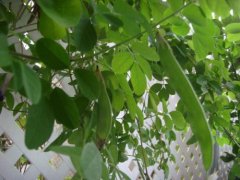
What is the butterfly pea? How to grow it and the benefits and effects of butterfly pea flowers
We generally know green beans and common beans, but have you ever heard of the butterfly pea? Do you know how to grow butterfly pea? Would you like to learn about it? Then take a look at the introduction below. The butterfly pea is native to tropical South America, and because its flower shape closely resembles a butterfly, it is called the butterfly pea.
-
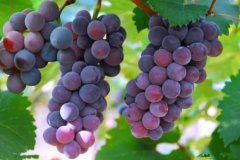
What are the nutritional benefits and dietary contraindications of grapes?
Do you like eating grapes? Then do you know what benefits they have? What components do grapes contain? Let's take a look together. Grapes are plants of the Vitaceae family and have been consumed by humans since prehistoric times. After the discovery of the New World, European grapes were immediately introduced to the Americas; grape cultivation in China began in the Western Han Dynasty, and legend has it that Zhang Qian, on his mission to the Western Regions, brought back European grape varieties from the Kingdom of Dayuan.
-
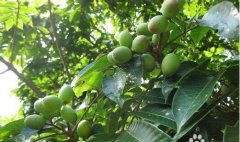
What are the benefits and effects of olives? Eating olives often has many benefits
What benefits do olives have, and can you eat them often? So what are the main benefits and effects of olives? Let's take a look together. The olive is the fruit of the olive plant, a member of the Oleaceae family. People may have begun cultivating olives before recorded history; the Bible frequently mentions
条件筛选