-

Symptoms and Control Measures of Scale Protrusion Disease in Fish
Symptoms and Control Measures of Scale Protrusion Disease
-

What are the common disease prevention and treatment methods for goldfish?
Prevention and treatment methods for common goldfish diseases
-
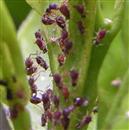
What pests and diseases affect honeysuckle when growing it?
What pests and diseases affect honeysuckle when growing it? Please explain the control methods. The main pest of honeysuckle is aphids. In hot and rainy environments, they often damage new leaves and vine tips, causing curling and affecting growth. Commonly, 40% dimethoate emulsion at 3000 times dilution is sprayed, or 25% phosmet emulsion at 1000 times dilution is sprayed. In addition, there are two simple...
-
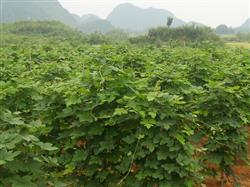
What pesticides work well for controlling kudzu diseases?
What pesticides are used to control kudzu diseases? The main diseases of kudzu include damping-off, downy mildew, and anthracnose; they can be controlled with a 600-fold dilution of 50% carbendazim, or an 800-fold dilution of 70% thiophanate-methyl wettable powder. At the same time, methods such as pruning diseased branches and leaves, or manual capture and trapping of pests, can also effectively...
-
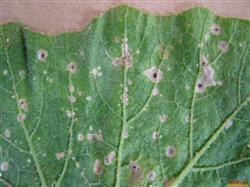
How to prevent and control pumpkin leaf spot disease when growing pumpkins?
What controls pumpkin leaf spot disease? What is pumpkin leaf spot disease? Please provide an introduction. Pumpkin leaf spot disease mainly damages the leaves and the flower axis. Leaf spots are circular to nearly circular or irregular in shape. The leaf margin is dark brown, the boundary between diseased and healthy tissue is distinct, and there are small black dots in the center of the lesion. In severe cases, the leaf spots merge, causing localized death of the leaves. The flower axis...
-
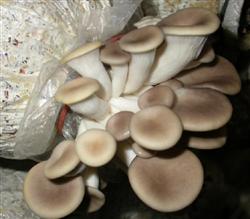
A Detailed Guide to Oyster Mushroom Cultivation Techniques and Pest and Disease Control Methods
How do you control pests and diseases in oyster mushrooms? Please provide an introduction to the control methods. Oyster mushroom pests and diseases can be controlled by referring to the following methods: 1. Preventive measures. 1. Environment: The mushroom house and bed frames must first undergo strict sterilization and insect disinfection, and during the mushroom growing period, work on heat preservation, moisture retention and ventilation should be done as well as possible. 2....
-
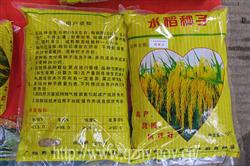
When is the best time to start rice pest and disease control?
When should rice pest and disease control begin? Please give guidance. For rice pest and disease control, you can refer to the following introduction: 1. Select rice blast-resistant varieties according to local conditions; for early rice and middle rice, try not to plant susceptible varieties such as Jinyou 402, You I 402, Jinyou 974, Zhongyou 974, You I 66, Zhongyou 752, Jinyou 752, 65002, ...
-
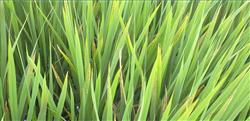
What causes premature aging in rice? An analysis of pest and disease control methods
Why does rice age prematurely? How to prevent and control premature aging in rice? Please give an introduction. Premature aging in rice refers to the premature decline of leaves during the heading to maturity stage, with leaf color turning brown, the leaf tips showing a dirty white withered state, leaves thin and curved, root growth weakened, and even a few black roots occurring. Rice...
-
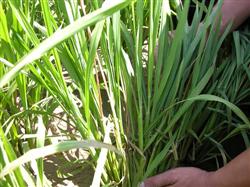
In rice pest and disease control, what is bacterial brown stripe of rice?
What is bacterial brown stripe of rice? What harm does bacterial brown stripe of rice cause? How is bacterial brown stripe of rice controlled? Please give an introduction. Harm of bacterial brown stripe of rice: when infected at the seedling stage, small brown spots appear on the leaves or leaf sheaths, later expanding into purple-brown long stripes, sometimes as long as the leaf, with clear edges...
-
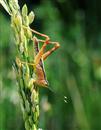
Rice pest and disease control: How to control rice locusts?
How to control rice locusts? What harm do rice locusts cause? Please introduce the harm caused by rice locusts: Rice locusts, commonly known as "grasshoppers," are one of the important pests in the middle and late stages of rice. Both adults and nymphs cause damage, mainly to rice, but also to corn, sorghum, beans and other crops. In mild cases they cause notches, and in severe cases they eat the leaves completely bare. During the milk-ripening stage of rice, they often bite through the panicle neck and small branch stalks, causing white heads and resulting in severe yield reduction.
条件筛选