What causes premature aging in rice? An analysis of pest and disease control methods
Why does rice age prematurely? How to prevent and control premature aging in rice? Please give an introduction. Premature aging in rice refers to the premature decline of leaves during the heading to maturity stage, with leaf color turning brown, the leaf tips showing a dirty white withered state, leaves thin and curved, root growth weakened, and even a few black roots occurring. Rice...
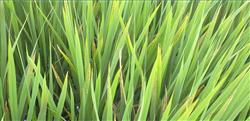 Why does rice age prematurely? How to prevent and control premature aging in rice? Please give an introduction
Premature aging in rice refers to the premature decline of leaves during the heading to maturity stage, with leaf color turning brown, the leaf tips showing a dirty white withered state, leaves thin and curved, root growth weakened, and even a few black roots occurring.
Causes of premature aging in rice:
First, stopping water too early in the later stage, which weakens photosynthesis, or irrigating too deeply, which causes poor soil permeability and leads to premature leaf aging;
Second, insufficient nutrients;
Third, excessive density;
Fourth, excessive respiration under high temperatures.
Control methods for premature aging in rice:
1. Manage water use in rice well and ensure sufficient water. In normal weather, maintain a shallow water layer during the heading, flowering and grain-filling stages. For fields with heavy clay soil and poor aeration, intermittent irrigation is generally suitable, that is, irrigate once with shallow water, let it dry naturally for 2-3 days, keep it moist for 1-2 days, and then add fresh water, so as to resolve the conflict between water and air.
2. Apply additional grain fertilizer. For fields with premature aging, a 1-2% urea solution can be used for foliar topdressing.
3. Timely prevent and control pests and diseases.
Click to get more rice cultivation techniques
Click to get more grain crop cultivation techniques