What are the common pest and disease control methods for king oyster mushrooms?
Because it mainly grows on plants such as eryngo (Eryngium) in the Apiaceae family, the king oyster mushroom is also known as eryngo oyster mushroom. The king oyster mushroom is rich in nutrients; its fruiting body contains about 16% protein, 11% crude fat, 6% ash and 4% crude fiber, and is rich in 18 amino acids, with an excellent taste. Regular consumption can help prevent cardiovascular disease, diabetes and obesity, and has beauty...
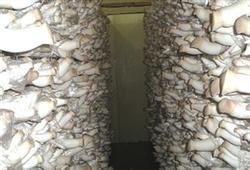 The main pests harming the fruiting bodies of edible and medicinal fungi are springtails, nematodes, mushroom maggots and so on. Springtails and nematodes mainly harm young mushroom buds, while mushroom maggots mainly harm mushroom bodies at maturity. These pests cause enormous harm to edible and medicinal fungus production and must be carefully controlled. Springtails are also known as soot insects or springtail bugs. The main pests harming the fruiting bodies of edible and medicinal fungi are the mushroom wart springtail and the black-horned springtail.
The mushroom wart springtail is nearly white and spherical, semi-transparent; the larvae are white and similar in shape to the adults; after dormancy they molt and their color gradually darkens to silver-gray, appearing gray-black when clustered, like soot. The adult resembles a flea, with a body length of 1.2-1.5 mm, short antennae, no wings, and 8 pairs of legs. It often crawls rapidly on the culture medium and the surface of fruiting bodies, and has a springing organ at the tail end, usually moving by jumping, with a jump height of up to several 10 cm. Its body surface is covered with grease and it is not afraid of water; when the bed is irrigated it can float in a layer on the water like bran and flow with the water. In a suitable environment it reproduces quickly, with 6-7 generations per year, and occurs in large numbers at 20-28°C. It often gathers on the back and base of fruiting bodies and within the pores of the leaves. Especially during the young mushroom stage, the primordia are covered by the insects, causing the mushroom body to yellow and wilt, become infected with bacteria and rot, and stop growing. Springtails are indicator pests of an overly humid planting environment and extremely poor sanitary conditions.
The control methods are as follows:
1. The planting site must be chosen in a hygienic, well-ventilated place with relatively good water source conditions, avoiding low-lying livestock pens, latrines and garbage dumps, to reduce the chance of contamination.
2. Before fruiting bodies emerge, spray 0.1% low-toxicity phoxim 1-2 times in the surrounding environment for prevention. If insects are found, the same method can be used for control. (1) Nematodes There are many kinds of nematodes, commonly including blood nematodes, mushroom maggots, segmented worms and so on. The blood nematode has a body length of 3-4 cm and is very slender, like a thread of blood, gathering in groups in the soil layer 1-2 cm deep around the mushroom buds, harming young mushroom buds and causing the mushroom body to stop growing, yellow and wilt, or rot. (2) Mushroom maggots are the main pests harming mushrooms at maturity. With a body length of about one cun, they mostly bore into the inner side of the mushroom body, seriously lowering its quality and causing it to lose commercial value. When mushroom maggots occur, spider-web-like substances or insect-bored holes can be found at the base of the mushroom body and between the leaves. Control methods: 1. Spray 0.3-0.5% trichlorfon water locally, and spray sumithion tincture around the area. 2. Integrated control: clean up the surrounding environmental sanitation. Maintain a clean water source. Deal with pests and diseases promptly when found to prevent their spread.