What pests and diseases should be prevented and controlled when growing bitter melon?
What pests and diseases should be prevented and controlled when growing bitter melon? Please provide an introduction to the control methods. The pests and diseases of bitter melon cultivation include the following and their control methods: 1. Powdery mildew. Symptoms of damage: mainly damages leaves. At the early stage of the disease, nearly circular small white powdery spots appear on the front or back of the leaves, mostly on the back of the leaves, and later the spots gradually expand, ...
What pests and diseases should be prevented and controlled when growing bitter melon? Please provide an introduction to the control methods.
The pests and diseases of bitter melon cultivation include the following and their control methods:
1. Powdery mildew
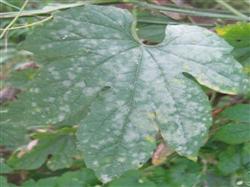
Symptoms of damage: mainly damages leaves. At the early stage of the disease, nearly circular small white powdery spots appear on the front or back of the leaves, mostly on the back of the leaves, and later the spots gradually expand and become large white powdery areas with indistinct edges. In severe cases, the leaves turn yellow, become brittle, and generally do not fall off. The powdery material gradually turns grayish white, and finally the entire leaf becomes yellow-brown and dried up. The disease mostly starts from the middle and lower leaves and gradually spreads to the upper leaves.
Conditions for onset: the pathogen of this disease is an ascomycete, an obligate parasite. The diseased seedlings overwinter as mycelium or cleistothecia on the host or on diseased residues, and can also overwinter on crops such as greenhouse cucumbers. The pathogen is mainly spread by air and flowing water. The temperature for the field epidemic of this disease is 16°C-24°C. It has a wide adaptability to relative humidity. When the air humidity is 45%-75%, the disease develops quickly, and when it exceeds 95%, the development of the disease is obviously inhibited. Generally, the disease is mild in years with relatively low rainfall. In continuous cloudy days and stuffy hot weather, the disease develops rapidly. Excessive vegetative growth of plants, overly dense vines and leaves, and poor ventilation and light transmission can easily lead to a major outbreak of powdery mildew.
Control measures:
① Strengthen cultivation management, attach importance to cultivating strong seedlings, rational close planting, timely pruning and leaf removal, improve ventilation and light transmission conditions, make plants grow robustly, and improve disease resistance. Base fertilizer should be supplemented with phosphorus and potassium fertilizers, and excessive application of nitrogen fertilizer should be prevented during the growth period.
② Physical control: use 27% higher fatty acid emulsifier at 80-100 times dilution, spray it on the leaves at the early stage of the disease to form a thin film, which can not only prevent pathogen invasion, but also create oxygen-deficient conditions to kill powdery mildew fungi. Generally spray once every 5-6 days, for 3-4 consecutive sprays.
③ Biological control: spray 2% Nongkang 120 aqueous solution, then spray again every 6-7 days, with a control effect of more than 90%.
④ Chemical control: the agents that can be sprayed alternately include: 15% triadimefon wettable powder at 1500 times dilution, 30% Triflumizole wettable powder at 1500-2000 times dilution, 40% carbendazim·sulfur suspension concentrate at 500-600 times dilution, 50% sulfur suspension concentrate at 250-300 times dilution, 50% amobam aqueous solution at 1000 times dilution, 47% Kasugamycin·Copper oxychloride wettable powder at 600-800 times dilution, 77% Kocide wettable powder at 500-700 times dilution. In protected cultivation, fumigation with chlorothalonil or sulfur smoke agents can simultaneously control downy mildew and powdery mildew.
The technical points of chemical control are: early prevention, thorough spraying, and large water volume. When spraying, spray evenly on the middle and lower old leaves and the back of the leaves. At the early stage of the disease, spray once every 7-10 days, for 2-3 consecutive sprays, which can achieve a relatively good control effect.
2. Phytophthora blight
Symptoms of damage: bitter melon phytophthora blight mostly shows symptoms before flowering. Both stems and vines and fruits can be infected. Infected leaves first lose their luster; at the initial stage they show dark green water-soaked irregular lesions with indistinct edges; when humidity is high, a very thin layer of white mold can be seen growing on the diseased area; when dry, it appears bluish white and is easily broken. The petioles and vine nodes show dark green water-soaked soft rot, and the affected parts are prone to constriction. When the fruit is damaged, dark green sunken lesions appear; when humidity is high, the fruit quickly soft-rots, and sparse white mold grows on the affected area, rotting and giving off a foul odor.
Conditions for onset: it is a fungal disease caused by Phytophthora. The pathogen overwinters in the soil with mycelium, chlamydospores, and oospores along with diseased plant residues. The pathogen on the lesions spreads through watering, rain splashing, air movement, and so on. The optimum temperature for the pathogen to cause disease is 27°C-31°C, with a maximum of 37°C and a minimum of 5°C. The release of zoospores from sporangia requires water. Low temperature and continuous rain or high temperature and high humidity are both conducive to pathogen infection and disease onset, and the incubation period is short, only 3-4 days, usually occurring in August-September. Early drought followed by rain, or heavy watering when the fruit enters the growth stage, causing a sudden increase in soil water content, can easily cause disease onset. The disease is severe in low-lying, poorly drained, and continuous cropping plots.
Control measures:
① Agricultural control: implement crop rotation of more than 3 years. Use plastic film mulching and high-ridge (bed) cultivation to reduce pathogen splashing from the ground. Rational irrigation and control of field humidity. Appropriately control watering during the rainy season, drain water promptly after rain, and ensure the ground dries after rain. Water promptly in case of drought; strictly prohibit flood irrigation when watering, and it should be done in the afternoon or evening on sunny days. Apply more organic fertilizer to promote robust plant growth, deep roots and luxuriant leaves, and improve resistance. Timely adjust the plants to prevent excessive density and poor ventilation and light transmission. Remove diseased leaves at any time and burn them.
② Chemical control: choose 25% metalaxyl wettable powder at 800-1000 times dilution, 80% zineb wettable powder at 600-800 times dilution, 64% oxadixyl·mancozeb wettable powder at 500-600 times dilution, 40% fosetyl-aluminum wettable powder at 300-400 times dilution, 80% Xinwansheng wettable powder at 500-600 times dilution, 72.2% propamocarb aqueous solution at 400-600 times dilution, 50% potassium copper oxychloride wettable powder at 600 times dilution, and other agents for alternate spraying, once every 5-10 days, for 3-4 consecutive times. Spraying should be thorough and meticulous, and all leaves, fruits, and nearby ground should be sprayed.
3. Downy mildew:
Both the seedling stage and the mature plant stage can be damaged. It mainly damages leaves, stems, tendrils, and flower stalks. When disease occurs at the seedling stage, irregular chlorotic yellow spots appear on the upper surface of the cotyledons; when moist, a gray-black mold layer appears on the back of the leaves; in severe cases, the cotyledons turn yellow and dry up. When disease occurs at the mature plant stage, it mostly starts from the lower leaves and gradually spreads upward. At the beginning of the disease, water-soaked light green or yellow small spots appear on the upper surface of the leaves, then gradually expand and change from yellow to light brown, forming polygonal lesions limited by leaf veins. On the back of the leaves, a purple-gray mold layer forms at the lesions. Under humid conditions, the mold layer thickens and becomes black. In severe cases, the lesions join into patches, the entire leaf becomes yellow-brown, dries up and curls, and all the leaves of the whole plant die.
Chemical control: at the early stage of the disease, use 25% metalaxyl wettable powder at 800-1000 times dilution; or 40% fosetyl-aluminum wettable powder at 300 times dilution; or 75% chlorothalonil wettable powder at 600-800 times dilution; or 65% zineb wettable powder at 400-500 times dilution; or 58% metalaxyl·mancozeb at 600 times dilution; or 64% oxadixyl·mancozeb at 400 times dilution. Use one of the above agents, once every 7-10 days, for 3-6 consecutive sprays.
4. Melon fruit fly:
The melon fruit fly, also known as the "needle bee", melon maggot, etc., is a pest belonging to the family Tephritidae of the order Diptera. It mainly damages with larvae. First, the adult inserts its ovipositor into the epidermis of young melons to lay eggs. After the larvae hatch, they burrow into the melon flesh to feed. The damaged melon first turns yellow locally, and then the whole melon rots and smells bad. This causes the plant to drop a large number of melons. Even when the melon does not rot, gum exudes and coagulates at the puncture site, the fruit becomes deformed and sunken, the peel hardens, and the melon tastes bitter and astringent, with reduced quality.
Control methods: first, promptly remove damaged melons, spray them with pesticide, and bury them deeply; second, in severe cases, bag the young melons to prevent adults from laying eggs. For chemical control, during the peak emergence period of adults, use poison bait to trap and kill adults. You can use 40 parts banana peel + 0.5 parts 90% trichlorfon crystal + 1 part essence, or use 1.8% abamectin oil paste at 1500 times dilution + Lvshadan at 1500 times dilution (4.5 m E) emulsifiable concentrate for control, spraying twice consecutively, with relatively good results. Or spray the plants with 50% dichlorvos emulsifiable concentrate at 1000 times dilution and 2.5% deltamethrin at 3000 times dilution, once every 3-5 days, for 2-3 consecutive sprays. This has a good effect on controlling adults. Bag young melons with paper bags for protection to prevent adults from laying eggs. Remove damaged melons and destroy them. Fly sticky paper can also be hung between rows, which also has a certain effect.
5. Melon borer:
The melon borer is a pest belonging to the family Pyralidae of the order Lepidoptera. It damages plants with larvae. In the early larval stage, the larvae feed on the leaf mesophyll on the back of the leaves, causing gray-white spots. After the third instar, they spin silk to bind leaves or tender shoots together, hide inside and feed, causing holes or notches in the leaves. In severe infestation, only the leaf veins remain. The larvae often bore into the melon and feed on the melon flesh, affecting yield and quality.
Control methods: clean the field of residual plants and fallen leaves to eliminate overwintering pupae and reduce the source of insects. During the larval stage, spray the plants with 20% fenvalerate at 3000 times dilution, or 50% malathion at 1000 times dilution, for high control effect.
6. Cutworm:
Cutworms belong to the family Noctuidae of the order Lepidoptera. There are many species of cutworms, and three are common in China: the black cutworm, the yellow cutworm, and the large cutworm. Among them, the black cutworm is a worldwide major pest with the widest distribution.
Poisonous grass bait trapping: mix 50 g of 90% trichlorfon evenly with 30-40 kg of chopped fresh grass, add a small amount of water, and scatter it near the vegetable field in the evening to trap and kill larvae.
Chemical control: for cutworm larvae before the third instar, you can use: 2.5% trichlorfon powder at 22.5-30 kg per hectare for dusting; or add 150 kg of fine soil to make poisonous soil and scatter it around the plants; or use 80% trichlorfon wettable powder at 1000 times dilution; or use 50% phoxim emulsifiable concentrate at 800 times dilution; or use 20% fenvalerate emulsifiable concentrate at 2000 times dilution for ground spraying. When the larvae are older, you can use: 50% phoxim emulsifiable concentrate; or 80% dichlorvos emulsifiable concentrate at 1000-1500 times dilution for root drenching to kill the larvae in the soil.
7. Melon aphid:
The melon aphid, also called the cotton aphid, commonly known as honey insect, greasy insect, etc. It belongs to the order Homoptera, family Aphididae.
The adults and nymphs of the melon aphid parasitize the back of host leaves or tender shoots and use their mouthparts to pierce and suck sap. They especially like to gather on tender leaves and tender stems to feed, causing melon leaves to shrink, become deformed, and curl toward the back. After the plant is damaged, growth and development stagnate or slow down, reducing yield and quality. The melon aphid is also the main transmission vector of viral diseases, and viral diseases are currently one of the main diseases causing total crop failure and yield reduction in cucurbit vegetables. Therefore, melon aphid damage can cause yield reduction in mild cases and total crop failure in severe cases. The melon aphid also excretes honeydew, contaminating leaves and products and reducing product quality.
At present, aphid control is mainly chemical control. In chemical control, the principle of early prevention should be followed. Commonly used agents include: 50% pirimicarb wettable powder or water-dispersible granules at 2000-3000 times dilution, which has a special effect on vegetable aphids and does not harm natural enemies; or 40% dimethoate emulsifiable concentrate at 1000-1500 times dilution; or 70% menazon wettable powder at 2500 times dilution, etc. Vegetable aphids are prone to developing resistance to pyrethroid pesticides, so they should be used with caution or mixed with other pesticides. Commonly used ones include: 2.5% deltamethrin emulsifiable concentrate at 3000-4000 times dilution; or 10% cypermethrin emulsifiable concentrate at 2000-6000 times dilution, sprayed as above. You can also use 1.8% abamectin oil paste at 1500 times dilution plus 10% imidacloprid wettable powder at 1500 times dilution for control.
Click to get more bitter melon cultivation techniques
Click to get more vegetable cultivation techniques