Complete Guide to Summer Corn Pest and Disease Control
How do you control summer corn pests and diseases? Here is an introduction. During the summer sowing period and seedling stage, many types of pests, diseases and weeds occur, and the damage is severe. If control is poor, it very easily causes missing plants and broken rows, leading to reduced yield. Therefore, throughout the entire growth period of corn, carrying out comprehensive control of pests, diseases and weeds at the sowing and seedling stages is crucial. First...
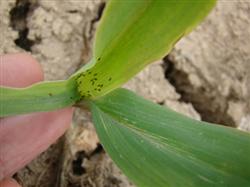
How do you control summer corn pests and diseases? Here is an introduction
During the summer sowing period and seedling stage, many types of pests, diseases and weeds occur, and the damage is severe. If control is poor, it very easily causes missing plants and broken rows, leading to reduced yield. Therefore, throughout the entire growth period of corn, carrying out comprehensive control of pests, diseases and weeds at the sowing and seedling stages is crucial.
I. Occurrence Characteristics
1. The seedling stage is key to pest, disease and weed control throughout the entire growth period.
① Soil-dwelling pests show an upward trend. The main soil-dwelling pests in cornfields are cutworms, white grubs and wireworms, which are the main cause of missing plants and broken rows at the corn seedling stage.
② Seedling-stage pests cause severe damage. The corn seedling stage is the period when pests such as thrips, Swedish fly, armyworm, cotton bollworm and corn mealybug cause concentrated damage, often causing missing plants and broken rows, curled heart leaves and stunted development; in severe fields, the crop may even be destroyed and replanted. Therefore, controlling corn seedling-stage pests well is key. In recent years, corn thrips and Swedish fly have shown an increasing damage trend and often cause damage together; generally, fields sown early and fields covered with wheat straw suffer more severe occurrence. The main damage period is from the 3~7 leaf stage, while latent damage occurs at the 1-leaf stage (that is, 1~2 days after corn emergence), when they bore in and lay eggs, forming curled heart leaves by the 3~7 leaf stage, and in some fields a second round of damage forms from late July to early August. The second generation of armyworm and the second generation of cotton bollworm occur together, often destroying the crop in some fields. Corn mealybug delays the corn jointing stage and causes slow growth.
③ Weed control results in some cornfields are unsatisfactory. The main reasons are, first, wheat straw cover is unfavorable for pre-emergence application after sowing; second, the amount of water used is insufficient; third, the timing of post-emergence spraying is not well controlled.
2. New pests and diseases keep appearing. ① The leaf beetle (heterospecific flea beetle) occurs severely in some local areas. It causes severe damage to the middle and lower leaves of corn. ② The two-spotted stem borer bores into the root and stem base of corn at the seedling stage.
3. Old pests and diseases are rebounding. ① Corn root rot and corn smut occur severely in some fields. ② Corn sheath blight is relatively severe in some susceptible varieties. ③ Corn rough dwarf disease causes severe dwarfing of plants, poor development, no heading and few grains.
II. Seed Treatment and Chemical Weed Control
1. Choose disease-resistant, high-yielding varieties and carry out seed treatment well. Xianyu 335, Jingdan 28, Zhengdan 958, Liyu 16 and others have performed well in recent years, and farmers may choose the best ones to plant.
2. Seed treatment: ① To control soil-dwelling pests, use 100 ml of 40% isofenphos-methyl plus 2.5 kg of water to mix with 50 kg of corn seed, pile and cover for 4~6 hours, then dry and sow. This can effectively control soil-dwelling pests and also control the small brown planthopper. ② To control root rot, use 50% carbendazim wettable powder or 25% triadimefon wettable powder at 0.5% of seed weight for seed dressing. ③ To control smut and head smut, use 50% carboxin for seed dressing at 250 g per 50 kg of seed, or 6% Raxil suspension seed coating agent at 1~2 ml per kg of seed.
3. Scientific chemical weed control. Before emergence after sowing, 40% acetochlor-atrazine mixture and similar products are recommended, using 200 ml per mu, diluted in 45 kg of water, and sprayed over the ground while walking backward. After emergence, at the corn 2~4 leaf stage, Gengjie, 23% nicosulfuron?atrazine and similar products are recommended, using 100~120 ml per mu, diluted in 30 kg of water, and sprayed on stems and leaves between rows (avoiding the corn heart leaves). When corn has more than 10 leaves, directed spraying with Gramoxone may be used. Quality requirements: ① sufficient pesticide amount and water amount; ② spraying time after 5 p.m.; ③ uniform spraying, no repeated spraying and no missed spraying. ④ In fields sprayed with herbicides containing nicosulfuron, organophosphorus insecticides must not be used 7 days before or after.
III. Pest Control Measures
(1) Swedish fly and thrips: pay attention to control in early-sown fields and fields sown with stubble. In fields with 2%~3% damaged plants after emergence, carry out chemical control immediately. Spraying should be uniform, and the pesticide amount and water amount should be sufficient. Pesticides to use: 30 ml of 2.5% beta-cypermethrin plus 30 ml of 50% dimethoate per mu, or 20~30 g of 10% imidacloprid plus 30 ml of 2.5% beta-cypermethrin per mu, diluted in 30~45 kg of water, for whole-field spraying.
(2) Corn mealybug: at the seedling stage, use 40% phoxim emulsifiable concentrate at 1000 times dilution or 48% Lesben emulsifiable concentrate at 1500 times dilution for timely root drenching, using 150~200 jin of liquid per mu. The method is to remove the nozzle cap and spot-spray the base of the corn stems so that the liquid seeps to the corn root and stem base.
(3) Cotton bollworm and armyworm: when the damaged plant rate is above 5% in early July, apply pesticide promptly for control. Use a 1:1 mixture of 4.5% beta-cypermethrin and 40% phoxim at 50~75 ml per mu, or 25% Huifeng Kuaike at 50 ml per mu for spraying.
(4) Corn borer: at the end of the corn heart-leaf stage (large trumpet stage), apply granules into the heart. Use special corn borer granules or 0.5 kg of 40% phoxim emulsifiable concentrate diluted in 5 kg of water and mixed with furnace ash and cinders to make granules, then scatter 3.5 kg per mu into the corn heart. Control threshold: apply pesticide when the corn leaf-feeding rate reaches 20%.
(5) Corn rough dwarf disease: in small plots, early-sown fields, fields with a more complex environment, and fields where wheat rosette dwarf occurred and the next crop is corn, weed and insect control should be carried out promptly to create an environment unfavorable for planthopper reproduction and prevent the occurrence of corn rough dwarf disease. Main measures: ① Before corn sowing or before emergence, extensively clear weeds in the field and along field edges to reduce virus sources, and chemical weed control is advocated. ② Fertilize and irrigate reasonably, strengthen field management, shorten the corn seedling stage, reduce opportunities for virus transmission, and improve corn disease resistance. ③ Before and after corn sowing and at the seedling stage, spray cornfields and surrounding weeds with 50% acephate emulsifiable concentrate at 1500 times dilution.
(6) Two-spotted stem borer: use 1 jin of 48% chlorpyrifos + 100 jin of cottonseed kernel meal powder to make poisoned bait and scatter it along the rows in the evening, with a control effect above 90%.
Click to get more corn planting techniques
Click to get more food crop planting techniques