How to control brown spot disease in lotus root cultivation?
How to control brown spot disease when growing lotus root? Please give an introduction. For growing lotus root, the following methods can be used to control brown spot disease: 1. Symptoms. This disease mainly damages the leaves and leaf stalks of lotus root. In the early stage of leaf infection, small brownish-green spots appear, which later expand into reddish-brown to dark brown irregular to polygonal necrotic lesions...
How to control brown spot disease when growing lotus root? Please give an introduction
For growing lotus root, the following methods can be used to control brown spot disease:
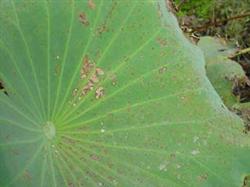
1. Symptoms. This disease mainly damages the leaves and leaf stalks of lotus root. In the early stage of leaf infection, small brownish-green spots appear, which later expand into reddish-brown to dark brown irregular to polygonal necrotic lesions, often with a yellow halo around them, 2-10 mm in size. The lesions often have concentric rings, and in the later stage they often merge with each other into large patches, turn brown and dry up. If the leaf stalk is infected, it is easy to break and droop. When air humidity is high, a sparse grayish-brown mold layer forms on the surface of the lesions.
2. Disease pattern. The pathogen overwinters with diseased plant residues. When temperature and humidity conditions are suitable, it produces conidia and forms primary infection. After the disease occurs, conidia are produced for secondary infection.
3. Control methods. (1) Agricultural control: Combined with cutting the stubble before winter, thoroughly clean up diseased and old leaves, collect and crush them for composting, and reduce the source of inoculum in the field; strengthen fertilizer and water management. In areas where the disease occurs frequently, increase the application of phosphorus, potassium, and zinc fertilizers, drain and sun-dry the field at the appropriate time and to an appropriate degree, promote root growth, and enhance the plant's disease resistance. (2) Chemical control: In the early stage of the disease, you can choose 50% anilazine wettable powder at 500 times dilution or 40% flusilazole emulsifiable concentrate at 5000 times dilution, or you can use 70% thiophanate-methyl wettable powder at 600 times dilution or 40% isoprothiolane wettable powder at 600 times dilution for spraying, once every 7-15 days, for 2-4 consecutive sprays.
Click to get more lotus root cultivation techniques
Click to get more vegetable cultivation techniques