-

Key Points of Disease Control Techniques During the Garlic Growing Period
1. Garlic rust: In years with abundant rainfall, check the disease centers promptly in early spring and take timely preventive measures. Generally, use 15 percent Fenxiuning wettable powder at 1000 times dilution, or 15 percent Fenxiuning wettable powder at 1500 times dilution plus 70 percent mancozeb wettable powder at 1000 times dilution for the first control in early April, then apply a second control after 10 to 15 days, generally applying 2 to 3 times depending on the severity of the disease. 2. Garlic leaf blight, leaf spot diseases, gray mold, etc.: Use 75 percent chlorothalonil wettable powder at 800 times dilution, or 64 percent
-
Comprehensive Utilization Methods of Fish Fingerling Ponds During the Winter Fallow Period
Raising market-size fish: Using winter-fallow fingerling ponds to raise one season of market-size fish can both increase production and help ease the "summer shortage" in the aquatic product market. Because the rearing period is relatively short and temperatures are relatively low, the following techniques should be adopted: 1. Stock early, that is, stock immediately after the fingerlings are combined into ponds, so as to make full use of the growing period. Stocking rate is calculated at a maximum water depth of 2 m, generally 125-150 kg per mu. The stocking ratio is generally about 40% silver carp, about 10% bighead carp, about 30% grass carp and bream, and about 20% black carp and common carp.
-
Control methods for diseases, pests and weeds during the cotton sowing period and seedling stage
This year, affected by abnormal climate, the cotton sowing time in our province was delayed. Under this continuous low-temperature condition, cotton growth and development were delayed, and the degree of disease and pest damage was relatively aggravated. For this reason, the situation facing cotton disease and pest control this year is more severe. From the start of sowing, every key control technique must be firmly implemented, especially the links in pesticide selection and use. The main disease and pest control techniques for the sowing period and seedling stage are introduced to the broad community of farmers as follows: 1. Strictly control the seed treatment with pesticides at the sowing stage. Before cotton sowing, focus on
-
Cotton is prone to premature aging during the dog days, so growers should be on guard
Once cotton shows premature aging, remedial measures are of little use, and prevention is what matters. Early August is the peak period of cotton flowering and boll setting; if vegetative growth and reproductive growth are well coordinated, premature aging is unlikely. The earlier premature aging occurs, the more severe the yield loss. In severe years, some fields show premature aging in mid-to-late August. How to prevent cotton premature aging and increase yield is an urgent problem in cotton production. Below are several measures to prevent cotton premature aging. Pay attention to the watering method. Summer drought causes cotton premature aging, so if there is no rain during the dog days, water promptly. Alternate-furrow irrigation is preferable,
-
Key Points of Feeding and Management Techniques for Adult Male Deer During the Antler-Growing Period
The physiological activities of adult male deer are strongly seasonal. Based on their different physiological and production characteristics in each period, the production of adult male deer is divided into four periods in practice, as follows: (1) antler-growing period (mid-March to early August), (2) mating period (late August to early November), (3) recovery period (early November to mid-January of the following year), (4) pre-antler-growing period (late January to early March). The above production periods are not completely separate from one another, but are interconnected and mutually influential, while each has its own characteristics.
-
How to determine the ingredient proportions for mink, fox and raccoon dog during the winter fur period
Mink dry feed ① Fish meal 30%, meat meal 15%, blood meal 5%, chicken and duck skeletons and meat 15%, Dinghao premix 4%, corn 25%, bran and middlings 3%, fat 3%. ② Haoyijia mink extruded feed Dingyi No. 4 60% (add 2.5 times water to make a porridge), self-mixed dry feed 40%. Fresh feed ① Miscellaneous fish 55%, livestock and poultry meat 12%, corn 25%, Dinghao premix 4%, bran and middlings 2%, fat 2%. ② Haoyijia mink extruded feed Ding
-
What are the key management techniques for garlic during the green-up stage?
How should garlic be managed during the green-up stage? After garlic overwinters, it enters the green-up stage. According to the climate characteristics of the Cangshan garlic producing area, after mid-February, temperatures gradually rise and the garlic plants begin active growth. After the Spring Equinox, that is, in late March, the seed garlic cloves rot (also called "clove rot" or "mother clove depletion"), the plants grow new adventitious roots, and growth begins to accelerate. In terms of management, soil temperature should be raised, along with fertilizer and water, to promote faster plant growth. For garlic fields covered with horse manure or firewood and straw in winter, the fertilizer or straw should be cleared away and the ground left to dry for 2-3 days. This can raise the soil temperature and promote root growth.
-
Precautions for Catching and Sorting during the Separate Rearing of Adult Eels
1. Catching adult eels for separate rearing There are two catching methods. In larger eel ponds, net catching is generally used; in smaller ponds or concrete-structured eel ponds, the pond water can be drained directly and the eels placed into an eel collection net cage. With the net catching method, feed is used to attract the eels to the feeding area, and when most of the eels have gathered in the feeding area, the feeding area is surrounded with a net and the net is lifted at the feeding area. The caught eels are gathered in a long eel collection box. The long box should be positioned on one side of the eel pond where sorting operations are convenient, and at a distance of 3 to
-
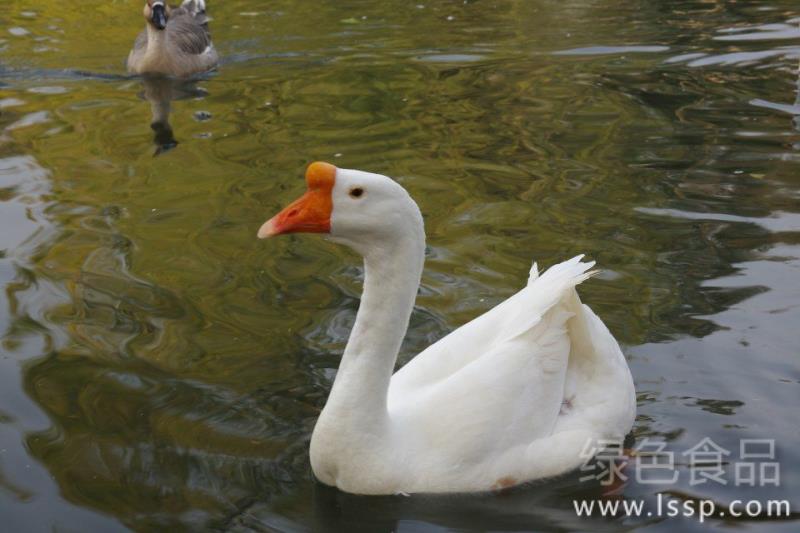
Symptoms and Prevention Methods of Heatstroke in Geese During Summer High Temperatures Due to Lack of Sweat Glands
Summer High Temperatures, Geese Lack Sweat Glands and Are Prone to Heatstroke: Symptoms and Prevention Methods of Heatstroke in Geese
-
How to carry out field management of cotton during the flowering and boll stage? Technical Q&A
1. What is the flowering and boll stage? The stage from flowering to boll opening, generally from early July to early September. There is a farming saying, "flowers see flowers forty-eight," but in fact in China's Yellow River basin it generally takes 50-70 days. When 10% of the cotton plants in the field have flowered, it is called the initial flowering stage; when 50% have flowered, it is called the flowering stage. When 50% of the cotton plants have the first fruiting node of the fourth fruiting branch flowering, it is called the full flowering stage. 2. What are the management principles during the flowering and boll stage? The initial flowering stage is the transition from vegetative growth to reproductive growth, and management should focus on control, preventing
条件筛选