-

Key Integrated Management Techniques for Soybeans During the Flowering and Podding Stage
When soybeans enter the flowering and podding stage, vegetative growth and reproductive growth proceed together, requiring sufficient water, nutrients and light. In terms of cultivation measures, vegetative growth and reproductive growth should be coordinated to achieve many pods and many seeds. The main measures should include the following "three preventions" and strengthened management during the seed-filling and maturation stage. The "three preventions" measures during the flowering and podding stage (1) Preventing excessive vegetative growth: when soybeans have shown 2 tillers and are flowering, use 30 grams of 15% paclobutrazol wettable powder per mu, mix with 40 kg of water, and spray to top the plants, which can shorten internodes, control top vine growth, increase flowers and preserve pods, so that pods cover the top; (2) Preventing drought and waterlogging: during the soybean flowering period, attention should be paid to summer drought, seepage and moisture retention, and in case of severe waterlogging, drain promptly to reduce waterlogging damage; (3) Controlling pests: from the end of July to mid-August is the peak outbreak period for soybean semi-looper, bean hawk moth, leaf roller, alfalfa noctuid and other pests. Pesticides with contact and stomach poison effects such as fenvalerate or cypermethrin plus dimethoate emulsion or dichlorvos can be used for control, eliminating pests at the 1st-2nd instar stage.
-
Key Technical Points for Disinfection and Disease Prevention During the Young Silkworm Stage
In young silkworm co-rearing, "disinfection and disease prevention" must be carried out throughout the whole process, earnestly grasping the technical keys of three links: pre-rearing disinfection, disinfection during the rearing period, and final disinfection: 1. Pre-rearing disinfection. Based on the principle of being comprehensive and thorough and seeking practical results, on the basis of comprehensive cleaning and washing, targeted chemicals are used for disinfection, while strengthening management after disinfection. It should be noted that: 1. The water used for washing must be of good quality; it is strictly forbidden to wash silkworm tools in stagnant ditches, ponds, or by riversides; 2. Garbage and other waste from cleaning and sweeping must be concentrated
-
What issues should be noted during the processing of yellow peaches?
Influenced by international yellow peach market prices, domestic yellow peach prices have been climbing steadily, with purchase prices maintained at 2-3.6 yuan/kg, an average price of 2.6 yuan/kg, and average output value of yellow peach orchards at 7800 yuan/mu, with the highest reaching 10,000 yuan, generally 2-5 times that of ordinary peach orchards, showing very significant economic benefits. 1. Pay attention to selecting excellent varieties: Yellow peach varieties used for canning require non-melting flesh, firm texture, good elasticity, low juice content, clingstone, no red streaks in the flesh, and preferably no
-
Pig eczema breaks out frequently during the rainy season: how can it be prevented and treated scientifically?
Pig eczema, also known as pig eczema toxemia, is mainly caused by pigs living in a damp environment for a long time, and the outbreak rate of this disease is especially high in hot seasons. 1. Symptoms. Most acutely affected pigs develop the disease suddenly. At the beginning of the disease, the skin under the jaw, on the abdomen and on both sides of the perineum turns red, and broad bean-sized nodules appear at the same time, with itching and restlessness. Later, as the condition worsens, blisters and papules appear on the skin of the affected pigs. After the blisters and papules rupture, they are often accompanied by yellow exudate, and finally form scabs or turn into scales. If acutely affected pigs are not treated in time
-
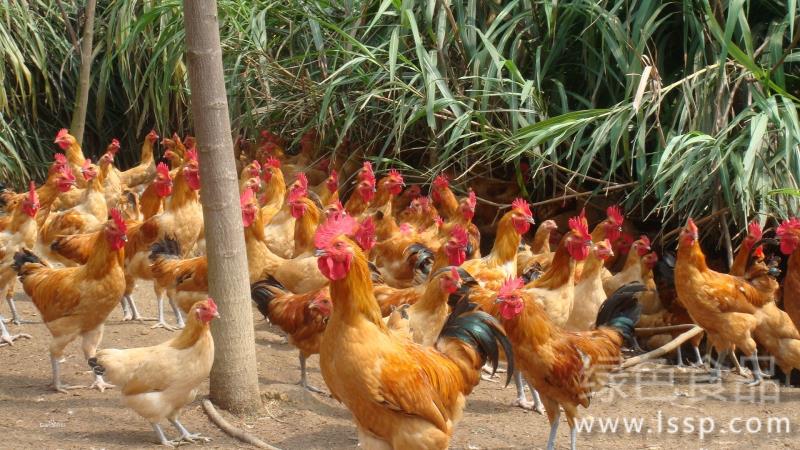
How should free-range chickens be raised and managed during the laying period to ensure the laying rate?
Key points for feeding and management of free-range chickens during the laying period to ensure the laying rate
-
Pest and disease control methods during jasmine cultivation
During the growth period, jasmine diseases include: jasmine stem rot and southern blight; pests include: jasmine leaf borer, scale insects, and carmine spider mite. (1) Jasmine stem rot. This disease occurs at the base of the stem. In the early stage, the lesions are brown spots with a water-soaked appearance. The lesions extend lengthwise into stripe-like patches. The edges are dark brown and the interior is grayish brown. In the later stage, the lesion tissue rots and splits lengthwise, and black granular bodies appear. This disease occurs year-round during the greenhouse maintenance period, and is especially severe in early spring. When maintained outdoors, it also occurs in August-September. High temperature and humid conditions favor
-
Key Technical Points for Feeding and Management of Does During the Breeding Period
The purpose of raising female sika deer is to require does to have high fertility, a healthy constitution, and to produce superior offspring. Whether does can produce superior offspring is not only related to the breed of the doe, but also extremely closely related to feeding and management. Only good feeding and management can enable does to give full play to their superior production performance. According to the nutritional needs and feeding and management characteristics of does at different stages, doe feeding and management can be divided into three periods, described as follows: I. Feeding and Management of Does During the Mating Period Every year
-
How to do a good job of disease prevention in pigeons during different production periods
(1) For squabs during the brooding period, pay attention to preventing trichomoniasis. Trichomoniasis is mainly transmitted directly to squabs by parent pigeons carrying the parasite, so check whether the parent pigeons are carrying it, and if so, treat them promptly. Pay attention to preventing pigeon pox, which is generally prevalent from March to June, so do a good job of vaccination and mosquito control. Once it occurs, timely surgical treatment should be given. A small amount of low-toxicity mosquito-killing water can also be sprayed on the squabs to prevent mosquito bites, but be sure not to use too much. In addition, pay attention to preventing diseases such as coccidiosis, mycoplasmosis and salmonellosis. (2) Young pigeons kept for breeding
-
Key Technical Points for Feeding and Management of Foie Gras Geese During the Pre-feeding Period
Geese of around 12 weeks of age should be selected for foie gras production. At this time, the number of liver cells in geese is relatively high, and the activity of fat-synthesizing enzymes in the liver is relatively strong, which is beneficial for rapid liver weight gain. Before 2 weeks of age, goslings are mainly raised with roughage and grazing to reduce feeding costs. The pre-feeding period is the transition from grazing to housed feeding, and from roughage to concentrate feeding. The quality of feeding during the pre-feeding period directly affects the production results of foie gras. The key to feeding during the pre-feeding period is to let the geese have a gradual adaptation process, so that they adapt to a high-nutrition diet and adapt to a large amount of concentrate feed.
-
The harm of influenza virus during bovine pregnancy must not be ignored
Bovine influenza is an acute febrile infectious disease, characterized by strong transmissibility, rapid spread, fast progression, and a fierce onset. As long as one cow in the herd is infected, most cattle will be infected and fall ill within a short period, especially during the spring and autumn seasons when the climate changes drastically and cold and heat fluctuate greatly, when the incidence rate is higher. Unsanitary, cold and damp cowsheds, poor feeding and management, exposure to wind or the shock of drinking cold water, and a decline in the cattle's resistance all make influenza more likely to be triggered. According to statistics, during the winter and spring influenza epidemics in Muling City, Heilongjiang Province over the past two years, the incidence rate among dairy cows reached 1
条件筛选