How should free-range chickens be raised and managed during the laying period to ensure the laying rate?
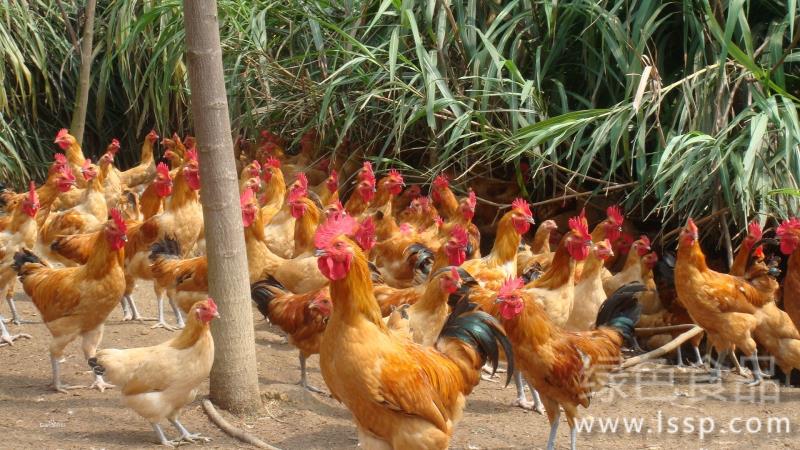
Free-range chickens
After going through the rearing period from 20 to 23 weeks of age, free-range chickens enter the laying period. Management during the laying period is relatively complex, and the key points for feeding and management are as follows:
1. Provide sufficient supplementary complete feed, feeding each chicken 50 g to 75 g of complete feed per day, and at the same time supply enough clean drinking water.
2. Release the chickens in areas with abundant grass and many insects. The stocking density should be determined according to the amount of insects and grass in the free-range area. Where insects and grass are abundant, the density can be appropriately higher; otherwise, the density should be appropriately reduced.
3. Build laying nests. Enough laying nests must be set up in the free-range area. Because free-range chickens are different from caged chickens, egg loss can occur if this is not done well. Hens should be trained to lay eggs in the nests, and decoy eggs (empty eggshells) can be placed in the nests. To prevent hens from stepping on and breaking the eggs, the keeper should collect the laid eggs promptly.
4. Build enough rain shelters. Severe weather such as storms, rain and snow, and hail is undoubtedly a great threat, and if it is not handled well, it can cause great losses. Therefore, windproof and rainproof shelters must be built, and free-range chickens should be trained to actively go into the rain shelters when severe weather comes.
⟧ 5. Do a good job of preventing attacks by wild hawks and rodents. Hawks and weasels, among others, will prey on free-range chickens, and rats will steal eggs and feed. Rats should be eliminated regularly in the free-range area. Rat elimination should be carried out at night, using methods such as rat traps, rat cages, or glue boards.